
PITCH & PEOPLE Folge 1: Branchly
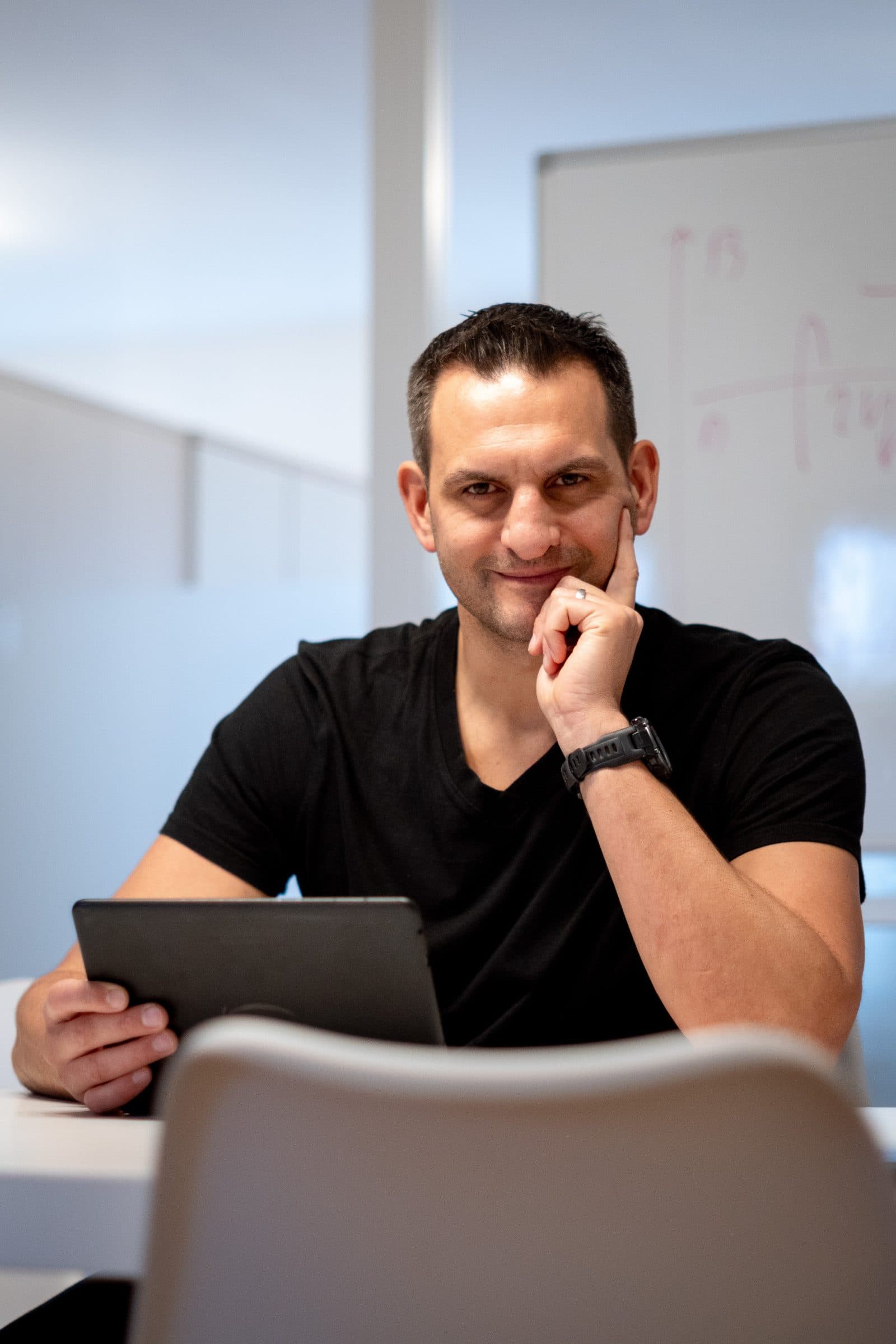
From fashion retail to AI business: Branchly founder Sebastian Flick has had an unconventional journey. After a burnout in retail, he found his way to the tech world at E-Bot7, witnessed a multi-million-dollar exit – and eventually founded Branchly. With his AI search and chat solution, he’s betting on bootstrapping instead of VC, and tells the new Munich Startup Podcast Pitch & People, among other things, why he spent 200 days a year on trains and had to pay over 4,000 euros in train costs.


When everything fell apart
In the first episode of our new video podcast format Pitch & People, Sebastian Flick from Branchly is our guest. His career path: unconventional. He didn’t start his career in the tech scene, but in retail. After his apprenticeship at the menswear retailer Hirmer, Flick’s path took him through positions at Ralph Lauren and Prada to Hackett, where he rose to become Munich’s youngest store manager. But in his early twenties, the pressure led to his first breakdown, followed by others. Flick couldn’t go on; his body rebelled, and mentally he was burned out. The diagnosis came quickly: burnout. A turning point that led him out of the fashion industry and into the world of technology.
The 70 million dollar exit
In 2017, Flick discovered the Munich AI startup E-Bot7. There he became the first full-time employee and quickly became a central figure for sales and customer success. He established the “Customer Success” department and guided the company’s rise to several hundred customers and 150 employees. In 2021, US conglomerate LivePerson acquired E-Bot7 – a deal worth around 70 million dollars.
His experiences at E-Bot7 made it clear to Flick that classical chatbots have their limits. Customers need more than a static FAQ database – a dynamic solution that semantically explores content and truly works multilingually. Together with his co-founder, he founded Branchly in 2022. Starting in stealth mode, the official market entry came at the end of 2023. Today the company has around 30 customers, mainly in Germany and Austria.
What makes Branchly different
Branchly relies on proprietary search and chat solutions that make company content accessible in up to 101 languages. The goal is to provide content barrier-free – while also providing companies with valuable insights into their users’ search behavior. Customers benefit in two ways: from better accessibility and data-driven optimization opportunities.
A key lesson from Flick’s time at E-Bot7: venture capital also means pressure. That’s why Branchly has been bootstrapped from the start. Financing came through founder grants, the first paying customers, and the company’s own reserves. Particularly important: long-term contracts averaging 24 months that create cash flow security.
Lessons from burnout
The issue of overload remains present for Flick. Earlier panic attacks taught him to pay attention to warning signs and structure things in a way that allows him to cushion stress. At the same time, he sees his retail experience as an advantage: the human touch, customer loyalty, and trust are crucial for him in the software world as well.
On Pitch & People, Sebastian Flick tells how extreme the pressure was even during his E-Bot7 time:
“I was honestly 200 days a year on trains – 4,000 euros in train costs in second class, that’s quite something.”
Flick sees Munich as a strong location for founders. However, he criticizes tax burdens such as input tax liability or trade tax, which can be a growth inhibitor especially for profitable but still small startups.