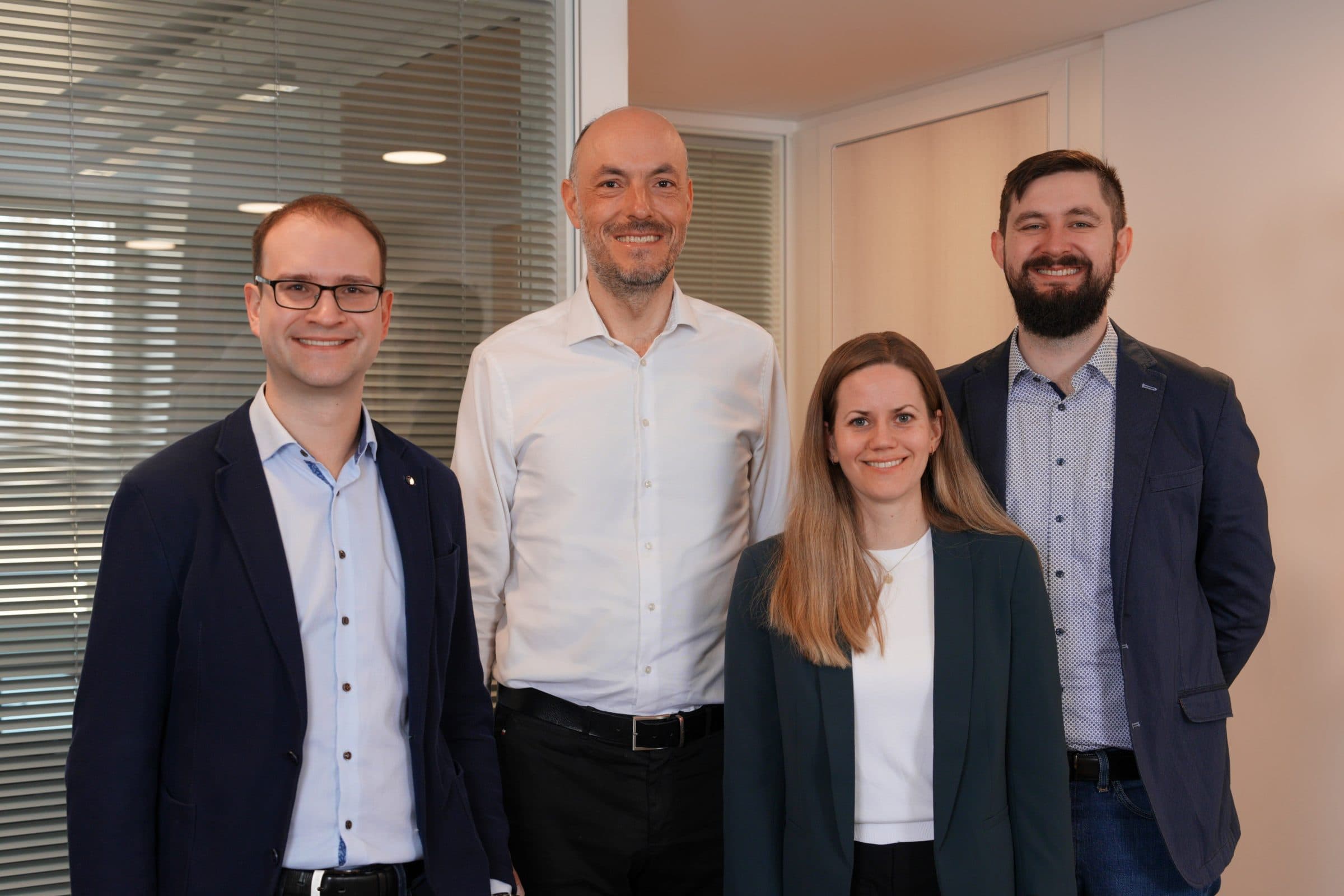

Smartbax has successfully raised 4.7 million euros in its Pre-Series A financing round. The round is led by Bayern Kapital and Anobis Asset. UnternehmerTUM Funding for Innovators is also participating, along with existing investors High-Tech Gründerfonds (HTGF) and Boehringer Ingelheim Venture Fund (BIVF). A second tranche for this financing round remains open to new investors.
The fresh capital will flow into further development of the drug pipeline, which targets new antibiotics. Smartbax develops small-molecule antibiotics with innovative mechanisms of action to overcome resistance. A promising drug candidate utilizes a novel target on the outer membrane of certain bacteria. Efficacy in vivo has already been confirmed in intravenous application—coupled with broad activity against multidrug-resistant bacterial strains and a low propensity for resistance development. Currently, the candidate is moving toward preclinical development.
In parallel, Smartbax is advancing a platform for small-molecule enzyme activators. These stimulate bacterial hydrolases, enabling bacteria to break down themselves. This approach differs significantly from classical antibiotics and offers new opportunities in the fight against resistance.
“Small-molecule antibiotics remain one of the most effective tools in fighting the rapidly growing threat of antimicrobial resistance. Smartbax is currently the only German biotech company dedicated exclusively to developing this critical drug class. We are proud to advance complementary approaches, both with a classical inhibitor against a novel target and with enzyme activators that employ an entirely new mechanism of action in the antibiotics space,”
explains Robert Macsics, CEO of Smartbax, and adds:
“Our programs focus on WHO priority pathogens and aim to create new treatment options for critically ill patients who currently have limited options. We are very pleased with this strong investor consortium that shares our commitment and will work with us to address this urgent public health threat.”
Broad investor engagement for Smartbax
Investors also recognize significant potential in the biotech. Monika Steger, managing director of Bayern Kapital, says:
“The growing resistance of bacteria to antibiotics places enormous burdens on global healthcare. Smartbax addresses this problem with two novel drug approaches that already show great potential at their current stage. At the same time, the market for new antibiotics opens up a highly attractive growth field with significant economic opportunities. An investment in Smartbax is not only a promising investment in the local biotech ecosystem and the resilience of our healthcare system. The investment also strengthens the technological sovereignty of the European Union in key technologies such as biotechnology along the STEP objectives.”
Martin Falk, managing director of Anobis Asset, says:
“Antibiotic resistance is among the most pressing medical challenges of our time, and there is a clear need for new therapeutic approaches. In Germany alone, nearly 10,000 people die each year directly from infections with multidrug-resistant bacteria; many more require hospitalization and often face lengthy recovery. We are proud to support a team developing solutions that can help patients and protect public health worldwide.”
Inga vom Holtz, Director Investments at UnternehmerTUM Funding for Innovators, adds:
“Smartbax has evolved from academic research into a biotech company with clear focus on antibiotic innovations. We are excited to support this financing round and a team advancing both classical inhibitors and entirely new antibacterial mechanisms of action with enzyme activators. We are proud that these innovations originate from the Technical University of Munich.”