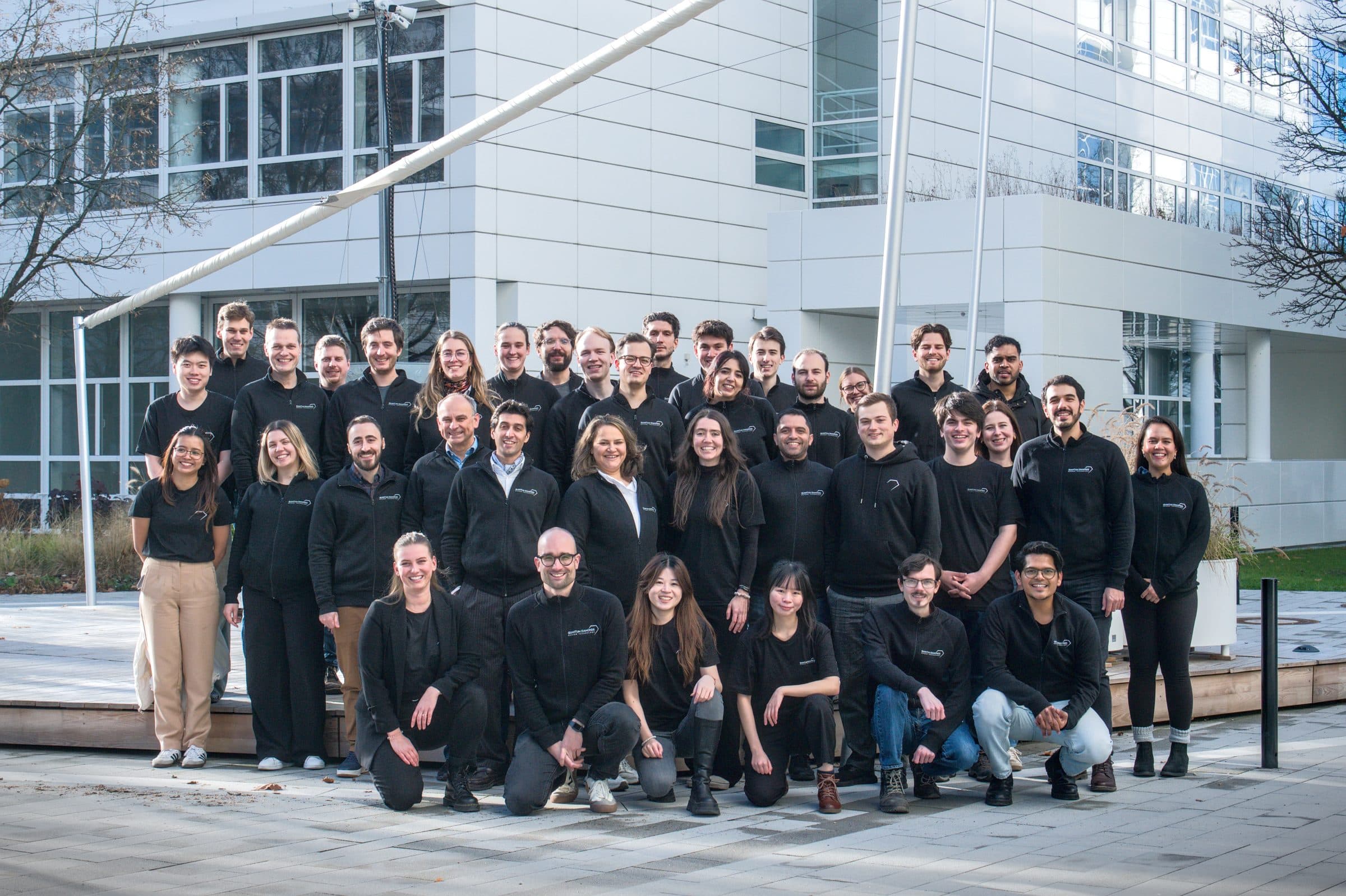

Quantum Diamonds, a startup founded in 2022 from the Technical University of Munich, is investing 152 million euros in the construction of a new production facility in Munich. Construction is scheduled to begin in the fourth quarter of 2025. The facility will produce systems for quantum-based chip inspection. The new production site is considered a central pillar in strengthening Europe’s position in global competition. The project is supported by public funding in the double-digit millions from the German federal government and the Free State of Bavaria as part of the European Chips Act.
With this investment, Quantum Diamonds aims to make semiconductor production in Europe more independent and efficient at the same time. The Munich facility is the first of its kind worldwide. It combines sensor manufacturing, cleanroom integration, and shared development laboratories under one roof. The concept is designed to more closely integrate research and production.
A new solution to an old problem
With each technological advance, semiconductors become smaller, more powerful – and more prone to defects. Especially with modern 2.5D and 3D chips, as used in artificial intelligence, mobile devices, and automotive technology, complex layer structures complicate quality control.
Previous testing methods reach their limits here: To find defects, chips are often cut or ground down. Procedures that are time-consuming, expensive, and destroy the components. Quantum Diamonds takes a different approach: The so-called Quantum Diamond Microscopy (QDM) uses special diamonds with nitrogen vacancies to visualize electrical currents and magnetic fields inside a chip without opening the housing.
Non-destructive methods are considered key technology for higher yields and lower costs in semiconductor manufacturing. They enable faster analysis and help identify production errors early.
David Su, former head of failure analysis at Taiwanese semiconductor manufacturer TSMC and now advisor to Quantum Diamonds, explains:
“The ability to test chips accurately and non-destructively is something the industry has been looking for for 15 years.”
Part of the European semiconductor strategy
The investment is in the context of the European Chips Act, through which the European Union aims to increase Europe’s share of global chip production from around ten percent to twenty percent by 2030. While Europe is one of the largest buyers of high-performance chips, it is heavily dependent on Asian manufacturers.
According to the company, Quantum Diamonds already works with nine of the ten largest chip manufacturers worldwide. First systems are in use in Europe, with further installations planned for 2026 in the US and Taiwan.
Fleming Bruckmaier, co-founder and chief technical officer of Quantum Diamonds, says:
“Our systems give manufacturers a layer-precise insight into current paths in microstructures without opening the housing. This type of inspection becomes indispensable as complexity increases.”
Bavaria’s Minister of Economics Hubert Aiwanger also sees the project as an important stimulus for Bavaria’s industrial policy and emphasizes that the Free State will support companies that “drive technological innovation and industrial strength in Bavaria”.