
What makes this boom particularly special: it is driven strongly by artificial intelligence. More and more startups are using AI from the start and build their products and business models on it. And this has direct consequences. Startups reach the market faster, often require less capital, and more frequently rely on scalable software models. SaaS solutions are currently clearly dominant. In short: founding is becoming easier – at least from a technical standpoint.
Record number of foundings
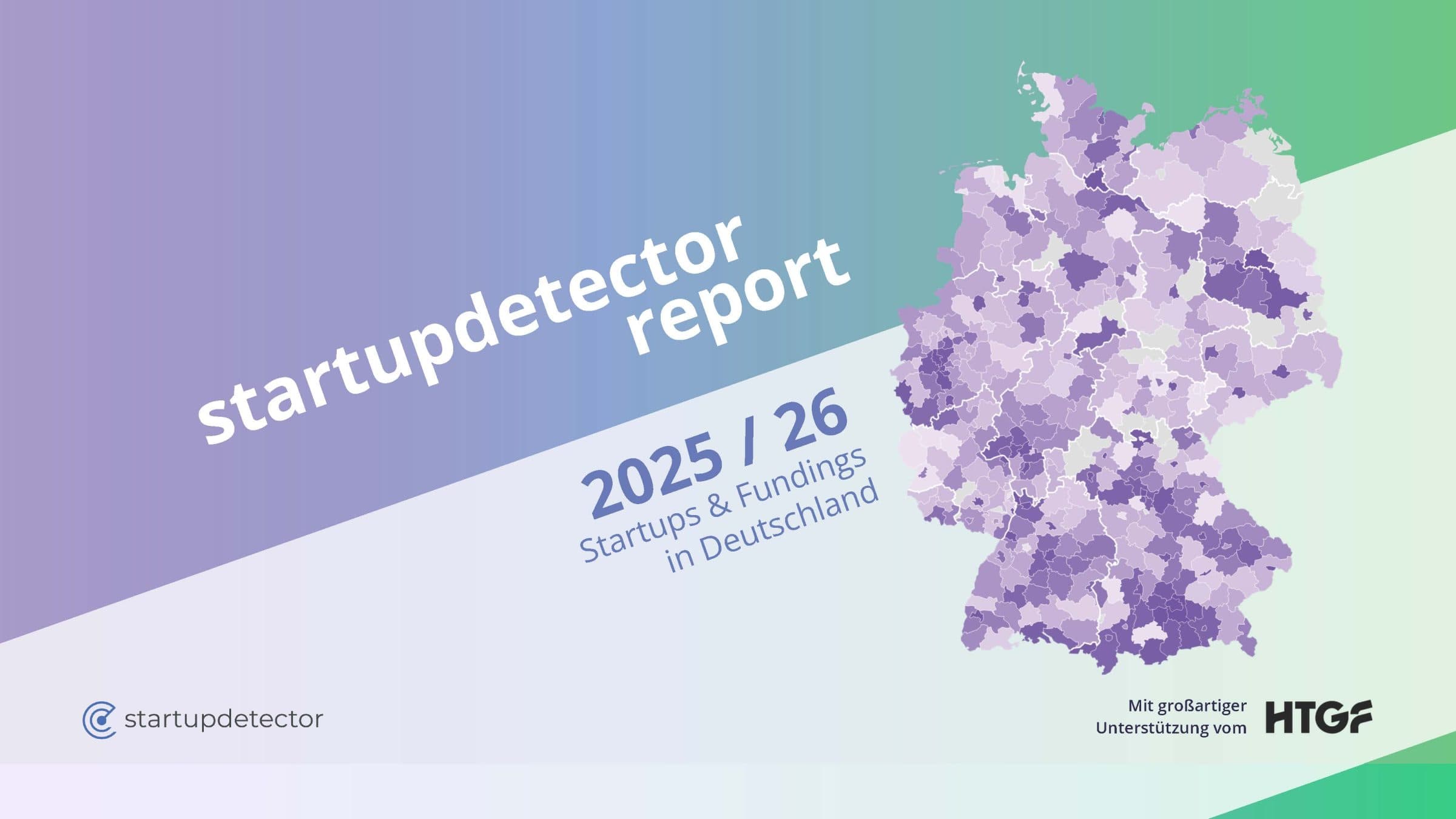
With 3,622 new startups, 2025 surpasses even the previous boom year of 2021 according to the latest Startupdetector Report. This represents growth of 24 percent compared to the previous year. The start of 2026 is particularly dynamic: 1,358 foundings in the first quarter mark a new record high.
Growth drivers at a glance:
- AI startups: share tripled since 2022 to 33 percent
- Software sector: 22 percent of all foundings
- Food & medtech: above-average growth
- SaaS models: 64 percent share in early 2026
Sectors like advertising, education, and HR in particular are benefiting strongly from generative AI and driving additional momentum.
Munich and Bavaria pull ahead
For the Munich ecosystem, these figures are particularly interesting: Bavaria is growing strongly and remains one of Germany’s leading startup centers. The Munich region stands out in particular. By foundings per capita, it now ranks ahead of Berlin and is expanding its lead.
This is mainly due to a mix of strong research, active early-stage investors, and the growing deeptech scene.
More startups, fewer deals
While the number of startups is rising, the opposite is happening on the investor side: the number of funding rounds has declined noticeably in 2025. Why?
Part of the explanation lies precisely in the AI boom:
- Many new startups require less capital
- Investors are taking a more cautious approach
- Focus is more on existing investments
In the first quarter of 2026, there are initial signs of recovery, but whether this is sustainable remains uncertain.
The bigger challenge comes later: growth. Many startups enter the market well, but once it comes to larger funding rounds, it becomes difficult. This is exactly where capital is often lacking in Germany. The result: international investors step in and now lead many growth rounds. But this also means: part of the value creation moves abroad.
Insolvencies rise again
After a temporary reprieve, insolvency numbers are rising again in early 2026. In the first quarter, 105 insolvencies were recorded – an increase of 54 percent compared to the previous quarter.
At the same time, it shows: long-term survival rates are around 75 percent, significantly higher than often assumed – but declining among younger founding cohorts.