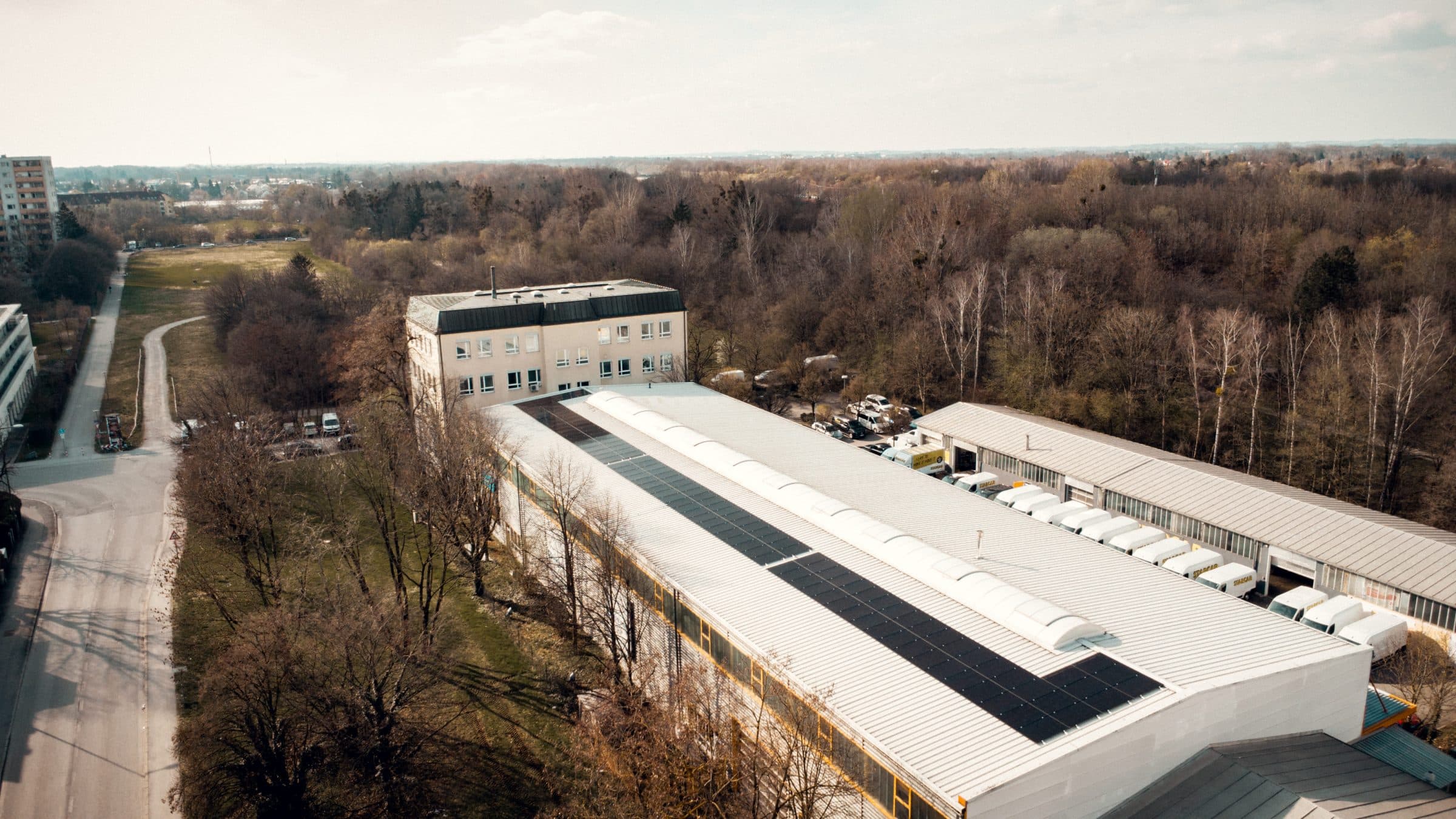

With an innovative energy concept, Solation is setting new standards in supplying commercial real estate with locally generated solar power. On a rented warehouse of technology group Knorr-Bremse, the cleantech company founded in 2023 has installed a photovoltaic system with a capacity of 55.9 kilowatts peak. The company directly consumes 73 percent of the electricity generated on site – emission-free and without routing through the public grid.
This is made possible by a new model of collective building energy supply. In this model, the landlord – in this case Wohnungs-Treuhand GmbH under the management of Dr. Holzmüller – passes the generated solar power directly to tenants in the building. For Knorr-Bremse, this means significantly reduced energy costs, greater planning security, and another step toward sustainable industry.
Solation offers scalable solution for urban commercial locations
According to the trade publication PV Magazine, Solation is considered the first provider of collective building energy supply in the commercial sector. Until now, the tenant electricity model was mainly limited to private residential construction. Solation demonstrates that the principle can also be applied to inner-city commercial real estate. Previously, the sector was considered difficult to tap due to its complexity.
“Industry doesn’t need subsidies – it needs direct solutions. Solar power from your own roof is exactly that”,
explains Sebastian Hugl, CEO of Solation.
The centerpiece of the concept is a patented control technology that functions as a virtual storage system. This makes it possible to use up to 80 percent of the generated solar power directly in the building – without any physical battery storage.
“While others rely on large logistics roofs, we’re making granular, inner-city energy transition scalable”,
Hugl continues.
Recent legislative clarifications are what make this model possible in this form: because the electricity doesn’t flow through the public grid, grid charges and additional surcharges are eliminated. This significantly reduces operating costs – a key advantage for energy-intensive operations like Knorr-Bremse.