
Munich Startup: If you had to name the most important elements that make CDTM so successful – what would they be?
Samuel Valenzuela, CDTM: I think the more important question is: How does CDTM support its students and alumni in being successful? Ultimately, it is their engagement that makes the CDTM what it is. The answer to that is very individual in each case, but some factors undoubtedly play a central role: a strong community with a helpful network, inspiring insights that open up new perspectives, a diverse skill set that goes beyond what you typically learn at university, and like-minded people who are ready to try new things together.
Interdisciplinarity as a foundation for innovation
Munich Startup: You bring together students from different disciplines. What challenges and benefits arise from this interdisciplinary collaboration? And how do you successfully translate this into innovative solutions?
Samuel Valenzuela: Every academic background teaches students to think in a certain way and explore the world. A group of students with different backgrounds is therefore able to have a much more holistic view of the world. It recognizes the siloed knowledge of each person, but also the synergies and overlaps between different fields. The central challenge is that everyone has to learn, to some degree, to speak the language of others in order to exchange ideas effectively. Moreover, most complex problems cannot be solved by looking at them in silos; they require different expertise to be addressed. This is at the heart of problem-solving at CDTM. We always make sure to bring together people with unique and complementary skills.
However, there’s a catch: you have to ensure that people can communicate effectively. An important part of our study program is teaching our students how to collaborate effectively with their colleagues. Beyond that, we strive not just for interdisciplinarity, but for all other forms of diversity. CDTM values unique perspectives and welcomes all kinds of backgrounds and identities.
Munich Startup: CDTM is known for its strong and active community. What measures help ensure that alumni, students, and partners remain connected to the institute in the long term?
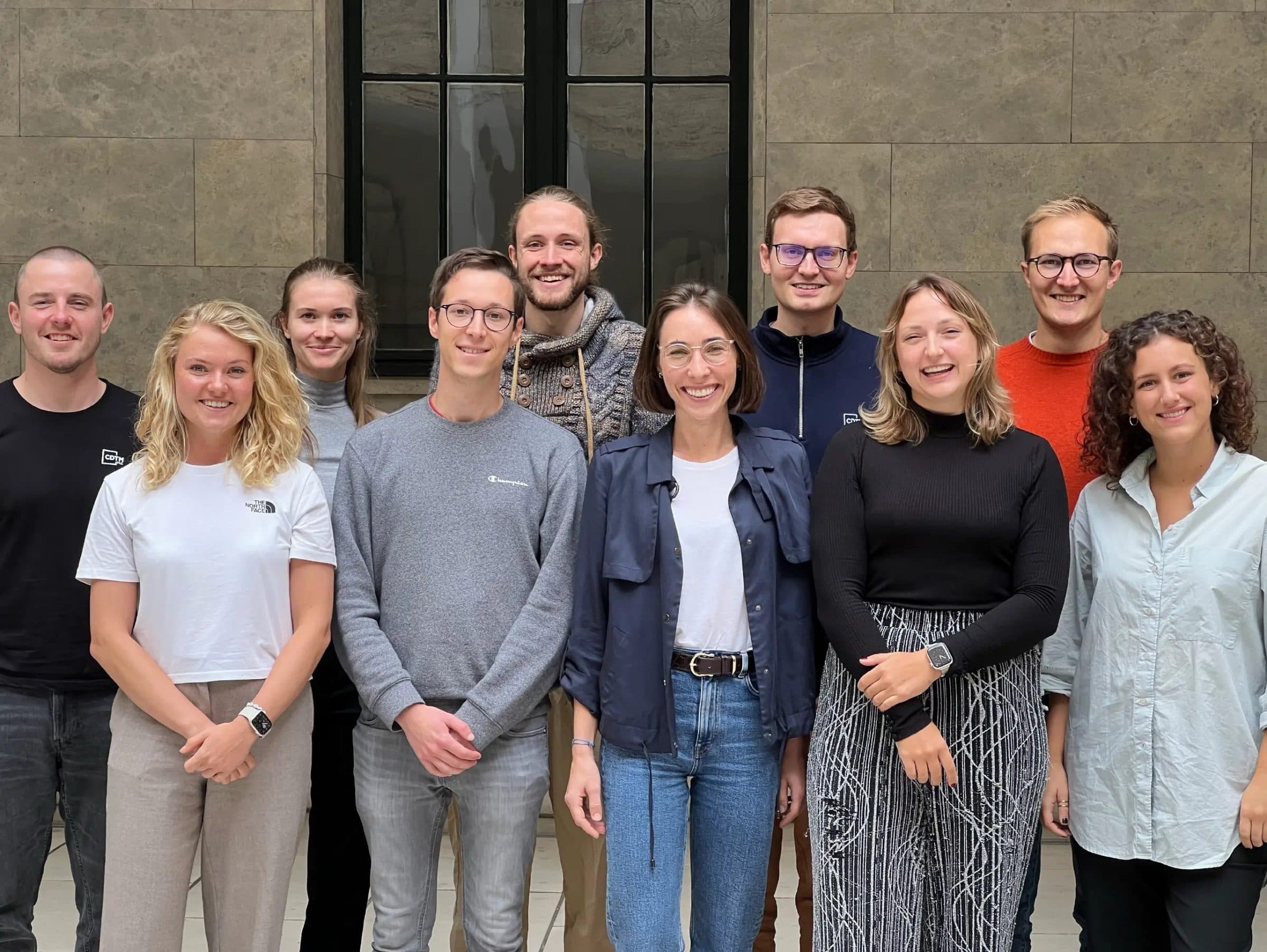
Samuel Valenzuela: Many alumni describe their time at CDTM as very formative. Through intensive time spent together, close friendships often developed in the past. I think this is also due to the cohort principle that we use: CDTM accepts approximately 25 students per semester in one cohort, or so-called ‘class’. This keeps the number of students manageable and often creates a strong bond within each cohort. This close connection to the people who make up CDTM ensures that many alumni feel strongly connected to the program even after they leave. Often this sense of connection – as well as the awareness of CDTM’s special qualities – persists when former students hold decision-making positions in companies or academia.
Munich Startup: Students actively shape CDTM. What advantages does this bottom-up approach bring, and what challenges does it face?
Samuel Valenzuela: Student involvement is an essential part of their educational journey. They feel heard and empowered to implement their ideas, and are supported by the community. This collection of ideas and their results makes the center the vibrant place it is today. Of course, some guardrails help align the ideas, and mistakes will certainly be made. But that’s part of the experience.
Continuous iteration is part of CDTM too
Munich Startup: What measures are you taking to continue promoting entrepreneurship and innovation in the future?
Samuel Valenzuela: Everything we do at CDTM is constantly iterated, rethought, and oriented toward what our community brings to us. The flexibility we have in our offerings – both in our curriculum and beyond – is an important factor. We enable ourselves to follow the interests of students and alumni and thus stay as current as possible. Much of what we do we see as experiments: we constantly try new things and launch small test balloons.
This interview is the second part of a series of articles about CDTM. Read the first part here.