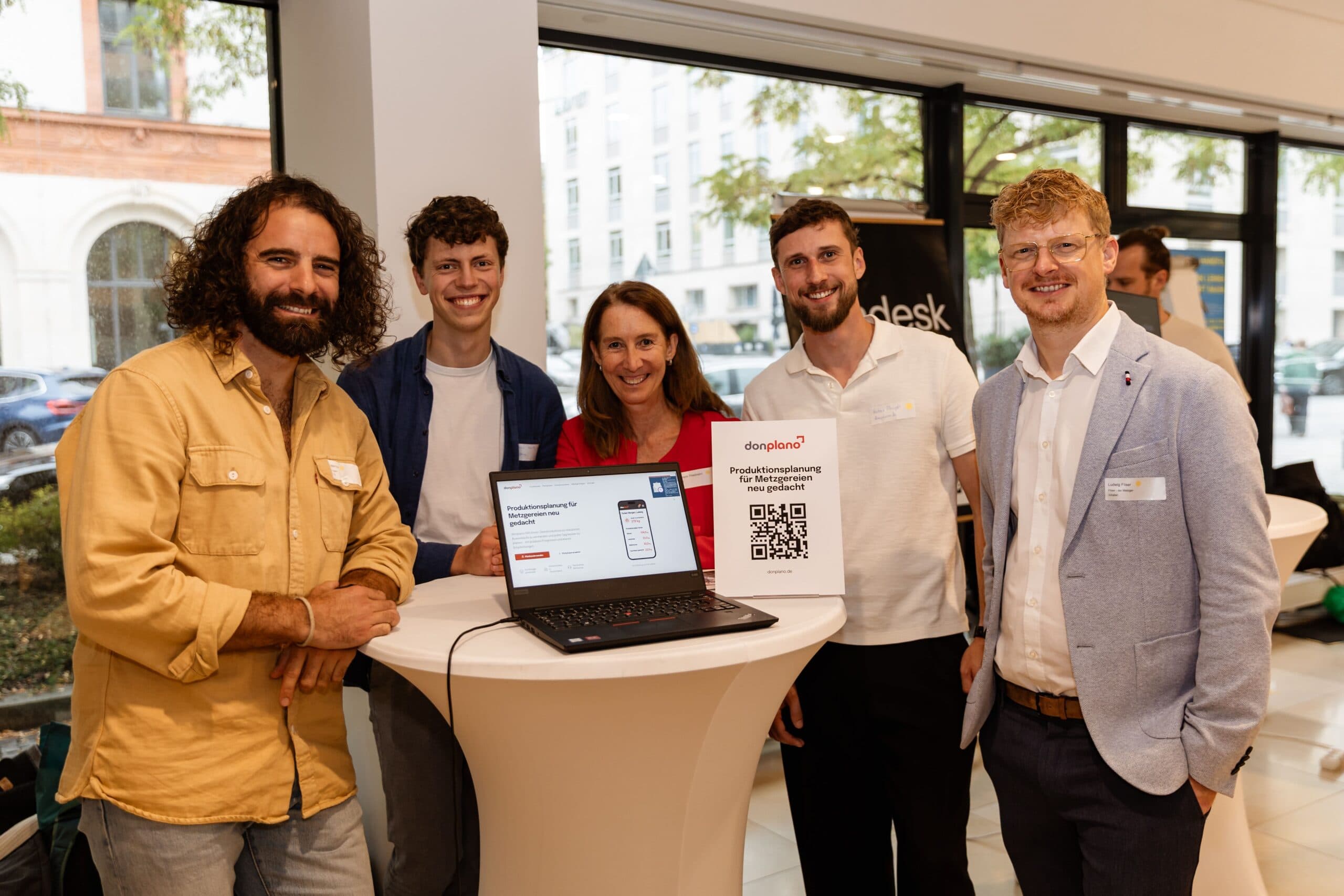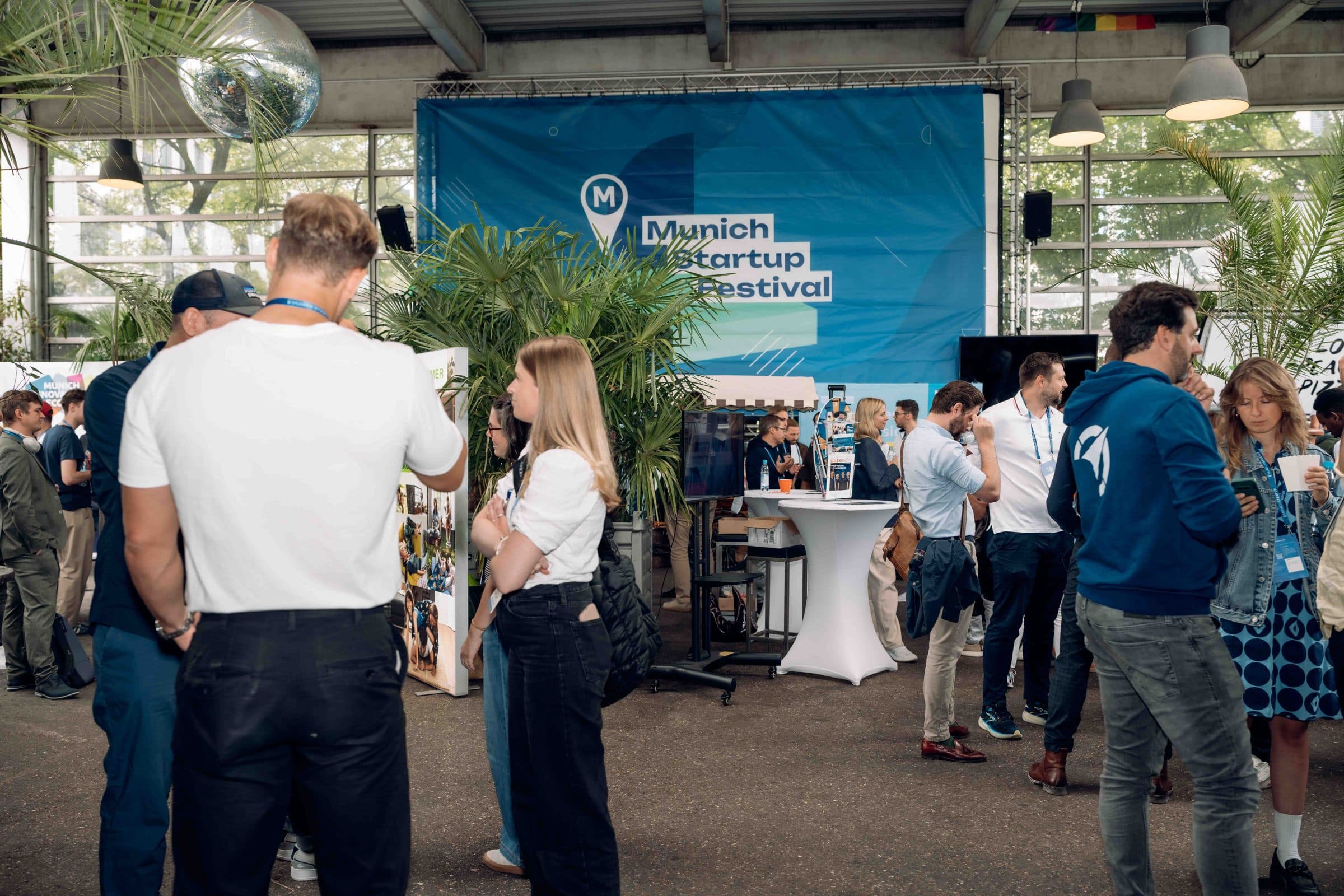

With a diverse program, inspiring speakers and real festival atmosphere, the Munich Startup Festival 2025 excited Startup Munich once again. Whether fresh ideas in pitches, in-depth panels or relaxed networking with live music – the event once again offered space for exchange, inspiration and new contacts. For the third time now, founders and prospective founders equally got their money’s worth at the Backstage.
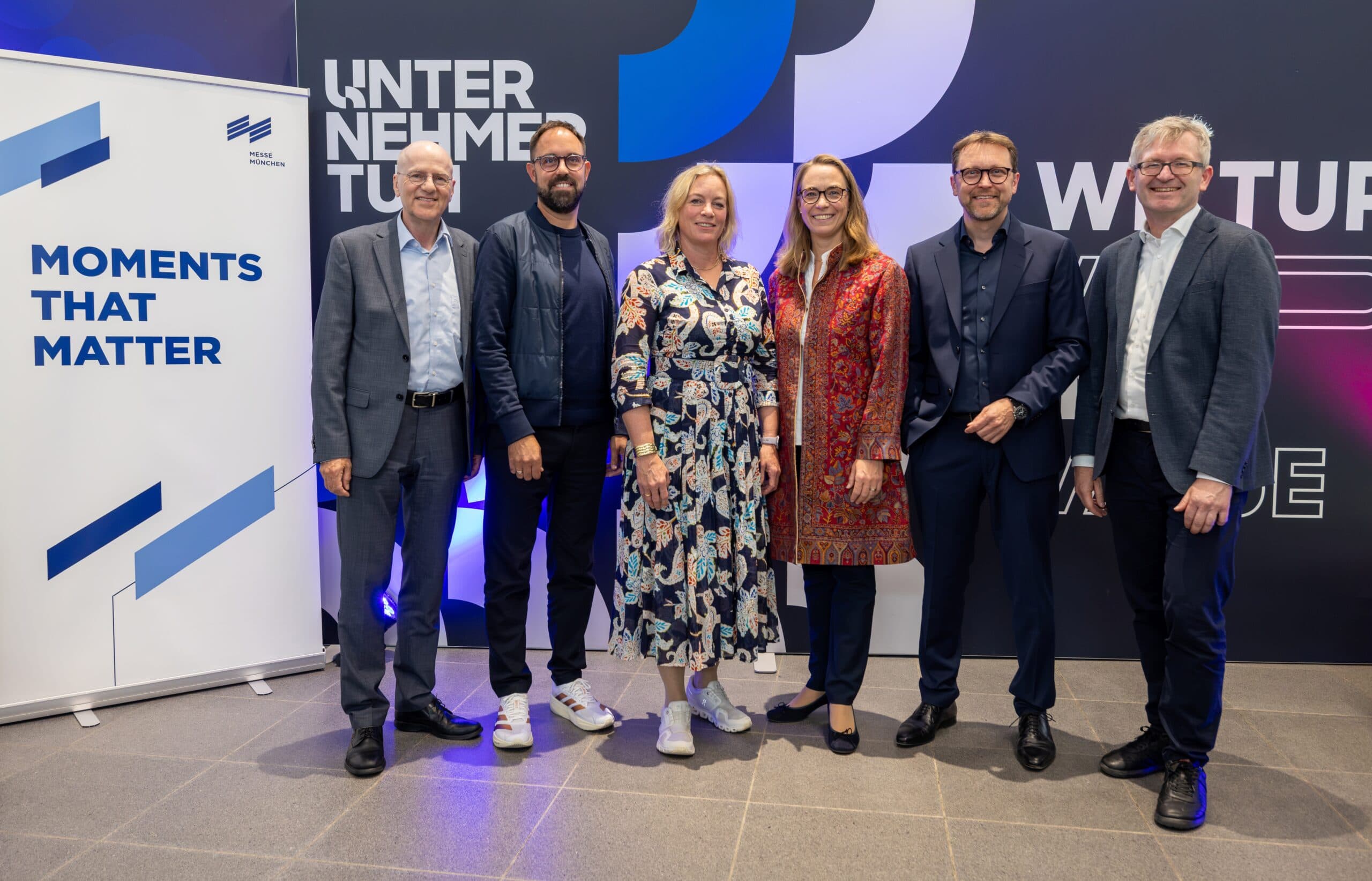
The third Munich Startup Festival was opened by the newly appointed city councilor for labor and economy of the Landeshauptstadt München Dr. Christian Scharpf and Arno Eggers, head of Munich Startup. The councilor pointed out that times were not easy for startups. That is why he considered events such as the Munich Startup Festival all the more important as a platform for mutual support, new ideas and contacts. Eggers drew attention to a special milestone:
“We’re not just celebrating three years of Munich Startup Festival, we’re also celebrating ten years of Munich Startup. A decade ago, the platform set out to bring more transparency to Munich’s startup ecosystem.”
Innovations for greater security
In the first panel of the day, experts provided insights into the defence tech industry, which is becoming increasingly relevant for startups. It became clear: it’s about far more than weapons. Cyber defense, civil protection and improved medical care for soldiers are also areas in need of innovation. Stephanie Wissmann, co-founder of Secublox, emphasized that the increasing blurring of civilian and military use cases should be considered. Felix Kästner, co-founder of Based, also confirmed that technologies need to be developed away from dual-use toward omni-use cases. For startups, the German Armed Forces are still a challenging partner, explained Julian Werner, officer of the Army’s Specialized Forces EGB and researcher at the Universität der Bundeswehr München, as there are still no processes for this. Nevertheless, startups must find their place in defence sector innovation efforts. Defence & deeptech investor Quirin Herz advised startups to start on the corporate side and then expand the business case toward potential military applications.
What foundations need to be laid now to ensure Munich’s future looks innovative? This was the question addressed by Dr. Fabian Mehring, state secretary for digitalization, city councilor for economics Christian Scharpf and Bernhard Kowatsch, head of the Innovation Accelerator of the United Nations World Food Programme (WFP). The panel was moderated by Frizzi Engler-Hamm, CEO at Munich Innovation Ecosystem. The panelists agreed: we are in the midst of a technological turning point where we must not just watch but actively shape things. This also requires the right framework conditions for startups and scaleups to keep them in the city. In addition to much that is already working well in Munich according to their view – including corporates and talent – there are still concrete areas with clear room for improvement. Issues of over-regulation and financing were particularly highlighted. Mehring advocated positioning Munich as a true world-class city to attract the best talent from around the world.
How startups can shape the future of care was discussed by Brigitte Bührlen, founder and chair of the Wir! Foundation for Caregiving Relatives, Rafael Hostettler, CEO and founder of Devanthro, Nicolai Heinzelmann, operational director TUM Venture Labs Healthcare and Dieter Weber, managing director & lead startup & scaleup unit of Barmer Munich. While Hostettler described how his company’s humanoid robots can be used as everyday companions for people requiring care, Bührlen emphasized how important it is in the care sector for innovators to exchange ideas with actual users about their real needs. Contrary to common prejudice, health insurance companies are very open to new technologies, Weber explained. Barmer recently launched its own innovation portal, which he encouraged people to use.
Call for European cooperation
The panel “Local roots, national trends, global opportunities” aimed to take a broader look at Munich’s ecosystem. Where does Munich stand – in national and international comparison? Nationally, the panelists Stefan Drüssler, managing director and chief operating officer at UnternehmerTUM, Magdalena Oehl, founder of Talentrocket and deputy chairwoman of the Startup Association, Axel Täubert, head of startups Google Cloud and Munich Startup director Arno Eggers quickly agreed – Munich has already reached the top and left Berlin behind. Now it’s about positioning the location internationally as well. Drüssler particularly emphasized the importance of Europe. Europe needs to collaborate at the startup level and significantly simplify access to all markets for European startups.
The Munich Startup Festival 2025 once again demonstrated how vibrant and diverse Munich’s startup scene is. With new impulses, exciting encounters and an eye toward the future, the event remains a fixed date in the calendar of the innovation community. We’re already looking forward to the next edition!