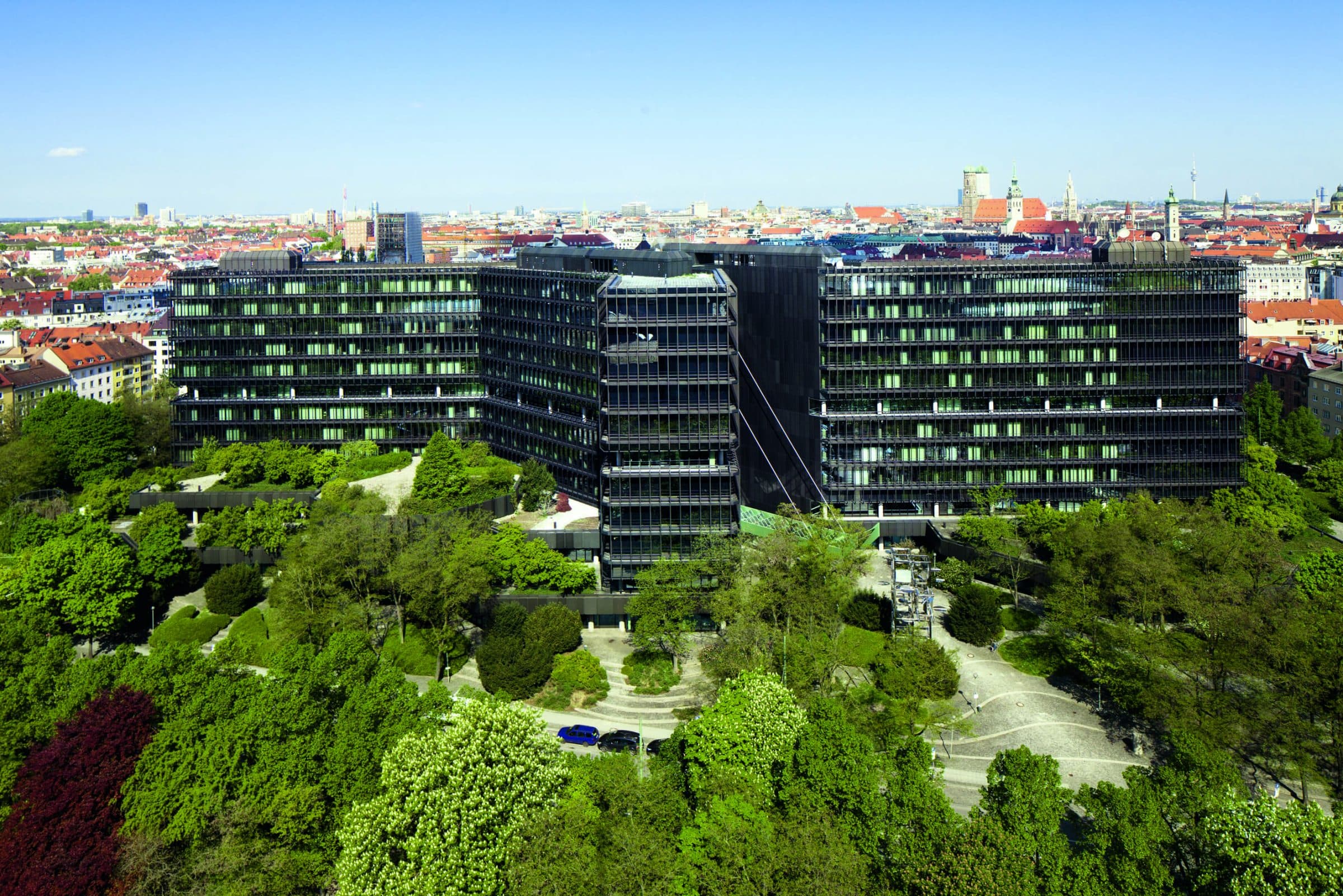

The European Patent Office (EPO) recorded a record year in 2025 with over 200,000 applications, while Germany remains the second-strongest country of origin worldwide with 24,476 patents. This is particularly relevant for Munich, as Bavaria leads the state rankings and the city maintains its position as Europe’s most important patent metropolis.
nnnnMunich as Europe’s “patent capital”
nnnnThe most striking finding of the current EPO Technology Dashboard 2025: Munich is not only Germany’s leading patent location, but also the city with the most patent applications across Europe. This keeps the region a central hub for industrial research, deeptech innovations, and technology-driven business models.
nnnnThe fact that Bavaria with 6,628 patent applications (27.1 percent of total German volume) ranks second across Europe (preceded only by Île-de-France) underscores the structural strength of the Munich ecosystem. In addition to large corporations and research institutions, startups also benefit from this, particularly in the deeptech sector.
nnnnThis special position results from the unusually dense integration of global industrial corporations like Siemens, BMW, and Infineon with leading research institutions such as the Fraunhofer Society, the TU München, and LMU, combined with a simultaneously rapidly growing deeptech startup ecosystem. This combination ensures that patents are not only filed, but also economically exploited – often through spin-offs or close cooperation with startups.
nnnnTechnology trends: relevance for Munich startups
nnnnThe strongest growth area with direct startup relevance is computer technology. Particularly dynamic developments are occurring in artificial intelligence (+9.5 percent across Europe), quantum technologies (+37.9 percent), and semiconductors (+7.6 percent). Munich is regarded as one of Europe’s most important locations for these technologies and brings together numerous startups from these sectors, such as in the AI environment around Applied AI and the TU München, in quantum computing with companies like Planqc or IQM Germany, and in the semiconductor and deeptech segment with players like Fazua or Celus.
nnnnAnother key area is the technology field of electrical machinery, equipment, and energy, which grew by 5.3 percent and is gaining momentum particularly through advances in battery technology (+14.6 percent). This development is particularly relevant for Munich startups in the climatetech, energy infrastructure, and e-mobility sectors, which benefit from the increasing innovation activity and associated market opportunities.
nnnnDespite a decline, Germany remains a leader in the transport sector (17.6 percent share in Europe). For Munich, this concretely means, in addition to strong proximity to automotive innovations and important interfaces for mobility startups, continued high patent activity among suppliers and OEMs (original equipment manufacturers).
nnnnWho dominates the patent scene?
nnnnAmong the top filers are primarily large corporations. Globally, companies like Samsung, Huawei, and LG are leading the way. In Germany, big names like Siemens (rank 6) and BASF (rank 8) dominate. The Fraunhofer Society is considered Europe’s leading research institution. A particular specialty for Munich is that the Fraunhofer institutes and corporate headquarters on site act as technology providers and spin-off drivers for startups.
nnnnUnitary patent gains importance – opportunity for startups
nnnnThe unitary patent, introduced in 2023, achieves a usage rate of 28.7 percent in 2025, and in Germany it is even higher at 37.6 percent. For startups, this means significantly simplified patent protection in up to 18 EU states, lower costs and less bureaucratic effort, as well as better conditions for rapid scaling of technology-driven business models in the European market.
n