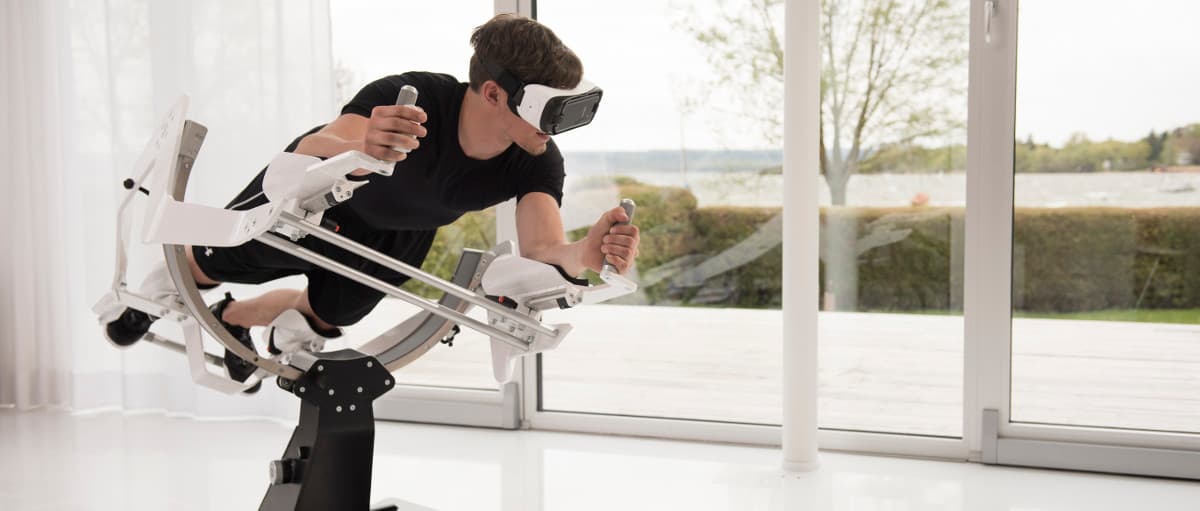

In der virtuellen Realität fliegen und dabei an der eigenen Fitness arbeiten – klingt zu schön, um wahr zu sein? Das Münchner VR-Fitnessgerät ICAROS sorgt auf Messen und Events für Staunen und Begeisterung. Hype oder echte Innovation: Was ist dran an ICAROS?
Über mangelnde Aufmerksamkeit kann sich das Münchner Unternehmen derzeit nicht beklagen: Das Unternehmen wurde in die Top-7-Startups des Pioneers Festivals gewählt, erhielt eine Honourable Mention vom renommierten Designpreis RedDot Award, ist Brandnew Overall Winner der ISPO, nominiert für den German Design Award und belegt den zweiten Platz beim Fitness-Preis FIBO Innovation & Trend Award. Große Unternehmen schmücken sich zu Marketingzwecken mit gebrandeten ICAROS-Geräten. Samsung führt seine Virtual-Reality-Brille Gear VR mit dem Fitnessgerät vor. Man findet das Münchner Startup auf der EXPO in Mailand, WIRED in London, CES in Las Vegas, der CeBIT in Hannover, SXSW in Austin und ab heute auf der gamescom in Köln. Und das alles wohlgemerkt in nur einem Jahr. Woher rührt der Hype?
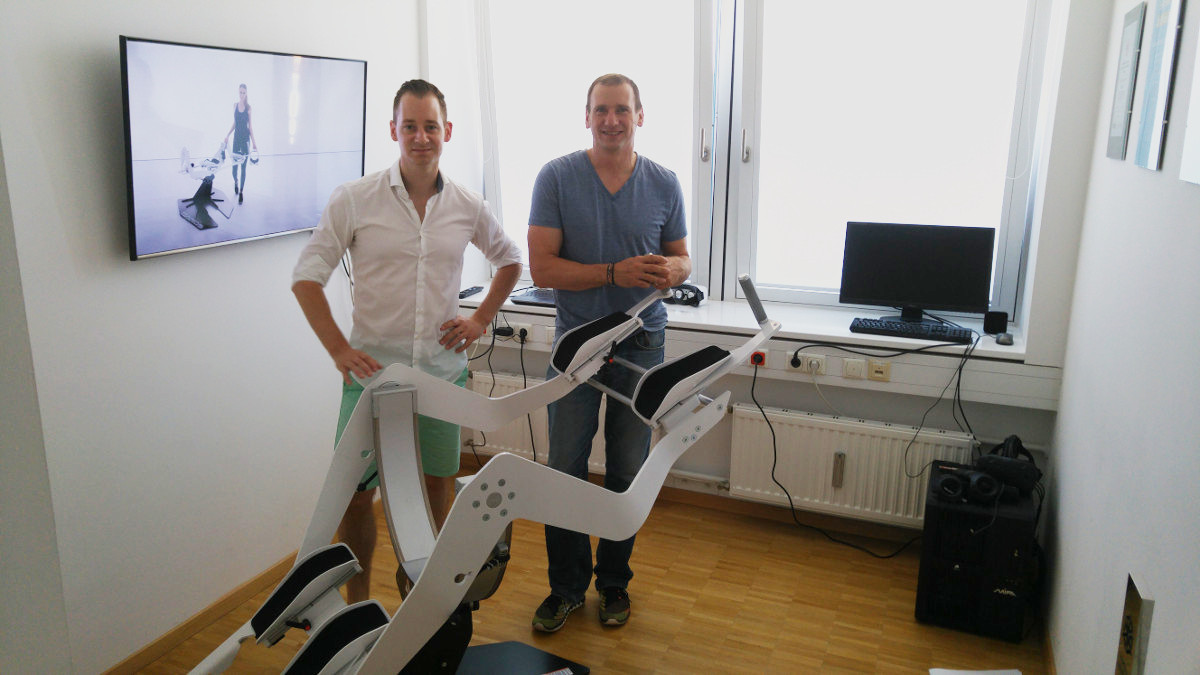
Johannes Scholl (l.) und Michael Schmidt (r.) im Gespräch mit Munich Startup.
Die Frage beantwortet sich schnell, sobald man auf dem ICAROS liegt. Das Gerät ist sowohl längs als auch quer frei beweglich. Die Schienbeine und Unterarme des Nutzers liegen auf, das Gleichgewicht hält man in der sogenannten Planking-Position durch die eigene Körperspannung. In der VR-Brille fliegt man über eine Landschaft, durch Verschieben des Schwerpunktes steuert man den Flug. Dabei das Gleichgewicht zu halten, ist wirkliche körperliche Arbeit.
-
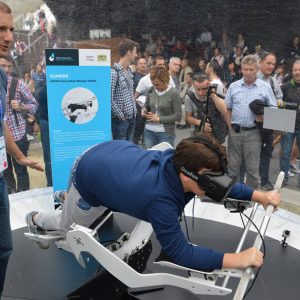
- Im Oktober 2015 präsentierte ICAROS seinen damaligen Prototypen auf der EXPO 2015 in Mailand. (Foto: ICAROS)
-
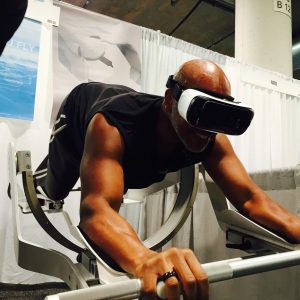
- Zum Jahresbeginn 2016 war das VR-Sportgerät auf der CES in Las Vegas zu sehen. (Foto: ICAROS)
-
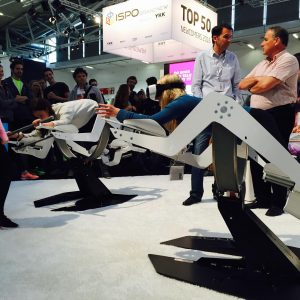
- Bei der Sportmesse ISPO im Januar 2016 wurde das Unternehmen als Brandnew Overall Winner ausgezeichnet. (Foto: ICAROS)
Alles wirkt stimmig und robust. Das Design gefällt, die VR-Erfahrung beeindruckt und macht Spaß. Vor allem aber strengt der Flug richtig an. Man hat das Gefühl, etwas für die Fitness zu tun. Kurzum: Hier scheint schlicht das Produkt den Hype zu rechtfertigen. Man meint dabei, dem Fitnessgerät den Enthusiasmus seiner Erfinder anzumerken.
Vom Design-Entwurf zum funktionierenden ICAROS-Prototypen
Gegründet wurde das Unternehmen von Johannes Scholl (29) und Michael Schmidt (49), beide sind Industriedesigner. Das Startup ist eine Ausgründung der Münchner Innovationsagentur HYVE. Michael Schmidt startete HYVE vor 15 Jahren, Johannes Scholl absolvierte bei der Agentur 2011 ein Praktikum. Die beiden hatten damals die erste Idee zu ICAROS, designten erste Entwürfe am Computer. Scholl sagt rückblickend:
„Wir wollten ein Fitnessgerät bauen, das ein ganz besonderes Gefühl vermittelt. Das war für uns der Menschheitstraum Fliegen. Und von technischer Seite war klar: Das können wir nur mit Virtual Reality umsetzen.“
-
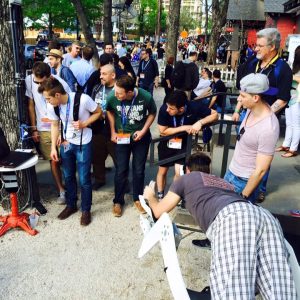
- Besucher der SXSW in Austin, Texas konnten im März 2016 einen Testflug vor dem German Haus unternehmen. (Foto: ICAROS)
-
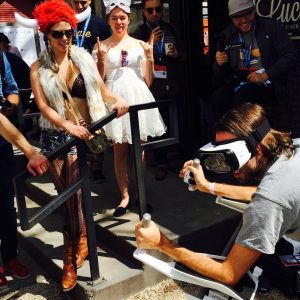
- Das Gerät ist hier schon zur Serienreife entwickelt. (Foto: ICAROS)
An eine Realisierung dachten die beiden zunächst aber nicht. VR-Brillen waren damals noch Zukunftsmusik. Dementsprechend war es zunächst ein Spaßprojekt der Gründer an Wochenenden und Feierabenden. Ein erster Entwurf sah dem Anzug von Iron Man ähnlicher als dem heutigen Gerät, erzählt Scholl:
„Der erste ICAROS war ein Design-Konzept – Future Studies. Wir dachten: Vielleicht kommt ja einmal Virtual Reality und dann machen wir das. Dass es anderthalb Jahre später wirklich so weit war, konnten wir damals nicht ahnen.“
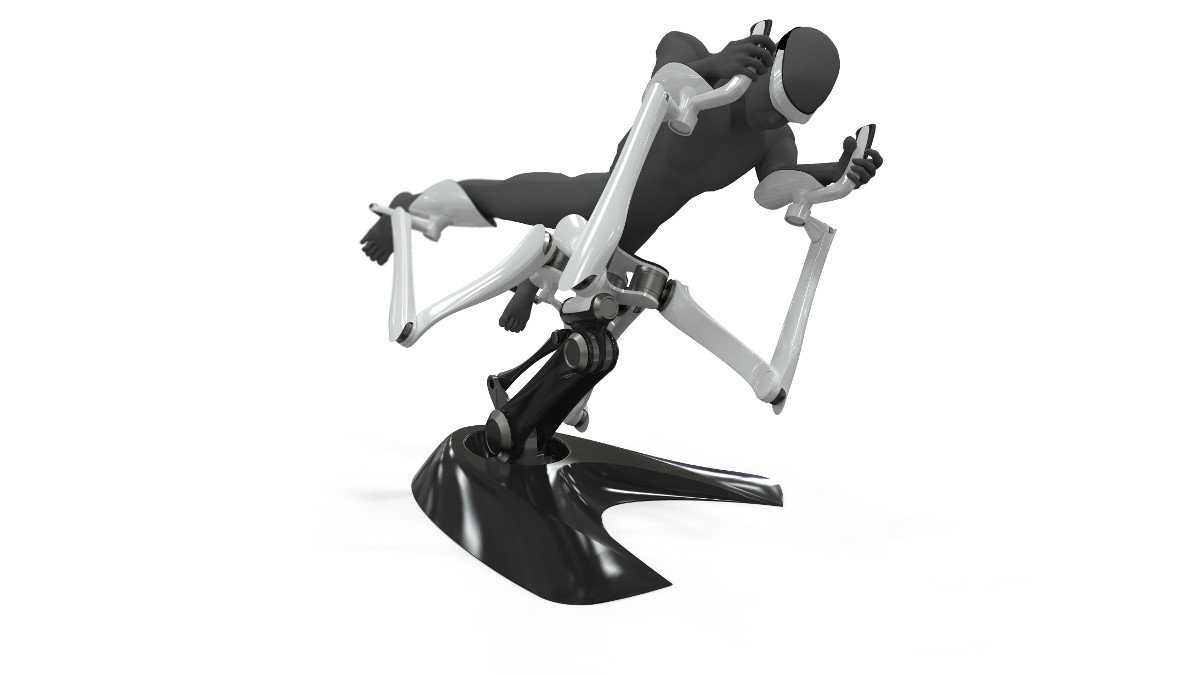
Der erste Design-Entwurf (Bild: ICAROS)
„Die Leute sind ausgeflippt“
Nachdem die ersten Virtual-Reality-Brillen als Entwicklerversionen erhältlich waren, haben die Gründer ihre Chance ergriffen und einen Prototyp mit einer frühen Version der Oculus Rift gebaut. Im Mai 2015 gingen sie damit auf der Digitalkonferenz Re:Publica in Berlin an die Öffentlichkeit. Die Resonanz war enorm, hunderte Besucher wollten die VR-Flugmaschine ausprobieren:
„Die Leute sind ausgeflippt und fanden es total geil.“
-
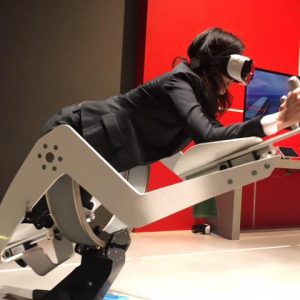
- Auf der CeBIT im März 2016. (Foto: ICAROS)
-
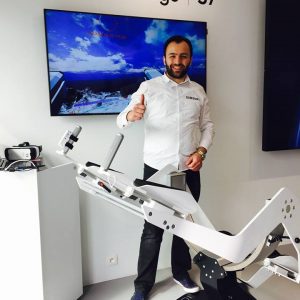
- Samsung führt seine Brille Gear VR in Antwerpen vor – mit ICAROS. (Foto: ICAROS)
-
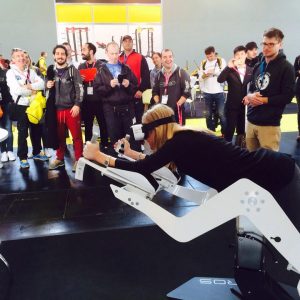
- Auf der Fitness-Messe FIBO wurde das Startup mit dem 2. Platz beim FIBO Innovation & Trend Award ausgezeichnet. (Foto: ICAROS)
Nach der positiven Resonanz, beschlossen Scholl und Schmidt, das Gerät zur Marktreife zu bringen. Sie gründeten dazu die ICAROS GmbH als Tochter von HYVE. Zur genauen Gesellschafterstruktur halten die Gründer sich bedeckt:
„Nur so viel: Wir sind alle happy.“
Das junge Unternehmen konnte aus dem Stand loslegen, erzählt Mit-Gründer Michael Schmidt:
„Über unsere Tätigkeit bei HYVE kannten wir die richtigen Leute. Wir hatten die Connections und das Netzwerk, um ein Produkt zu bauen, das aus sehr komplexer Mechanik und einer eigenen Elektronik und Software besteht. Schon als wir angefangen haben, wussten wir, wer für uns die Platinen bestückt, wer die Prototypen baut.“
Das Netzwerk besteht vor allem aus etablierten mittelständischen Unternehmen. Die gesamte Produktion findet in Deutschland statt: Die Geräte werden im Allgäu gefertigt, die Elektronik kommt aus Düsseldorf, die Gehäuse aus Nürnberg. Auf den unterschiedlichen Messen und Events, auf denen das Startup seine Prototypen präsentierte, probierten über 3.000 Tester das Gerät aus: Darunter Tech-Begeisterte, Fitness-Experten, Therapeuten und Gamer. Deren Feedback floss in die Weiterentwicklung ein.
-
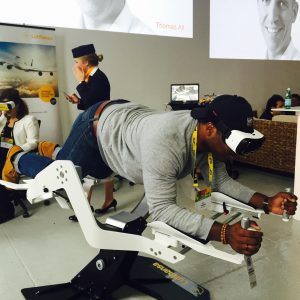
- New York, New York: ICAROS beim New Yorker Spin-Off der DLD-Konferenz. (Foto: ICAROS)
-
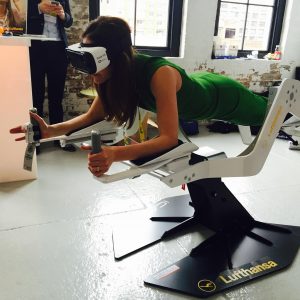
- Große Firmen wie die Lufthansa nutzen das Fitness-Gerät, um auf der VR-Welle mitzuschwimmen. (Foto: ICAROS)
Schon vor einigen Monaten hat ICAROS Serienreife erlangt: Seit April dieses Jahres liefert das Unternehmen Geräte an seine Kunden, insbesondere Fitness-Studios, aus.
Neue Geräte, neue Zielgruppen, neue Spielewelten
Die Zukunft ihrer Firma sehen die Gründer in einer wachsenden Produktpalette mit Geräten für unterschiedliche Anwendungen, so Schmidt:
„Wir haben Geräte im Kopf, die beim Marktpreis erschwinglich anfangen und dann weit über 15.000 Euro gehen. Diese würden bei der physischen Belastung die Fähigkeiten des aktuellen Modells weit übertreffen.“
Eine wichtige Zielgruppe bleiben auch zukünftig Fitness-Studios. Parallel dazu entwickelt das Startup auch eine Heimtrainer-Variante, die der Nutzer nach der Lieferung selbst montieren kann. Als Verkaufspreis für die Fitness-Studios peilt das Unternehmen 7.500 Euro an, der Heimtrainer soll rund ein Drittel kosten. Auch das Spielerlebnis soll sich weiter entwickeln. Eine Unterwasserwelt ist bereits in Planung und auch eine Plattform für externe Software-Entwickler angedacht. Die beiden Gründer testen im Moment einen neuen Multiplayer-Modus:
https://www.youtube.com/watch?v=fYtYcn4–yc
In Gesprächen mit Physiotherapeuten ergaben sich weitere Anwendungsmöglichkeiten und Zielgruppen: Der ICAROS könnte die Arbeit in Reha-Kliniken unterstützen, etwa bei der Mobilisierung von Schlaganfallpatienten oder bei der Physiotherapie von Sportlern. Erste Versuche laufen, erzählt Schmidt und sagt:
„Das sind natürlich noch Experimente. Wir wollen aber nicht ausschließen, dass wir zukünftig vielleicht spezialisierte Therapiegeräte anbieten werden.“
Ein Gerät steht im Moment bei den Sportwissenschaftlern der TU München. Diese machen Messungen, wollen die Effekte des Trainings mit ICAROS vermessen und quantifizieren: Welche Muskelgruppen werden angesprochen, wie viele Kalorien verbraucht? Ab Ende August beginnt auch die Sporthochschule Köln mit eigenen Tests.
Im nächsten Schritt soll das Team wachsen und die Produktion des aktuellen Geräts hochgefahren werden. Die Nachfrage jedenfalls sollte kein Problem sein. Wir wären nicht überrascht, den ICAROS demnächst vermehrt in Fitness-Studios, Büros, Hobby-Kellern und Wohnzimmern zu finden.