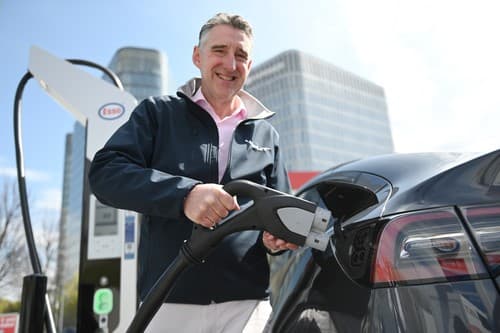

With its fast charging stations, Jolt Energy relies on battery storage that is intended to supplement existing low-voltage networks in cities. They provide additional energy for the charging process and enable charging electricity for up to 100 kilometers of range in five minutes. The charging stations deliver power of up to 320 kW. In this way, the startup aims to enable the construction of fast charging infrastructure without major interventions in the power grid.
In the coming years, the startup plans to install thousands of fast charging stations in European and North American cities. This is made possible by the completion of a funding round with Infrared Capital Partners, an international infrastructure investment company. The investor has invested 150 million euros in Jolt through a capital allocation to support the company’s growth.
Maurice Neligan, CEO of Jolt, says:
“With Infrared, Jolt has found a financing partner that supports the development of forward-looking infrastructure and paves the way for decisive change in e-mobility. Our ultra-fast charging stations with powerful battery storage are the missing link to accelerate the energy and transport transition in cities. These charging systems are essential for city residents to unlock the full potential of electric vehicles.”
Jolt aims to facilitate the spread of electric vehicles
Stephane Kofman, Partner and Head of Capital Gain Funds at Infrared, adds:
“Investing in fast charging infrastructure for electric vehicles aligns with our approach to supporting a low-carbon future. Infrared has long-standing experience with investments in renewable energy and batteries. With our investment in Jolt, we are focusing on a sector with attractive growth potential. Expanding the network with ultra-fast charging stations will facilitate the spread of electric vehicles. We are proud to work with Jolt and do our part in decarbonizing transport.”
Jolt plans to cooperate with both cities and commercial facilities such as supermarkets, restaurants, and gas stations to install charging stations at central locations for electric vehicle drivers. In first German cities, the startup founded in 2018 already has locations in operation, with another 100 to follow by the end of the year.