
Die Orthopädietechnik ist eigentlich ein Handwerk. Viele Neuerungen der letzten Jahrzehnte führten jedoch dazu, dass immer mehr standardisierte Teile verwendet wurden. Das Münchner Startup Mecuris, ein Spin-off des Uni-Klinikums der LMU, möchte hier einen anderen Weg gehen: Mit Hilfe einer cloud-basierten Plattform sollen Ärzte und Orthopädietechniker befähigt werden, Prothesen und Orthesen zu erstellen, die wieder eines in den Fokus stellen: Die Individualität jedes einzelnen Patienten.
Orthopädische Hilfsmittel mit nur sechs einfachen Arbeitsschritten, eine deutlich verkürzte Produktionszeit und eine 100% individuelle Anpassung – mit diesem Ansatz möchte Mecuris den Orthesen- oder Prothesenmarkt verändern. Einem Markt mit Wachstumspotential: Allein in Deutschland hat sich der Umsatz in den letzten 20 Jahren auf mehr als 1,8 Mrd Euro im Jahr 2015 verdoppelt. Experten sehen die Gründe dafür im demographischen Wandel und Zivilisationskrankheiten wie Diabetes. Aussichten, die auch den Hightech-Gründerfond und Bayern Kapital überzeugen konnten: Mecuris erhielt in einer Seed-
Finanzierungsrunde von den beiden renommierten Investoren Ende letzten Jahres einen hohen sechsstelligen Betrag.
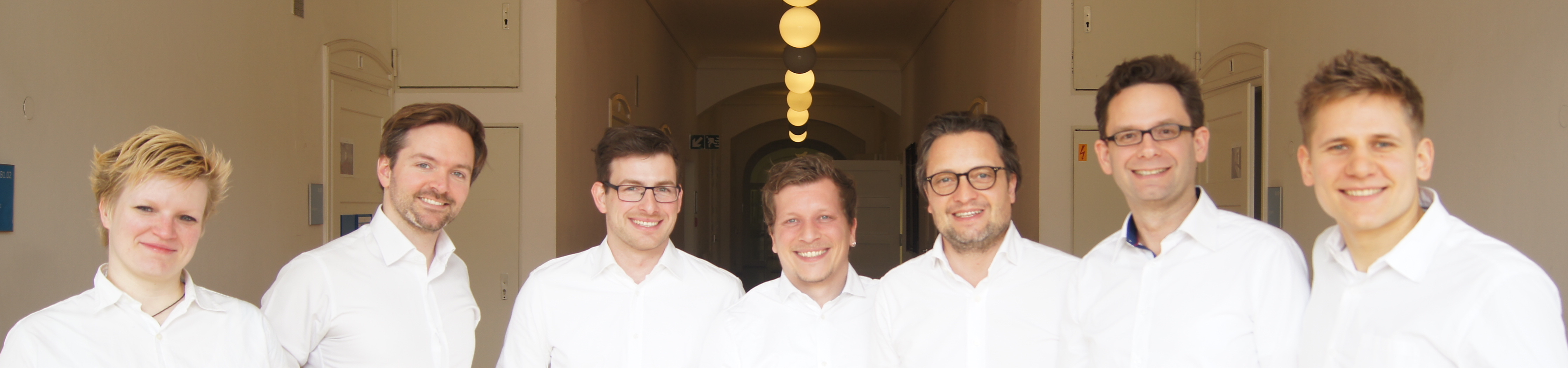
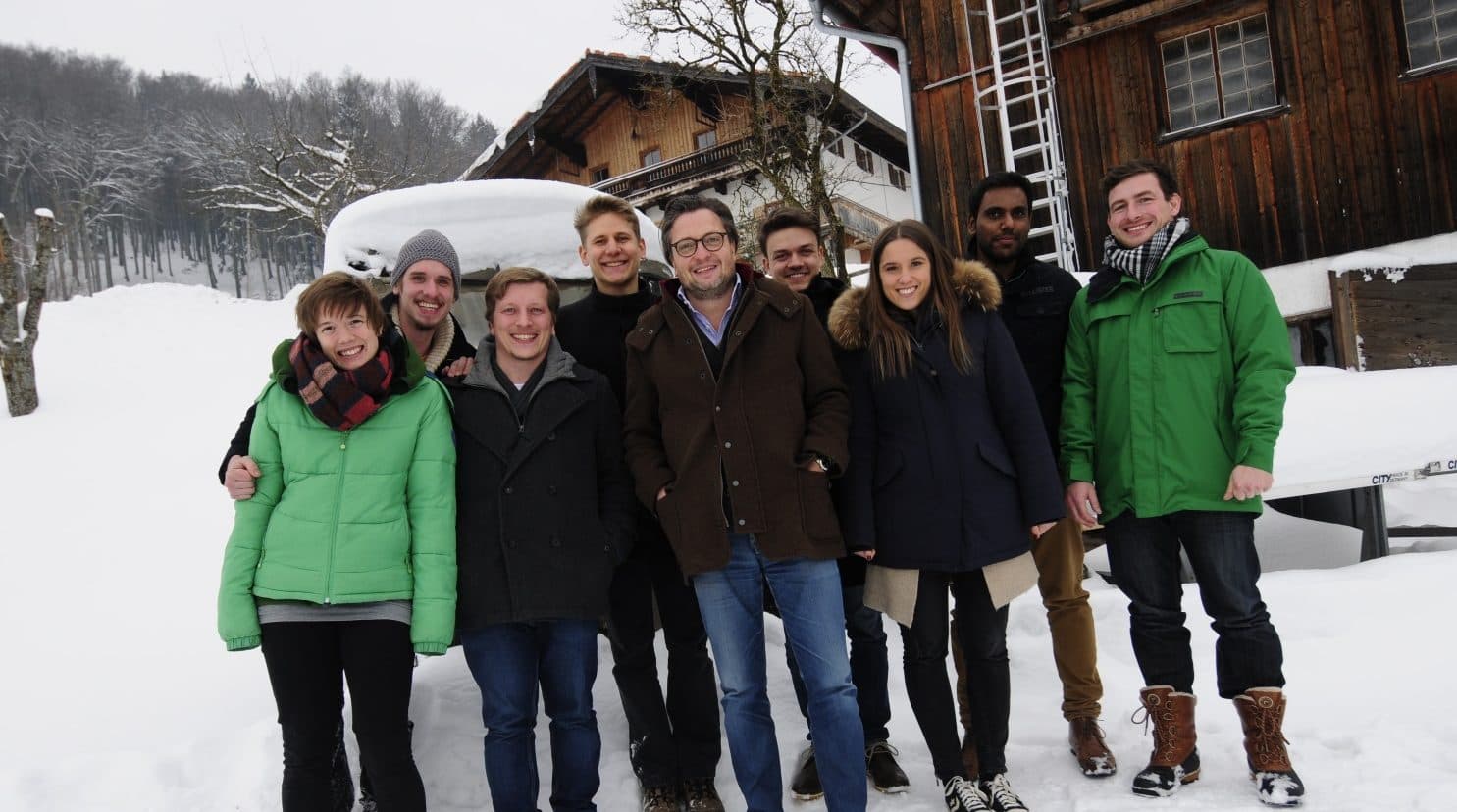
Produktenwickler, Informatiker, Facharzt: Das Mecuris-Team ist gut aufgestellt (© Mecuris)
Prothesen leicht gemacht: Wie funktioniert’s?
Die cloud-basierte Lösung von Mecuris passt Konstruktionsdaten der zu fertigenden Orthopädietechnik mit Hilfe künstlicher Intelligenz und medizinischer Bildverarbeitung-Verfahren automatisiert an die Anatomie des Patienten an. Wichtig: Ärzte und Orthopädietechniker brauchen keine besonderen Kenntnisse in der CAD-Konstruktion oder im 3D-Druck. Vielmehr laden sie das digitale Patientenbild — CT, Scan oder Fotos — im Konfigurator hoch und geben der Mecuris-Software damit die notwendigen Daten, um eine 3D-Anatomie des Patienten zu erstellen. Diese kann noch individualisiert und mit Hilfe eines Mecuris-Technikers nach Kundenwünschen angepasst werden. Hier spielen individuelle Wünsche eine Rolle, wie beispielsweise, ob das orthopädische Hilfsmittel eher modern oder natürlich aussehen soll oder ob der Träger eher sportlich oder bequemer unterwegs ist. Das druckfertige 3D-Design wird anschließend an ein zertifiziertes 3D-Druckzentrum in der Nähe des Auftraggebers übermittelt – und produziert!
Die Idee, Prothesen und Orthesen drucken zu lassen, ist nicht neu. Womit können sich die Münchner also von der Konkurenz absetzen. Manuel Opitz, CEO des Unternehmens, ist sich sicher:
„Wir gehen in Sachen Qualität einen deutlichen Schritt weiter und sind die weltweit ersten, die medizinisch zugelassene, 3D-gedruckte Bein- und Fußprothesen anbieten.“
Der Zertifizierungsprozess dieser Prothesen hat insgesamt 4 Monate in Anspruch genommen. Eine Zeit, die allerdings sinnvoll investiert ist, erklärt Manuel:
„Die Sanitätshäuser als unsere Kunden forderten aufgrund einer gesunden Skepsis gegenüber dem 3D-Druck wiederholt eine CE-Konformität unserer hochbelasteten Prothesen. Daher beschlossen wir im Herbst 2016, diese anzugehen und vor dem Launch unserer Onlineplattform im April 2017 fertig zu stellen.“
Die CE-Konformität erfordert drei große Schritte: Zuerst muss eine umfangreiche technische Dokumentation erstellt werden. Zweitens muss eine klinische Bewertung erfolgen. Und drittens muss man bei Bein- und Fußprothesen einen mechanischen Dauer- und Maximallastest bestehen. Das Ergebnis: Mecuris sind die ersten und aktuell einzigen weltweit, die diesen Testzyklus entsprechend der Norm DIN EN ISO 10328:2016 mit 3D-gedruckten Prothesen bestehen konnten und nun über eine CE-Konformität verfügen.
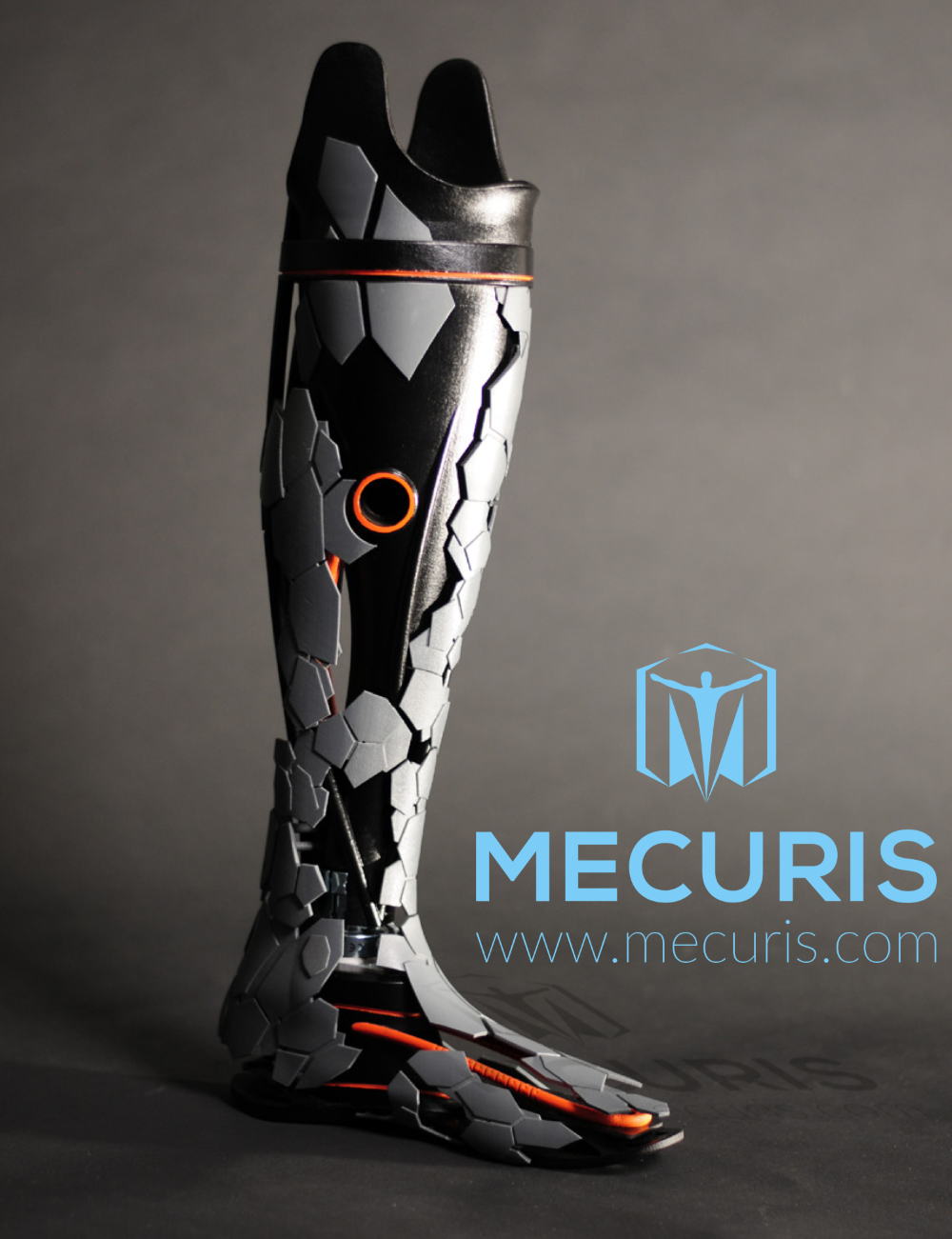
Die Designprothese “Pangolin“ (© Mecuris)
Geplant: Serie-A-Finanzierung Ende 2017
Und der Weg geht weiter. So konnte Mecuris im Januar dieses Jahres unter anderem 3 Prothesencover, 3 “FirStep” Prothesenfüße für Kinder ab ca. einem Jahr und 1 Designprothese “Pangolin” ausliefern. In nächster Zeit soll außerdem der “NexStep” Prothesenfuß für Erwachsene mit CE-Kennzeichnung auf den Markt kommen. Ambitionierte Schritte, die Mecuris machen kann – immerhin wissen sie starke Investoren im Rücken:
„Wir machen zwar bereits erste Umsätzen, finanzieren uns derzeit aber primär über Investoren. Unsere Seed-Investoren sind der Hightech-Gründerfonds (HTGF) und Bayern Kapital. Zusammen mit dem Pre-Seed Geldern kommen wir damit auf rund 1 Mio €, die wir bis Ende des Jahres in unsere Lösungsplattform und weitere Produkte investieren werden.“
Eine Serie-A-Finanzierung ist für Ende 2017 anvisiert. Außerdem soll auch die Personalbasis weiter verstärken werden, vor allem im Vertrieb. Ein Werkstudent im Marketing wäre im Moment sehr wilkommen, wie uns Manuel verrät.
In der Medizintechnik muss nicht nur ein, sondern immer gleich drei Kunden zufrieden gestellt werden: Der medizinische Anwender, die Kassen, die alles bezahlen und natürlich den Patienten:
„Bislang sind alle drei mit uns zufrieden, aber insbesondere die Patienten geben uns ein phänomenales Feedback und empfehlen uns weiter. Das treibt uns voran!“
Was Mecuris noch vorantreibt, sind die guten Kontakte zu den medizinischen Experten an der LMU und TUM, über die sie als Spin-off des Klinikums der Universität München verfügen. München als Unternehmens-Standort ist für Manul sowieso eine gute Entscheidung, denn:
„Wo gibt es sonst noch 2 europaweit führende Universitäten und gleichzeitig eine nennenswerte industrielle Basis?