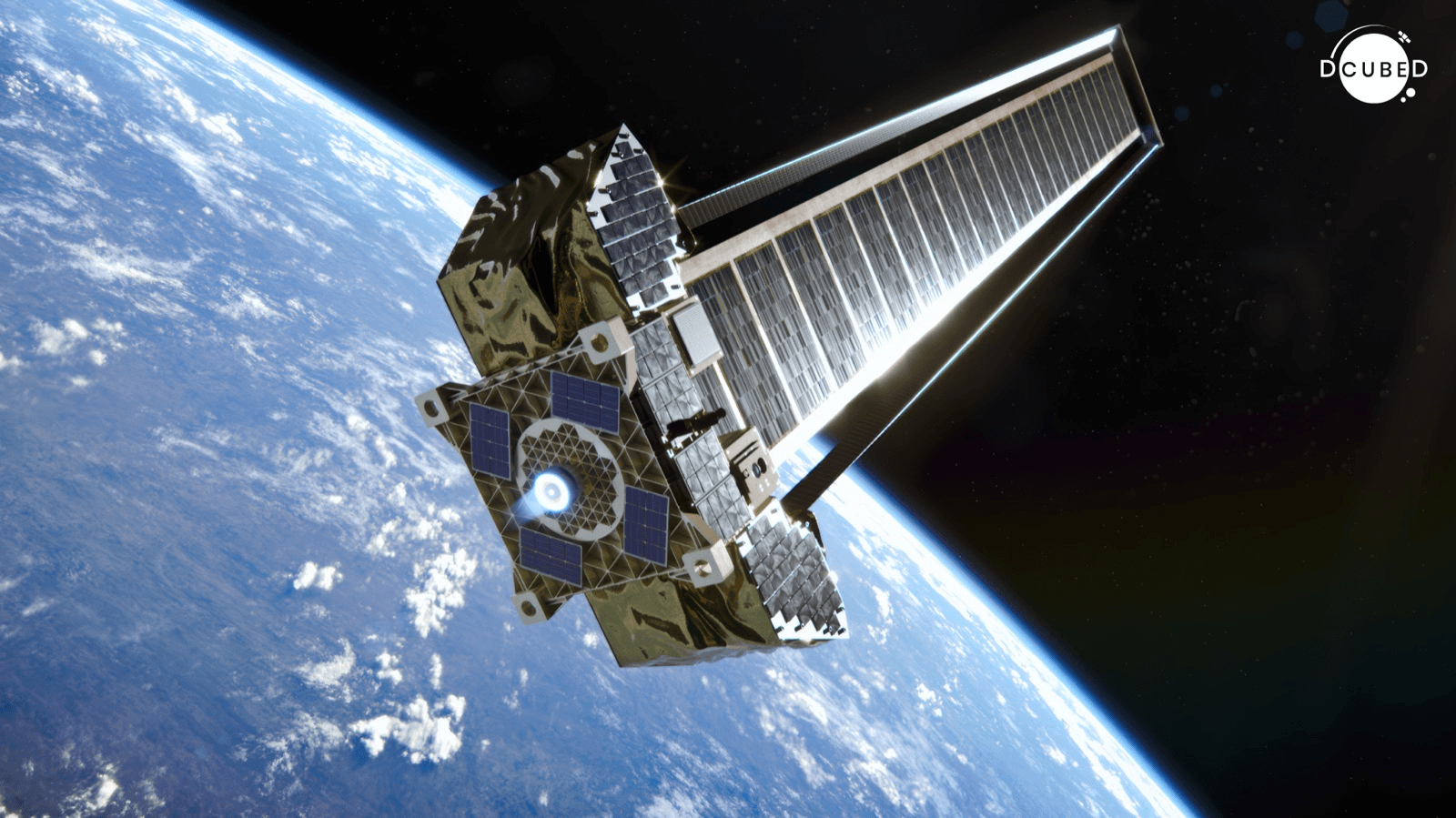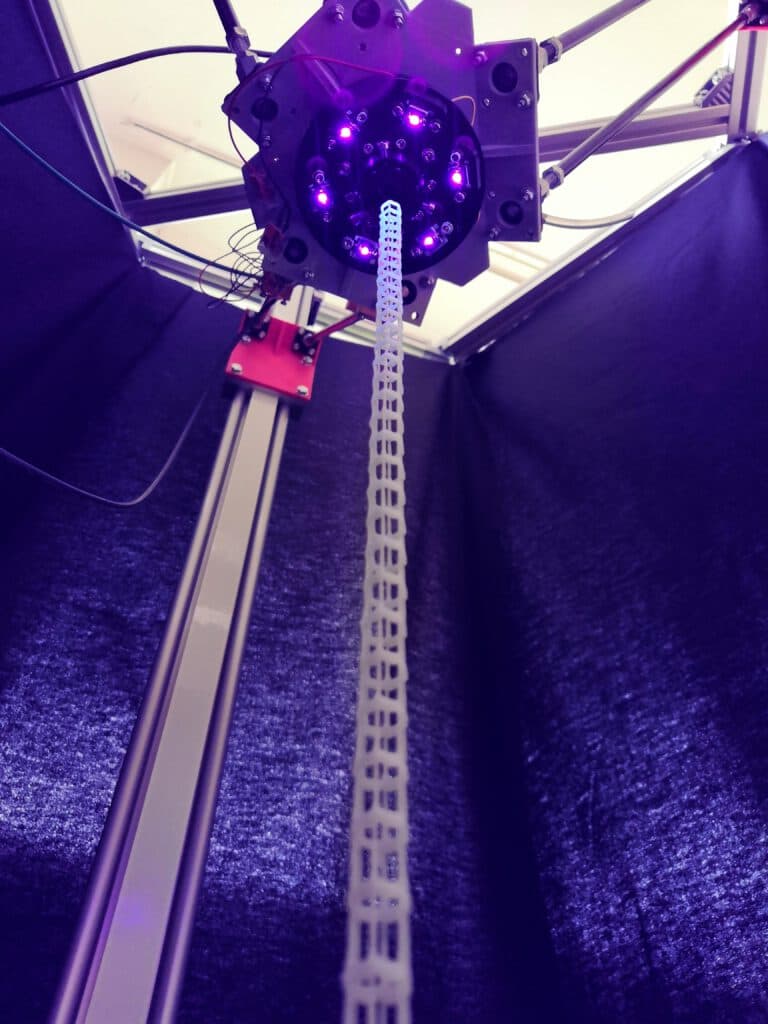

The goal of the two-year project, which starts in January 2024, is the practical research and further development of technologies for production in space, known as In-Space Manufacturing (ISM). Dcubed aims to conduct the world’s first demonstration of this method in open space this year. In 2025, further tests are planned to advance the technology to market-ready operational capability.
Specifically, the technology is to be used to manufacture the support structures of satellite solar panels in space via 3D printing from photopolymer. Currently, these are prefabricated on Earth and installed. For transport, they are equipped with a complex deployment mechanism that brings the panels to their actual size in orbit. Manufacturing in space would eliminate the need for this and remove potential sources of error. Additionally, the finished parts would no longer be subjected to the extreme stresses of a rocket launch. Furthermore, the startup expects that panels printed via ISM will be lighter, more affordable, and more powerful than current solutions.
The increased availability of energy in space resulting from this technology makes it possible to equip satellites with significantly higher computing power in the future. Additionally, this can substantially increase data transmission rates to Earth. In the longer term, the findings from the current research project are expected to pave the way for manufacturing much larger structures and products in space. This would unlock entirely new potential of space for business and research.
Dcubed: “The highest funding amount we have received for this technology so far”
The total project volume amounts to more than one million dollars, of which the state assumes nearly two-thirds. The funding is provided within the framework of the Bavarian Space Research Program, through which the state government supports the development of space technologies to address future societal challenges.
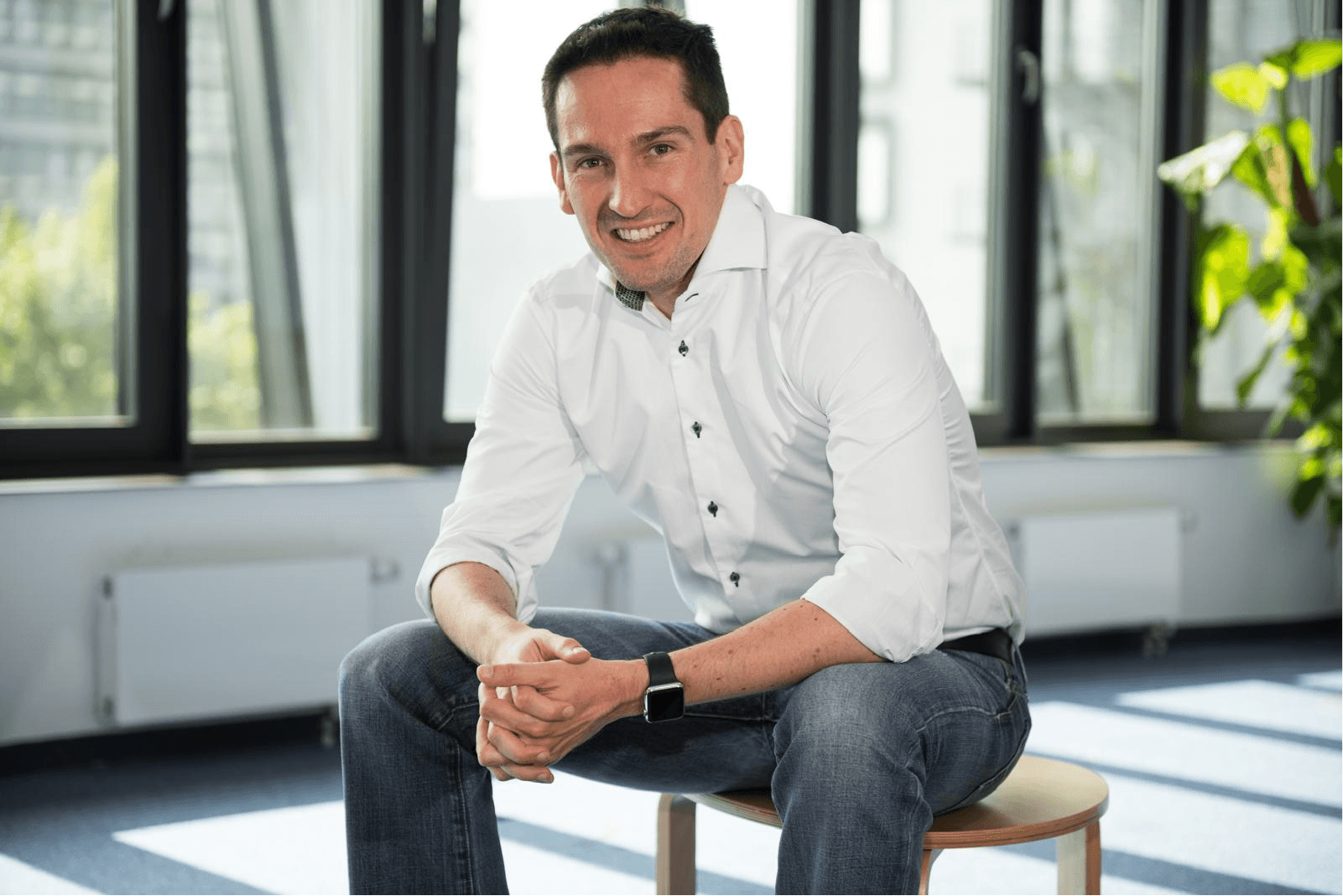
Thomas Sinn, CEO and founder of Dcubed, says:
“The support from the Bavarian government represents the highest funding amount we have received for this technology to date: this is a tremendous validation of our capabilities. Based on this foundation, we are pursuing something that has never been done before: we want to be the first to demonstrate that manufacturing structures directly in space is possible. And we want to be the first to develop manufacturing capabilities in space to market maturity.”
Markus Pietras, professor of aeronautics and astronautics at Munich University of Applied Sciences, adds:
“We are looking forward to intensifying our already proven partnership with Dcubed even further. Together, we are engaged in truly pioneering work: the ability to manufacture in space will open up entirely new potential for business and science. This will enable us to benefit even more significantly from space technologies here on Earth in the future.”
And Dietmar Schneyer, head of the Air and Space, Mobility department at the Bavarian State Ministry of Economy, Regional Development and Energy, explains:
“Supporting innovative technologies in the space sector is an important step in further strengthening Bavaria’s position as a high-tech location. The commitment of Dcubed and the Hochschule München in the field of In-Space Manufacturing is an impressive example of how research and industry can work together to expand the boundaries of what is possible.”