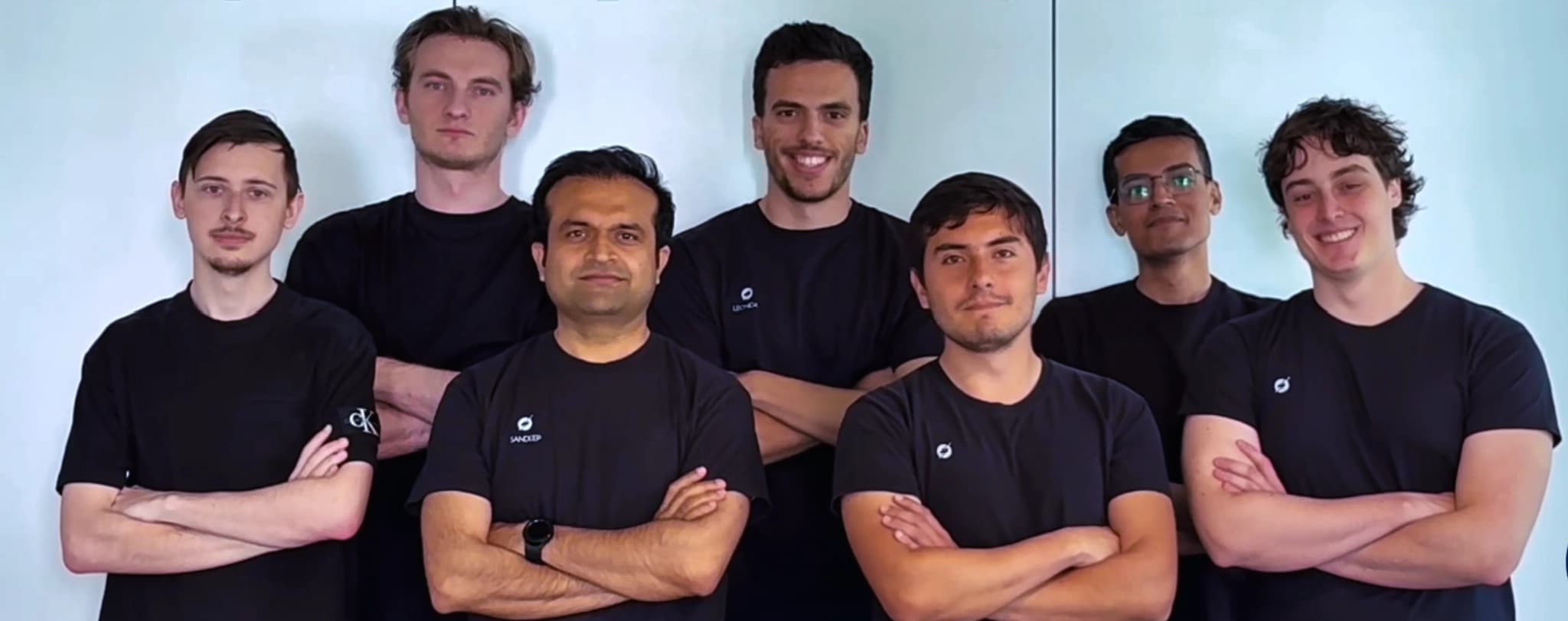

The regulation-tech company Atmen has developed an IoT and SaaS platform that enables manufacturers of energy-intensive goods to certify their production more efficiently. To do this, the solution simplifies the demonstration of renewable energy use – with hydrogen and e-fuels at the center. Additionally, companies can use the solution to create digital product passports, quantify their carbon emissions, and obtain government-approved certificates. The startup’s goal is to replace outdated, manual, and unpredictable certification processes with a streamlined, automated approach.
Atmen was founded in early 2023 by Flore de Durfort, Quentin Cangelosi, and Erika Degoute, initially under the name Point Twelve. Under this name, the startup also won the Munich Startup Special Prize at the founders’ fair Bits & Pretzels. Now Atmen has successfully completed its pre-seed round and raised 1.3 million euros. The round is led by Revent, with a co-investment from Vireo Ventures. UnternehmerTUM and various angel investors are also participating.
“Atmen’s solution has the potential to become the industry-leading standard”
Henrik Grosse Hokamp, partner at Revent, says:
“We are very pleased to lead Atmen’s funding round. Decarbonizing industry is one of the most urgent challenges of our decade. As long as carbon intensity is not continuously tracked and certified, manufacturers cannot demonstrate their progress toward targets, and product decarbonization cannot be promoted.”
Flore de Durfort, co-founder and CEO of Atmen, explains:
“We are at a turning point in how industry verifies its sustainability efforts. Hydrogen and e-fuels are a cornerstone of industrial decarbonization, but also the first energy-intensive products where the pressure and complexity of demonstrating and certifying decarbonization are so acute.”
And Sven Heilitag, partner at Vireo Ventures, adds:
“Tracking and certifying carbon intensity is one of the biggest pain points in scaling the green hydrogen economy, and we believe that Atmen’s solution has the potential to become the industry-leading standard in this field. Once that is achieved, it offers enormous potential to become a new, category-defining player in certifying all low-carbon products.”