
Munich-based Defencetech Project Q has completed a Series A funding round of 15 million euros. The round is led by Expeditions, which is expanding its existing investment. Project A is also participating again. New investors include listed defence company Hensoldt and venture capital investor Heliad.
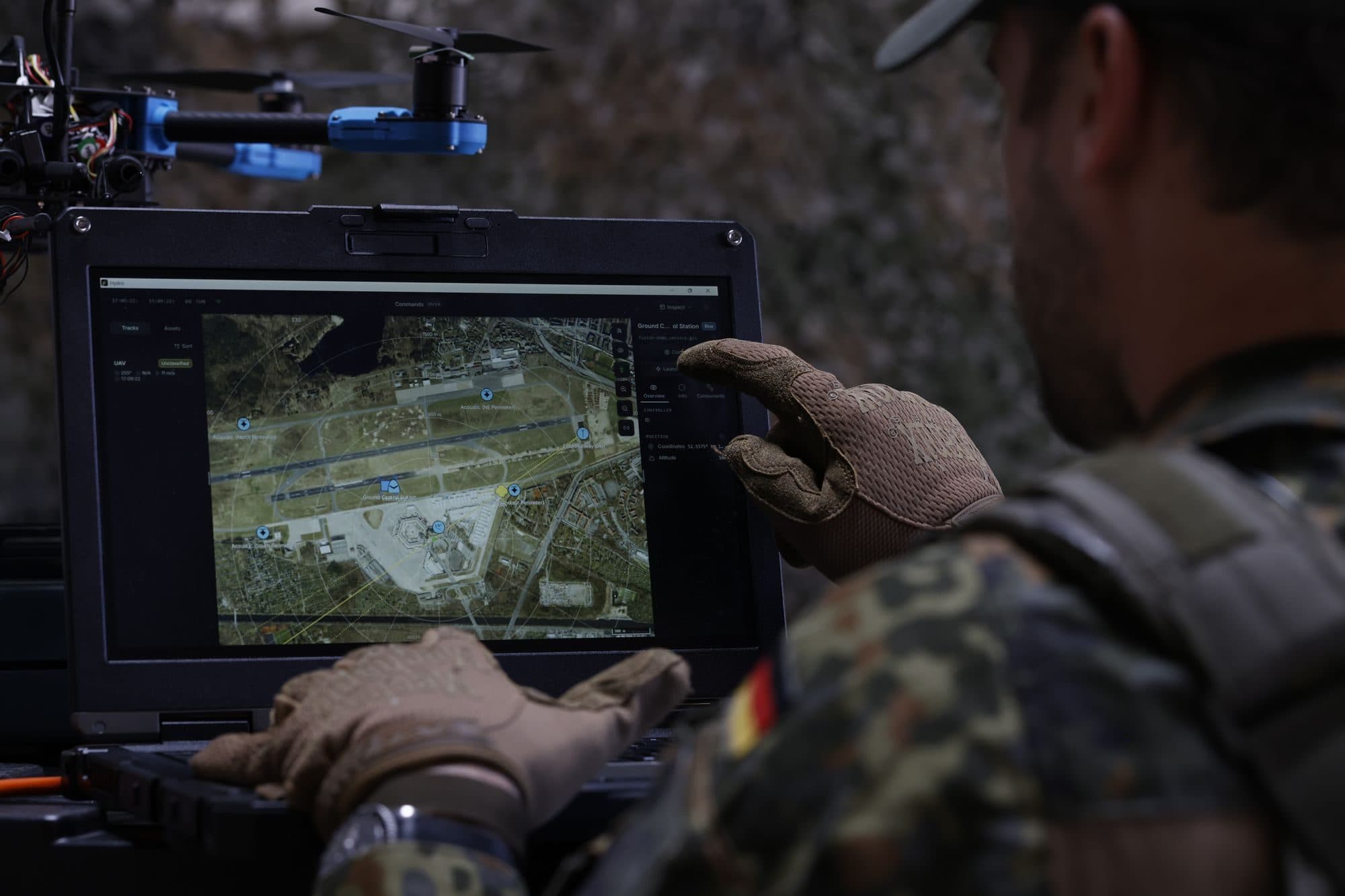
Project Q develops technological solutions for the defence and security sector. The focus is on the open-source platform Hydris. It connects sensors, unmanned systems, command and mission systems, and other data sources in a shared operational environment. The company is pursuing an “Internet of Defence” approach and aims to make civilian technologies such as artificial intelligence, cloud computing, and sensors usable for security-critical applications.
With the funding round, Project Q is accelerating the development of Hydris. The platform is intended to enable armed forces and security authorities to network commercially available technologies and existing systems more quickly. Open standards, AI-powered data processing, edge computing, and distributed operations form the technological foundation for this.
Focus on technological sovereignty
Leonard Wessendorff and Frank Christian Sprengel founded Project Q in 2024. The company has locations in Munich and Berlin. With Hydris, the team aims to provide vendor-independent and interoperable software for security and defence applications and thereby strengthen Europe’s technological sovereignty.
Leonard Wessendorff, CEO and co-founder of Project Q, says:
“The confidence of our investors is a great affirmation for us. We are particularly pleased that the funding comes entirely from Europe. With Hydris, we enable armed forces and security authorities to independently integrate new technologies and capabilities, continuously develop them further, and thus respond much faster to changing threat scenarios. This creates the foundation for greater technological sovereignty of Europe.”
Mikolaj Firlej, General Partner and co-founder of Expeditions, says:
“A single special operations unit in one European country can use over ten different communication means that are not compatible with each other. If Europe is to act as a unified force and cycle through faster decision-making than the adversary, deeper integration of the many separate systems operating in more than 27 different national systems is essential. Project Q, under the leadership of Leonard and Philipp, is the most advanced initiative to solve this problem and create an interoperability layer that governs how systems communicate, integrate, and achieve effects on the battlefield.”