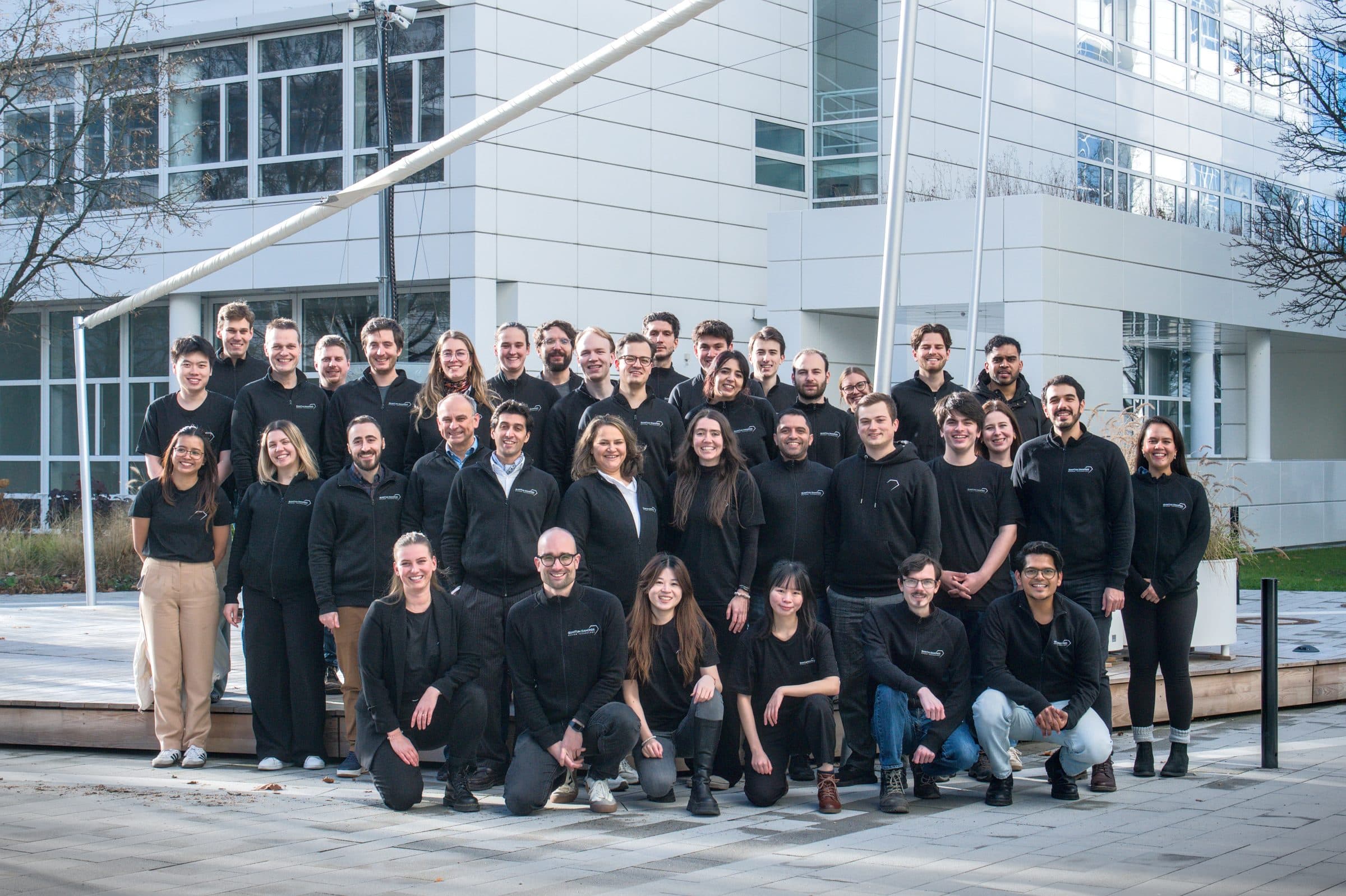

With the aid from the EU Commission, the Munich-based startup wants to build a new production facility in Munich for semiconductor test systems based on novel quantum sensors. The facility is intended to be the first production facility of its kind in the European Union and strengthen Europe’s role in the semiconductor value chain.
The starting point is a state aid measure registered by Germany for Quantum Diamonds’ “IPF-ATEST” project. The Commission has reviewed this measure under EU state aid rules and has now approved it.
The aid flows as a direct grant. Without this public support, the Commission states, Quantum Diamonds would not make the planned investment in Europe. The decision is thus also a signal to the European semiconductor industry and to the Munich startup ecosystem that Brussels wants to strategically support production capacity along the value chain.
Semiconductors made in Munich
The core of the project is the development and manufacturing of advanced measurement and inspection systems for the semiconductor industry. The systems are based on quantum sensors that are intended to enable high-resolution and three-dimensional inspections of modern chips. According to the Commission, there is currently no comparable production facility in the European Union.
In return for the multi-million euro grant, the Munich-based deeptech startup commits to strengthening supply security and increasing the number of qualified professionals.
According to the EU, the company should also intensify collaboration with universities and research institutions. Part of the facility will be made available to startups, early-stage high-tech companies, small and medium enterprises, and scientific laboratories. For the Munich startup scene, this creates an infrastructure that provides access to highly specialized measurement technology in the semiconductor sector. In case of supply bottlenecks, Quantum Diamonds commits to prioritizing orders. Potential project-related profits exceeding current expectations will be shared between the company and Germany.
Novel production in Europe as a flagship project
The Commission assesses the measure as eligible because, in its view, it supports the development of economic activity without disproportionately distorting competition in the internal market. It emphasizes that this is novel production in Europe and that the aid is necessary, appropriate, and limited to the required minimum. The decision aligns with the Commission’s policy guidelines for the 2024 to 2029 period and is consistent with the European Chips Act.
The decision is part of a broader support context. In November 2024, Germany issued a call for proposals for innovative investment projects in the European semiconductor value chain. Quantum Diamonds’ project is the fifth to be pre-selected under this call. Overall, this is the Commission’s fourteenth decision based on the Chips Act principles. So far, various member states have granted aid totaling approximately 14.2 billion euros for semiconductor technologies and applications.
In parallel, the EU is advancing its industrial policy framework. On 3 June 2026, the Commission adopted a new proposal for the so-called Chips Act 2.0. The goal is to further expand the chip industry in Europe, reduce strategic dependencies, and promote the manufacturing of advanced semiconductor technologies. Chips Act 2.0 is intended to consolidate previous progress, expand strengths in commodity chips, and create new capacity in the advanced segment.
For Munich and the regional startup scene, the decision means that another building block of the European semiconductor strategy is to be established locally. Opening parts of the facility to startups and research can and should initiate new collaborations.