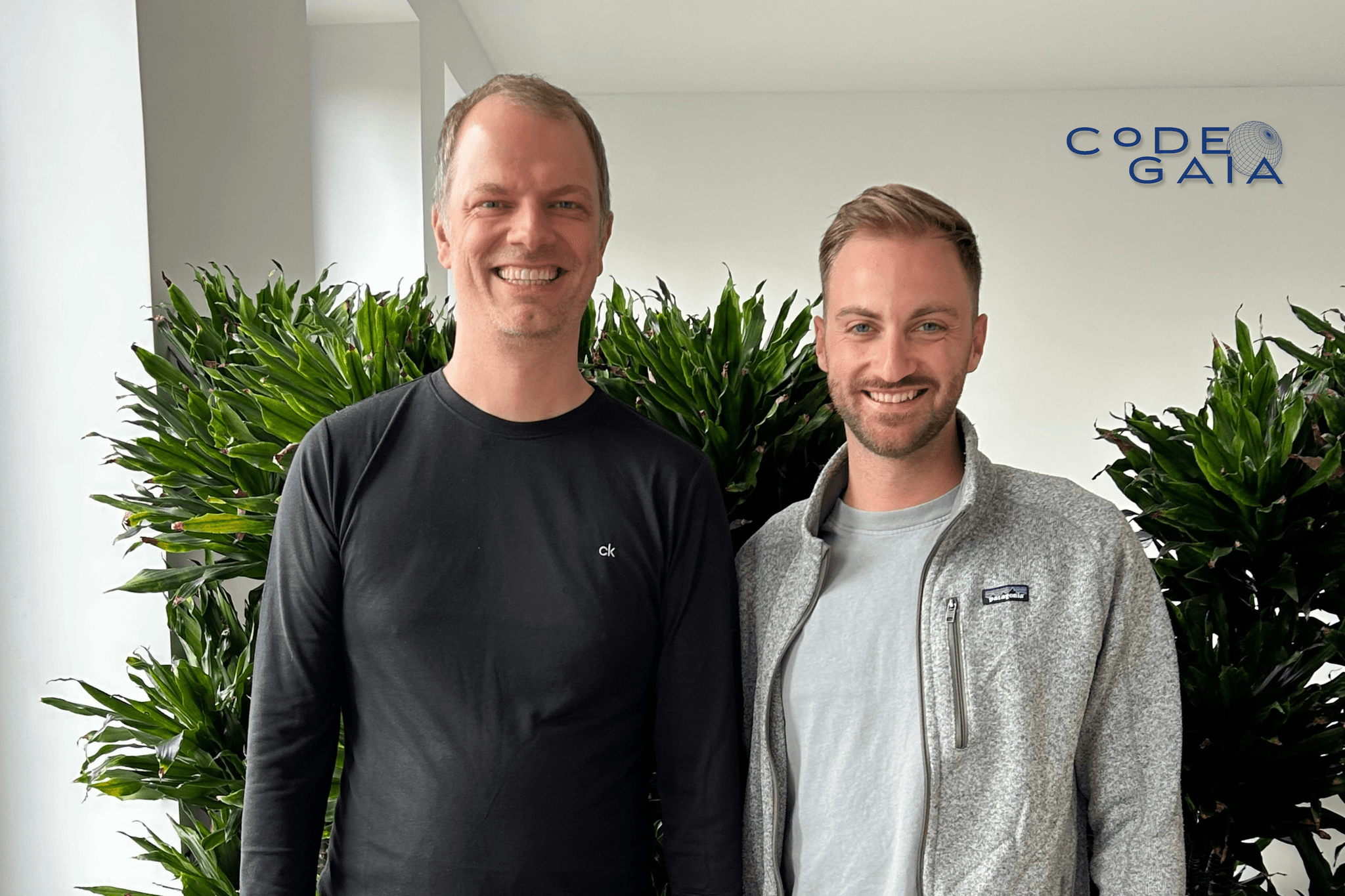

For Code Gaia, the transition of Global Climate’s clients is more than just additional new business. The Munich startup is strategically positioning itself as a consolidation and landing platform for an ESG software market whose framework conditions have shifted significantly. At the same time, the House of Gaia Group is expanding its leadership team, bringing Marc Erfkamp on board as VP Revenue.
A major driver behind the market shifts is European sustainability regulation. In February 2025, the EU Commission initiated extensive simplifications, including for CSRD and CSDDD, through its first Omnibus package. The amendments to the corresponding directives have since been adopted.
The Omnibus package presented by the EU Commission in February 2025 aimed to simplify sustainability and due diligence obligations for companies and significantly narrow the scope of obligated businesses. According to the Commission, the measures are intended to reduce administrative costs related to sustainability regulation by billions of euros annually.
For ESG software providers, this represents a market shift. Solutions whose primary value lies in fulfilling individual reporting obligations now face different regulatory conditions than when the CSRD was first launched. At the same time, sustainability data is not disappearing from everyday business operations: carbon accounting, customer requirements, supply chain data, or voluntary reporting can remain relevant even beyond direct legal reporting mandates.
This also alters the framework conditions for software providers whose products are heavily focused on mandatory regulatory sustainability reporting. Code Gaia is therefore focusing on a broader offering centered around sustainability and compliance management.
Global Climate Customers to Retain Historical ESG Data
Specifically, Code Gaia and the stakeholders at Global Climate have agreed to position Code Gaia as the follow-up solution for the Munich-based ESG software provider’s customers. According to Code Gaia, the goal is not merely to switch software, but also to continue existing data and established reporting processes with as little disruption as possible.
Global Climate provided companies with solutions for Corporate Carbon Footprints (CCF), Product Carbon Footprints (PCF), CSRD, supply chain requirements, the EU Taxonomy, and Science Based Targets, among others.
The question of data migration is crucial for companies because sustainability management increasingly relies on historical time series. Carbon footprints, supply chain data, or information from previous reporting cycles do not lose their significance when switching providers.
Code Gaia combines software and AI-supported data processing with consulting services. Its portfolio includes carbon accounting, ESG reporting, VSME, and CSRD, as well as product and supply chain management. On its website, the company currently cites more than 630 customers, over 60 employees, and five locations.
Wilhelm Hammes, Managing Director at House of Gaia, explains:
“For companies, this is about far more than just switching software. Over the years, they have invested time and resources into their data, accounting, and reporting processes.”
Code Gaia therefore aims to facilitate a transition with a defined roadmap and the transfer of historical data.
House of Gaia Bets on Buy-and-Build in the ESG Software Market
The move fits into a broader consolidation strategy. In May 2026, Code Gaia and Planted announced their merger to form the House of Gaia Group. The acquisition of sustainability startup Codio Impact followed in July. According to the company, Clime also now belongs to the group.
Code Gaia Managing Director Markus Adler describes the goal as follows:
“We offer ESG providers the opportunity to become part of the group. This allows us to offer companies long-term security and a growing portfolio.”
The aim is to gradually transform individual solutions into a shared platform for sustainability and compliance.