
In space travel development, weight has always been a decisive factor. The heavier an object is, the more expensive its journey into space becomes. For this reason, ever smaller and thus lighter satellites are trending. At the same time, they are expected to perform increasingly complex functions, which requires larger solar panels for power supply, larger antennas for high data transmission, and larger radiators for heat dissipation. To fit all these actually large systems into small satellites, designers rely on foldable structures. Once in space, they are expanded to their actual size with the help of actuators.
The Munich-based startup Dcubed develops, manufactures, and distributes such actuators, so far in “nano” format. The Nano Release Nut, for example, which is used when screw connections need to be released, measures 17x17x17mm. The next generation is set to be even smaller, measuring only a few millimeters. The actuator based on shape-memory alloy (SMA) technology is to be operated by the satellites’ onboard power supply and provide feedback on the deployment status. This would make it significantly superior to the technology currently used in nanosatellites: the burn-wires used keep the structure in place until they are cut by a thermal knife. This means they are neither resettable nor can their deployment be tested.
Federal funding for Dcubed and Memetis
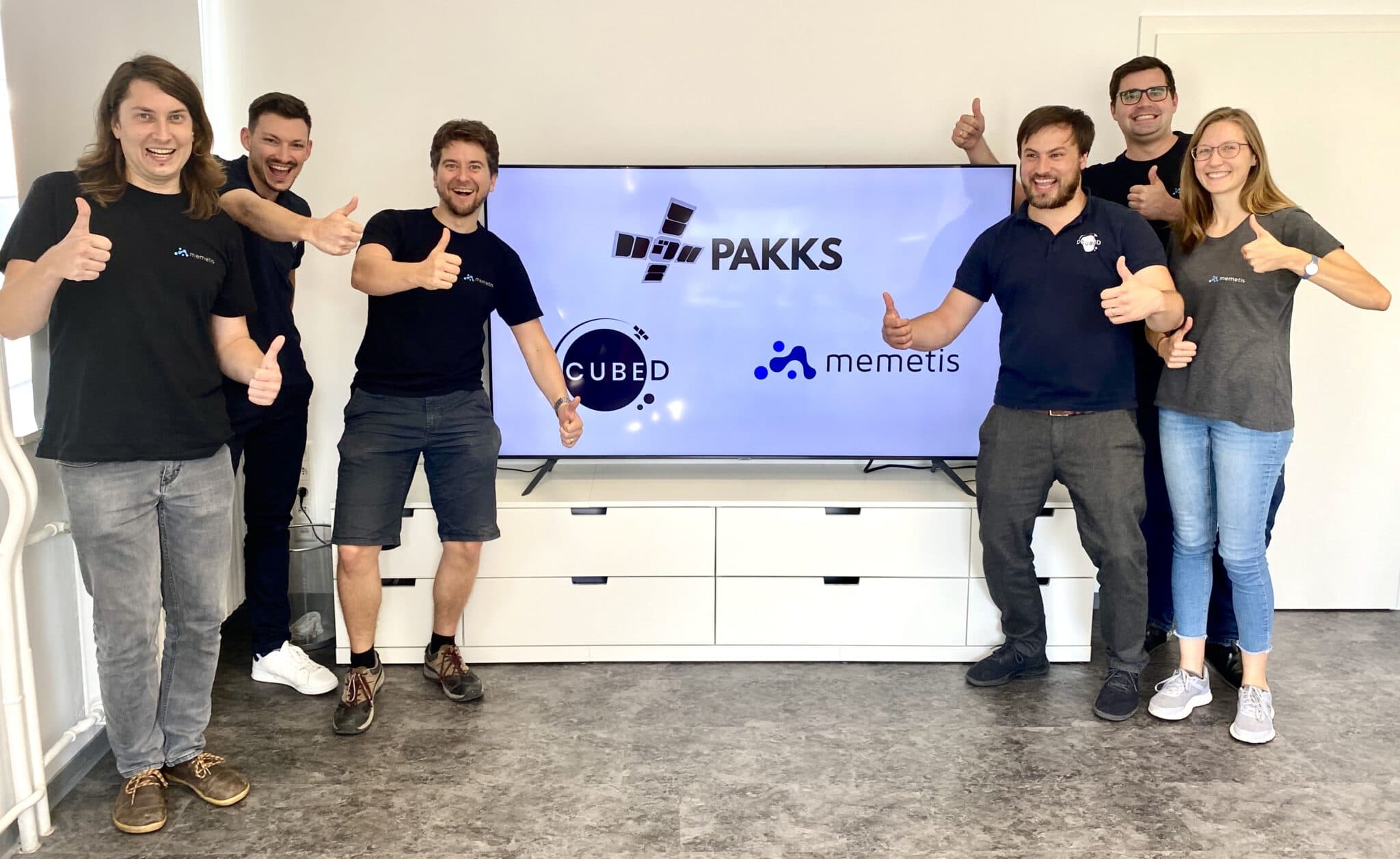
Dcubed has partnered with Memetis for the development of the new actuator. The Karlsruhe-based company specializes in micro-actuators based on shape-memory alloy technology. For their project, the partners have received funding under the Central Innovation Program for SMEs (ZIM) of the Federal Ministry for Economic Affairs and Climate Action (BMWK). ZIM is Germany’s largest innovation program for SMEs and supports innovative companies with business operations that want to develop new products or technical services or significantly improve existing ones. The PAKKS project launched in July and will run for 18 months including the test campaign.
In addition to cooperations between companies, ZIM also promotes research and development activities of individual firms. Currently, funding applications can be submitted again. Further information is available on ZIM’s website.