
The Defence Tech Report 2026 shows that Munich is developing into the most important European location: the Bavarian state capital accounts for 40 percent of European defense tech funding volume, even though only 4.1 percent of the sector’s VC-backed companies are based there. European defense tech startups have already raised over 6.6 billion euros (7.4 billion dollars) in venture capital in 2026. That is nearly three times as much as in the entire previous year.
The European defense tech market is growing faster than any other major venture capital sector. While investments across Europe are heading toward new record highs, individual tech hubs and a small number of large startups are benefiting disproportionately.
Munich is at the center of this development. Companies like Helsing and Quantum Systems have grown into European heavyweights. Together, the two companies reach a valuation of nearly 23 billion euros (25.7 billion dollars), according to Dealroom.
Published on October 5, 2026, the study also highlights that Europe’s defense tech boom raises new questions regarding financing, technological sovereignty, and military procurement.
Defense Tech Funding Climbs to Record Levels in 2026
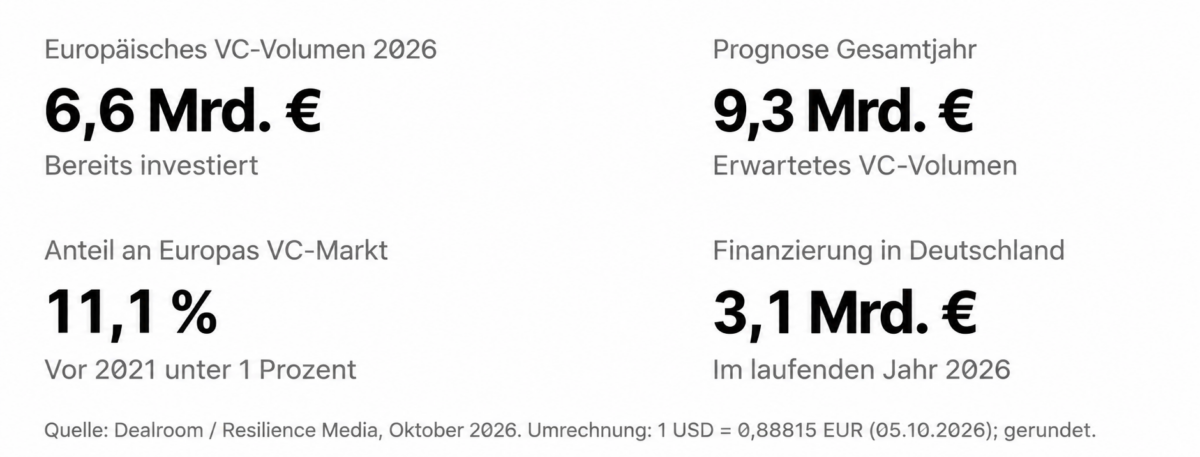
Accounting for an 11.1 percent share of total European venture capital volume, defencetech has now become a key investment sector. Across the 27 EU member states, that share is as high as 15 percent.
However, this development is heavily shaped by exceptionally large financing rounds. More than 85 percent of the capital invested in 2026 went into mega-rounds. At the same time, funding volume in the breakout segment between 13.3 million euros (15 million dollars) and 89.3 million euros (100 million dollars) has already doubled compared to 2025.
This indicates that it is not only established market leaders raising large sums. Growth-stage companies are also increasingly benefiting from investor interest.
Munich Accounts for 39 Percent of European Defencetech Enterprise Value
Munich’s significance extends beyond the number of startups based there. According to Dealroom, the city accounts for 39 percent of the aggregate enterprise value of European VC-backed defencetech startups.
This concentration is particularly evident in the financing rounds. In July 2026, Helsing secured 1.6 billion euros (1.8 billion dollars) in a Series E round. In the same month, Quantum Systems received around 1 billion euros (1.2 billion dollars). Together, these two rounds account for approximately 40 percent of the European defense tech VC volume in 2026 to date.
Germany therefore leads the European country rankings. German defense tech startups have raised a total of around 5.27 billion euros (5.9 billion dollars) since 2020, with roughly 3.1 billion euros (3.5 billion dollars) of that in the current year alone.
Development in Munich benefits from an established deep tech ecosystem, a strong industrial base, and proximity to research institutions. The location therefore provides the conditions needed to transfer technologies from fields such as artificial intelligence, robotics, aerospace, and sensor technology into military applications.
US Investors Fund 47 Percent of European Defense Tech Market
Another key finding of the study concerns the origin of the capital. US investors now account for 47 percent of the funding volume of European defense tech startups. In 2020, this share stood at just 12 percent.
Active US investors include Accel, Founders Fund, General Catalyst, Lightspeed, and Y Combinator, among others.
This creates a tension: while Europe wants to strengthen its technological and security policy independence on the one hand, it is increasingly reliant on US capital to build the corresponding companies on the other.
For European venture capital firms and institutional investors, this raises a strategic question: Can they provide large enough funding rounds to allow European defence tech companies to grow independently of non-European capital providers over the long term?
Drones, autonomous systems, and cybersecurity attract billions
Capital is flowing particularly heavily into autonomous systems and drone technologies. The study highlights three notable funding areas:
| Technology Segment | VC Funding 2026 |
|---|---|
| Drone Startups | around 4.2 billion euros (4.7 billion dollars) |
| Anti-drone systems | around 1 billion euros (1.2 billion dollars) |
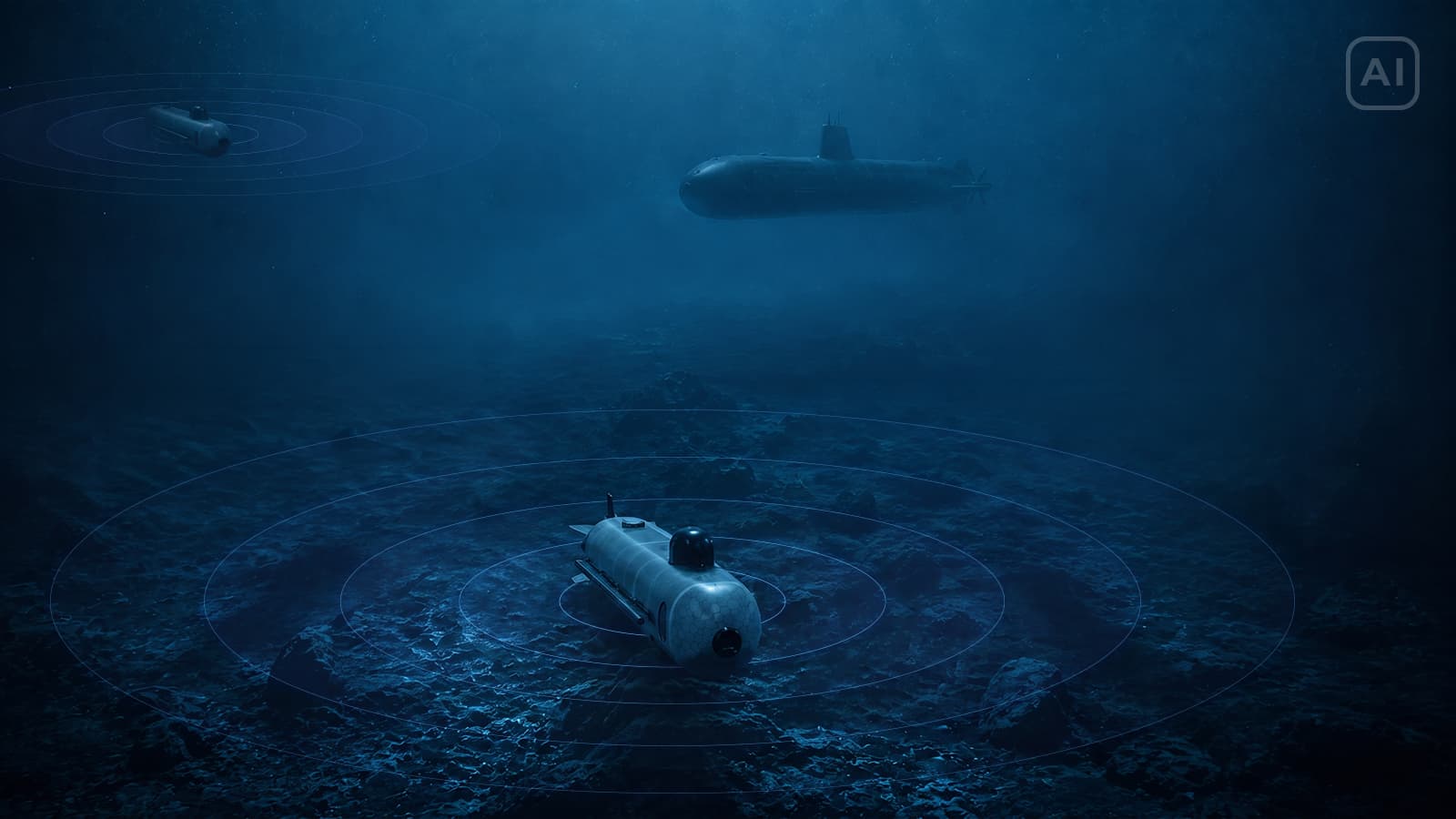
| Autonomous maritime systems | around 710 million euros (796 million dollars) |
While this year’s investments in anti-drone technologies and autonomous maritime systems already exceed the cumulative volume of all previous years, the report also highlights Europe’s technological weaknesses. Although European startups are internationally competitive in quantum technology, photonics, space applications, and drones, significant gaps remain in AI chips, processors, launch vehicles, and communication satellites.
These differences are relevant to technological sovereignty: defense systems require not only operational software and autonomous platforms, but also reliable semiconductors, communication infrastructure, and supply chains.
Defense Tech Founders: Military Experience Becomes a Location Factor
As the market grows, the requirements for founding teams and investors are changing as well.
According to the study, 17 percent of European defense tech founders have professional experience in the military or a ministry of defense. At the C-level, that figure is 14.7 percent.
Among specialized defense tech investors, the share with a relevant background is 26 percent, compared to just 12 percent among general venture capital investors.
The figures underline the importance of practical military experience. In addition to technological know-how, understanding operational requirements, regulatory frameworks, and government procurement processes plays a key role.