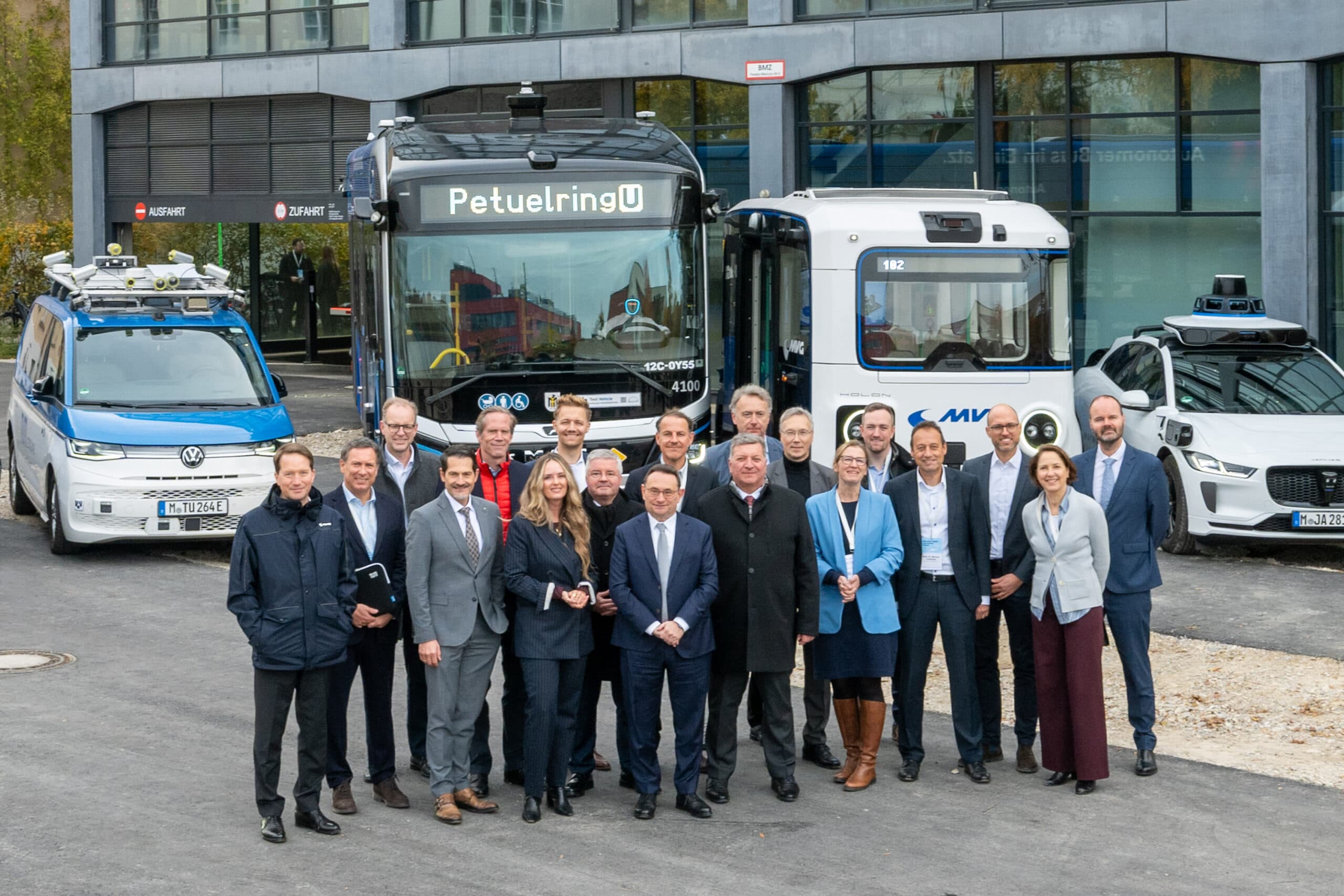

Munich aims to play a pioneering role in autonomous driving. With the opening of the Munich location of the German Center for Future Mobility (DZM), a research project is getting underway that aims to bring autonomous buses and shuttles out of the testing phase and into regular public transit. Led by the Technical University of Munich (TUM), academia, industry, and transit companies are collaborating on its implementation.
The Federal Ministry for Digital and Transport is funding the joint project RISE with up to 20 million euros. The funding period runs from October 1, 2026, to September 30, 2029. The goal is to make autonomous mobility not just technically feasible, but also safe, economically viable, and usable for other regions.
Initial tests in Ottobrunn, followed by MVG routes
Specifically, autonomous buses and shuttles are initially set to be tested on a closed test site in Ottobrunn. Following that, real-world laboratory operations are planned on two routes operated by the Munich Transport Company (MVG).
This involves far more than just self-driving vehicles. For autonomous buses to operate reliably in day-to-day service, control centers, digital infrastructure, and operational processes must also be coordinated with one another.
RISE stands for “Regular operation, Integration, Scaling, and Development of automated mobility systems in public transport” (Regelbetrieb, Integration, Skalierung und Entwicklung automatisierter Mobilitätssysteme im öffentlichen Verkehr). The project aims to establish the prerequisites for autonomous vehicles to become a permanent component of local public transport over the long term.
Munich pools its mobility expertise
Numerous players from Munich’s innovation ecosystem are taking part in the project. Alongside TUM, core partners include Landeshauptstadt München, Stadtwerke München, MVG, MAN Truck & Bus, the Munich Transport and Tariff Association (MVV), Universität der Bundeswehr München, Ludwig-Maximilians-Universität München, and UnternehmerTUM.
For the city, the technology offers an opportunity to provide better access to previously poorly connected districts. The growing shortage of drivers and rising costs in local public transport also make autonomous solutions appealing.
Munich’s Deputy Mayor Dominik Krause explains:
“With autonomous shuttles and buses, we will be able to connect underserved corners of Munich to local public transport much more effectively in the future.”
MAN also sees significant economic potential. Frederik Zohm, Executive Board Member for Research and Development, emphasizes that Germany already possesses a strong industrial base with its vehicle manufacturers, suppliers, and technology leaders. The crucial step now, he says, is to translate these competencies into scalable applications.
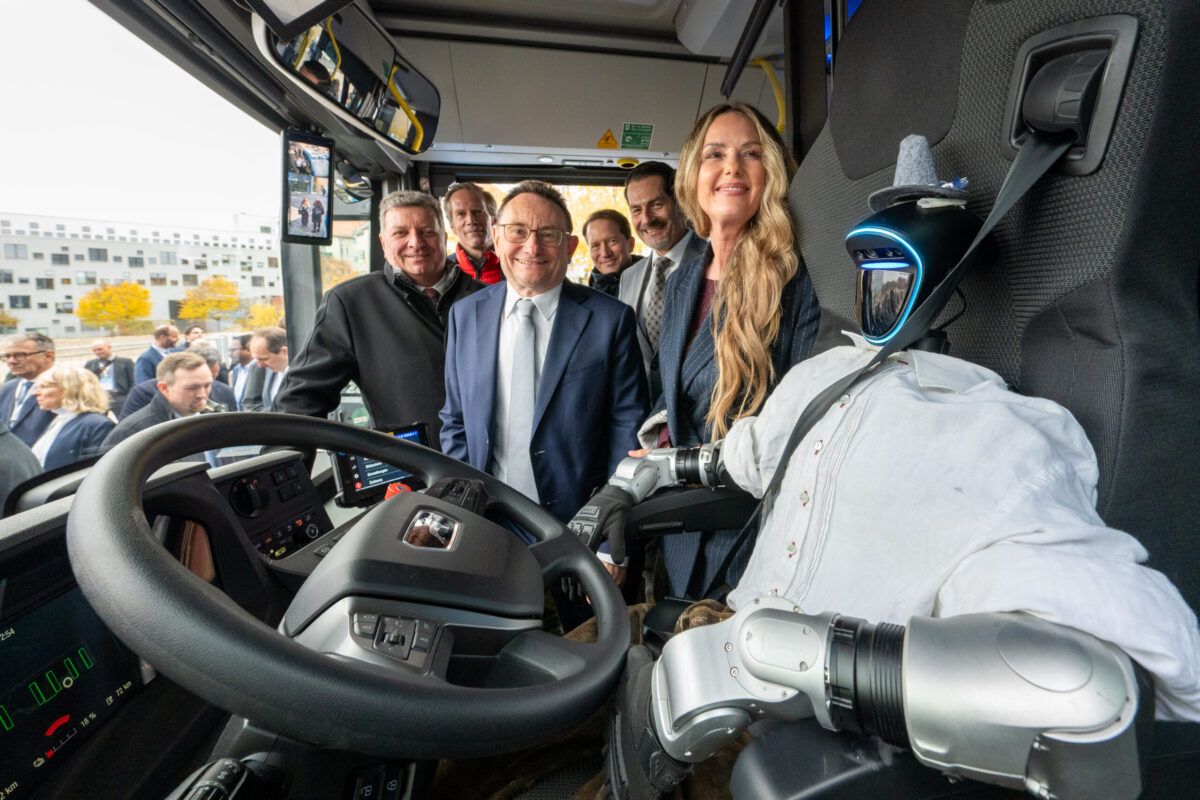
From research project to regular operation
The project was presented at the Munich Autonomous Driving Summit. Around 400 representatives from politics, academia, industry, startups, and transport companies gathered to discuss the future of autonomous mobility in Germany and Europe.
The new DZM site builds on existing Munich innovation networks, including the MCube future cluster, the Allianz Mobile Zukunft München & Region, and UnternehmerTUM.
In the long term, the solutions developed in Munich are also intended to benefit other cities and rural regions. At the same time, the project aims to help strengthen Europe’s technological independence in autonomous driving.