
Elvio Robotics relies on a manufacturer-independent platform that connects different robot models, building infrastructure, and hospital IT. At Isar Klinikum, the startup demonstrates how this approach can be implemented in everyday clinical operations: the robots handle cleaning and transport tasks, navigate the building independently, and use elevators to move between floors.
With this, Elvio is addressing a key challenge in hospital automation. While individual robots can perform specific tasks, a comprehensive deployment requires them to be integrated into existing processes and technical systems. This is precisely where Elvio OS comes in.
Three robot models automate cleaning and logistics at Isar Klinikum
Isar Klinikum has already been working with robots for around two years. Initial applications focused on cleaning and logistics. According to the hospital, it became clear that standalone robot solutions are not enough to cover the diverse demands of hospital operations.
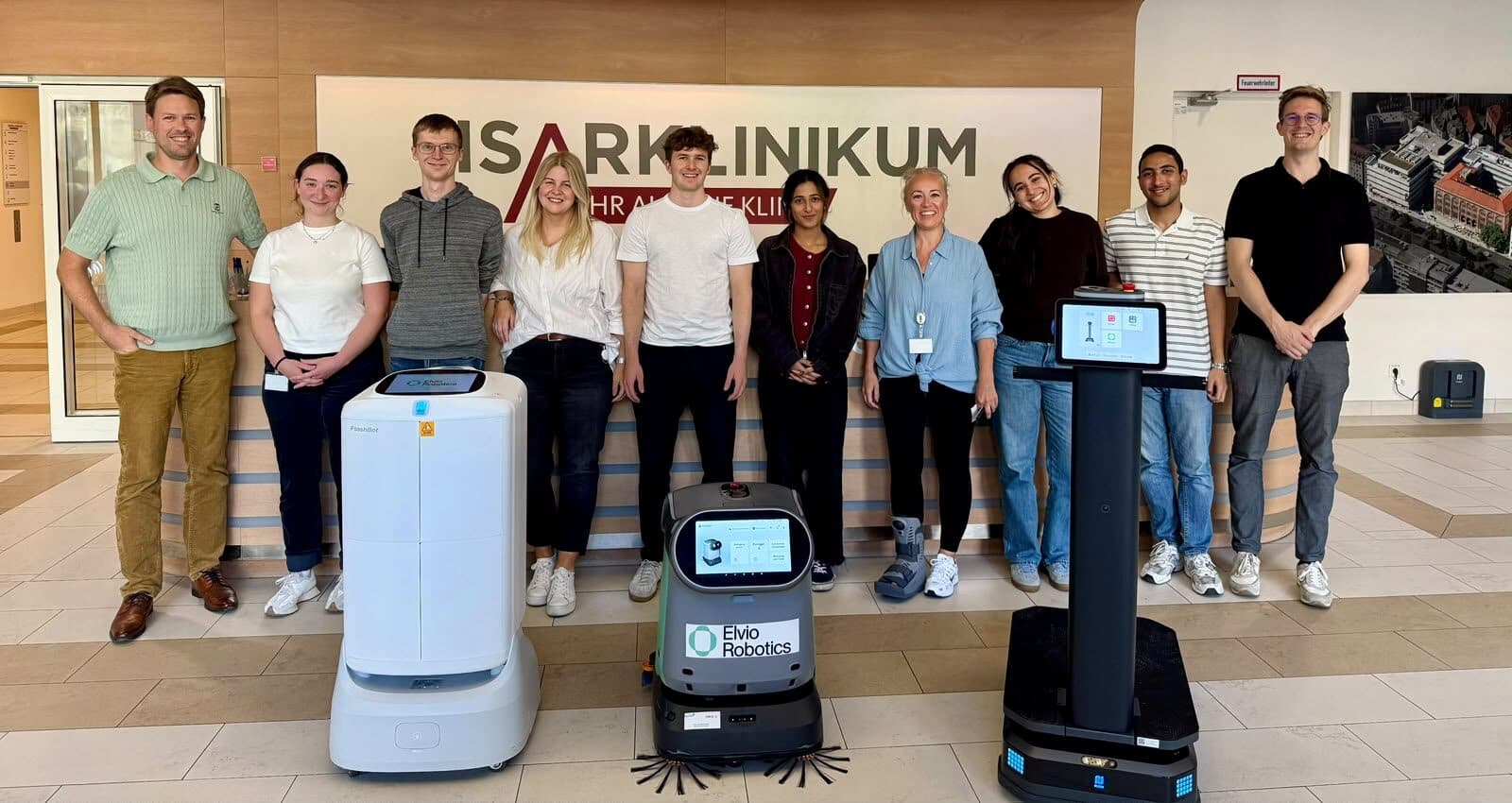
Together with Elvio Robotics, an integrated system was therefore established. The fleet currently in use comprises three robot models from different manufacturers that handle the following tasks:
- Surface cleaning inside the hospital building
- Small transports for internal logistics processes
- Container transport within the hospital
The robots are coordinated via Elvio OS and integrated into the building infrastructure. This enables them, among other things, to use elevators independently and complete tasks across multiple floors.
Andreas Wolf, Administrative Director of Isar Klinikum, sees this as the foundation for long-term expansion:
“Our vision is not simply to set up individual robots in the hospital. We want to make automation an integral part of our processes, step by step.”
The clinic plans to integrate further processes and robotics solutions into the existing system going forward. The company has not yet provided specific details regarding the number of additional robots or planned expansion dates.
Multi-Million Funding: Revent, Calm/Storm, and Over 20 Business Angels Invest
Alongside its deployment at the Isar Klinikum, Elvio Robotics has closed a multi-million euro financing round. The exact amount of capital raised was not disclosed.
The institutional investors include:
- Revent
- Calm/Storm from Austria
- HIC/Redstone
- Wilbe from the US
In addition, more than 20 business angels from the healthcare industry, established companies, scaleups, and the academic sector joined the round. Among them are Maximilian Greschke, founder and CEO of healthtech company Recare, and Christian Albrecht, co-founder and CEO of Avelios.
Alongside capital, Elvio thus brings on board investors with experience in hospital digitization and building healthtech companies.
Lead investor Otto Birnbaum, General Partner at Revent, sees the decisive factor not in robotics alone, but in their integration:
“The decisive value is created when robots are seamlessly integrated into the numerous processes and workflows at hospitals.”
With this funding, Elvio Robotics aims to accelerate the further development of its software platform and integrated robotics system. The focus is on scaling the approach to additional applications and hospitals.

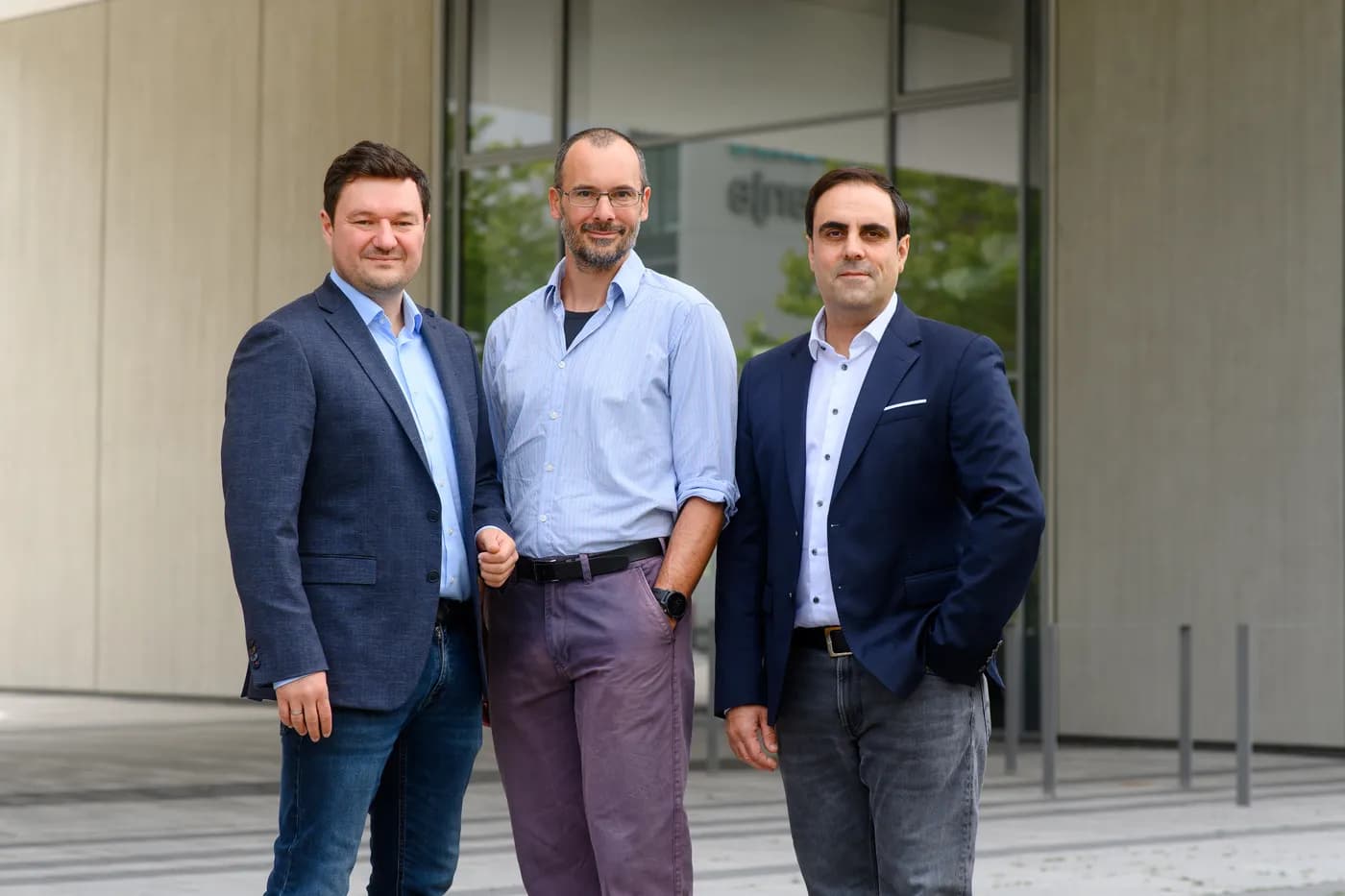
Elvio Robotics was founded in February 2026 by Marco Brizzolara and Johannes Drexler. Already in its first year, the company is implementing robotics projects with major private chains, large municipal hospitals, and smaller clinics, while collaborating with leading robotics manufacturers and partners such as Charité – Universitätsmedizin Berlin and the Isar Klinikum in Munich.
Elvio OS Connects Autonomous Robots with Hospital IT and Building Infrastructure
The technological core of the Munich startup is the vendor-agnostic software platform Elvio OS. It is designed to prevent hospitals from having to operate separate, isolated systems for different robots.
Instead, the platform connects robotics, elevators, doors, and existing IT systems into a shared automation infrastructure.
This is particularly relevant for hospitals that deploy various robot types or want to expand their automation step by step. New applications can be integrated into the existing system without having to build a completely independent technical solution for each use case.
Johannes Drexler, co-founder and CTO of Elvio Robotics, describes the challenge as follows:
“The individual systems work – now we need to ensure that they mesh efficiently.”
For the startup, this also represents its scaling potential: The easier it is to integrate additional robots and building functions, the more processes hospitals can automate.
Hospital robotics aims to address skilled labor shortages and cost pressure
The deployment of autonomous robots is gaining importance against the backdrop of skilled labor shortages and economic pressure on hospitals. Highly standardized, recurring tasks in cleaning and logistics, in particular, offer starting points for automation.
In doing so, Elvio Robotics aims to relieve hospital staff of support tasks and make more efficient use of resources. Whether and to what extent this actually saves staff hours or operating costs has not yet been substantiated by published figures for the deployment at Isar Klinikum.
However, the practical deployment of the mixed robot fleet demonstrates that different autonomous systems can be operated within a shared technical infrastructure.
For Elvio, Isar Klinikum is therefore an important reference location. Crucial for further development will be whether the system can also be deployed economically in hospitals with different structural conditions, IT landscapes, and operational workflows.