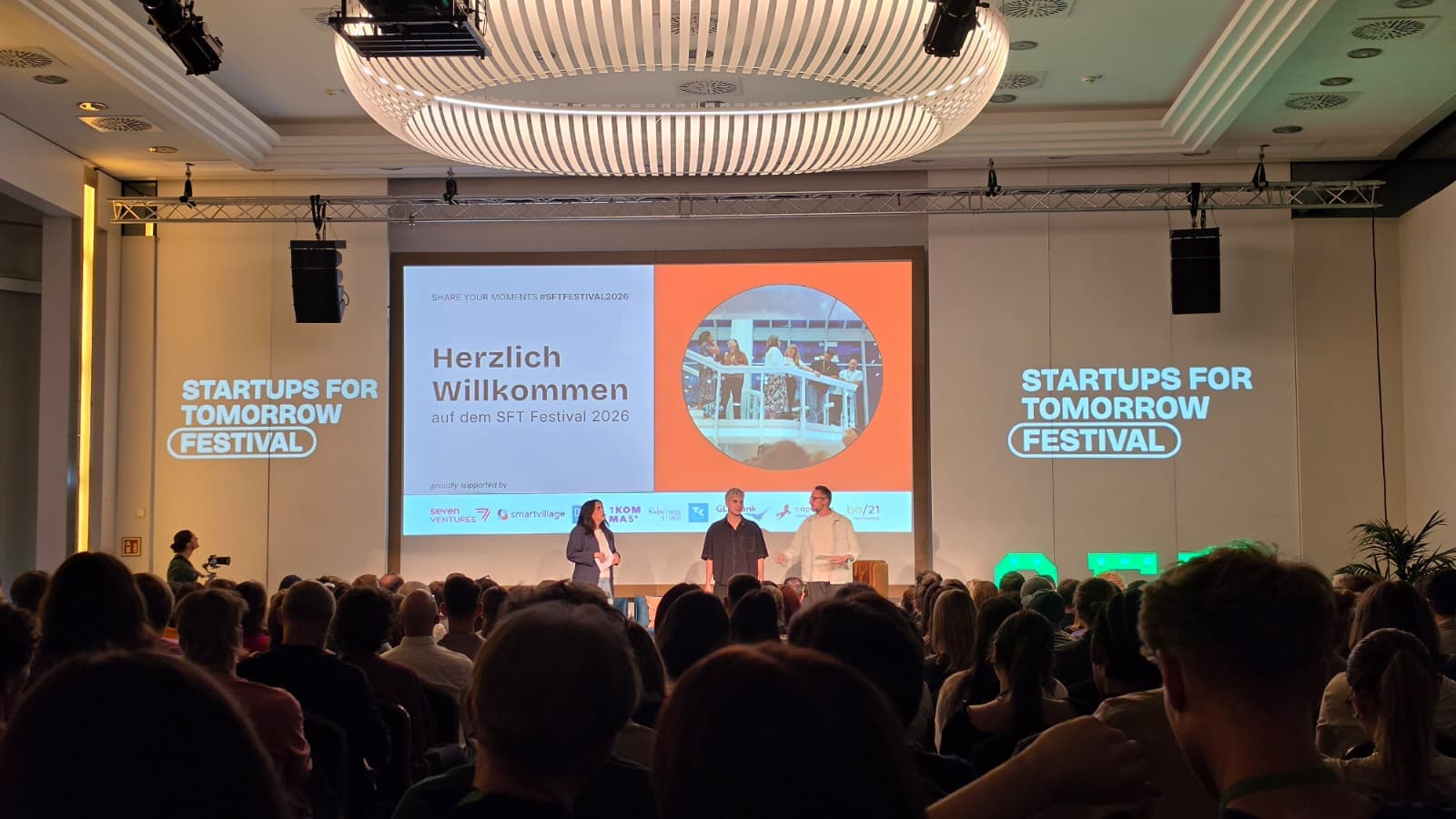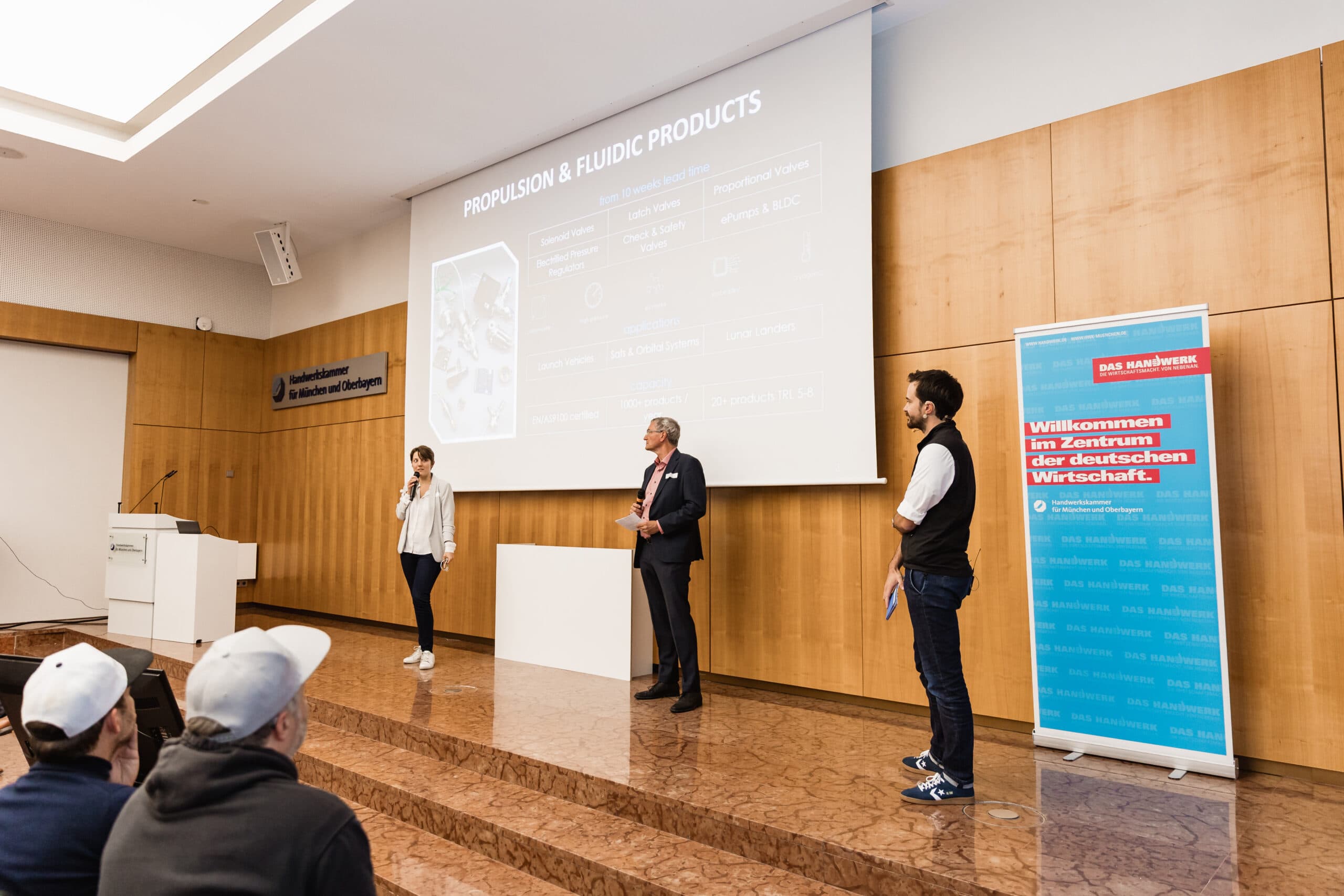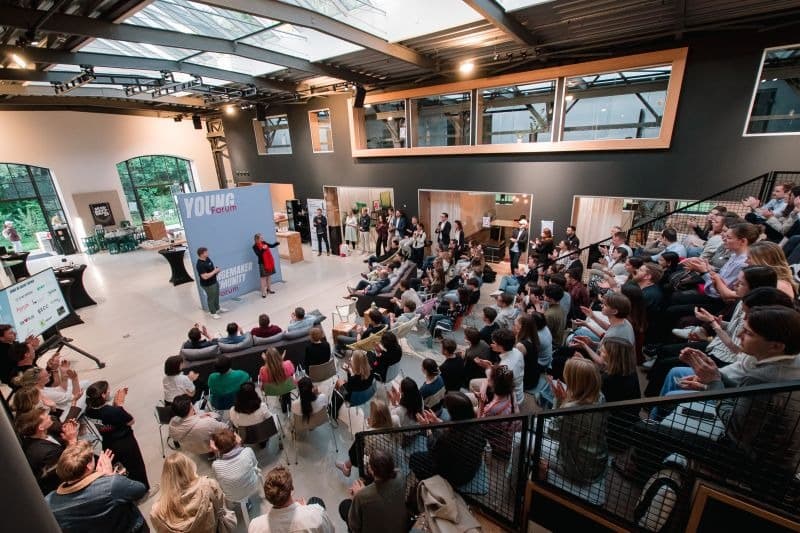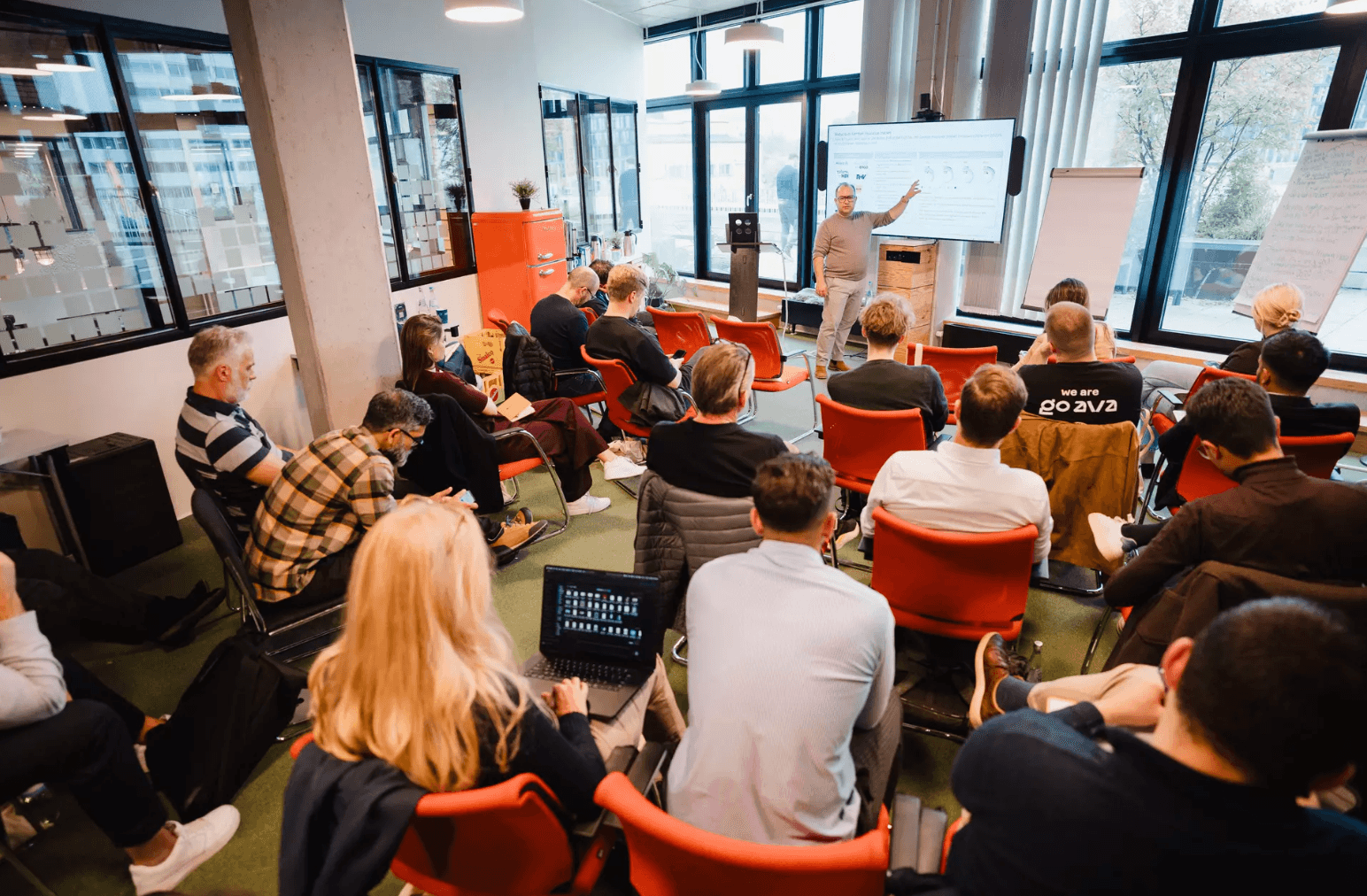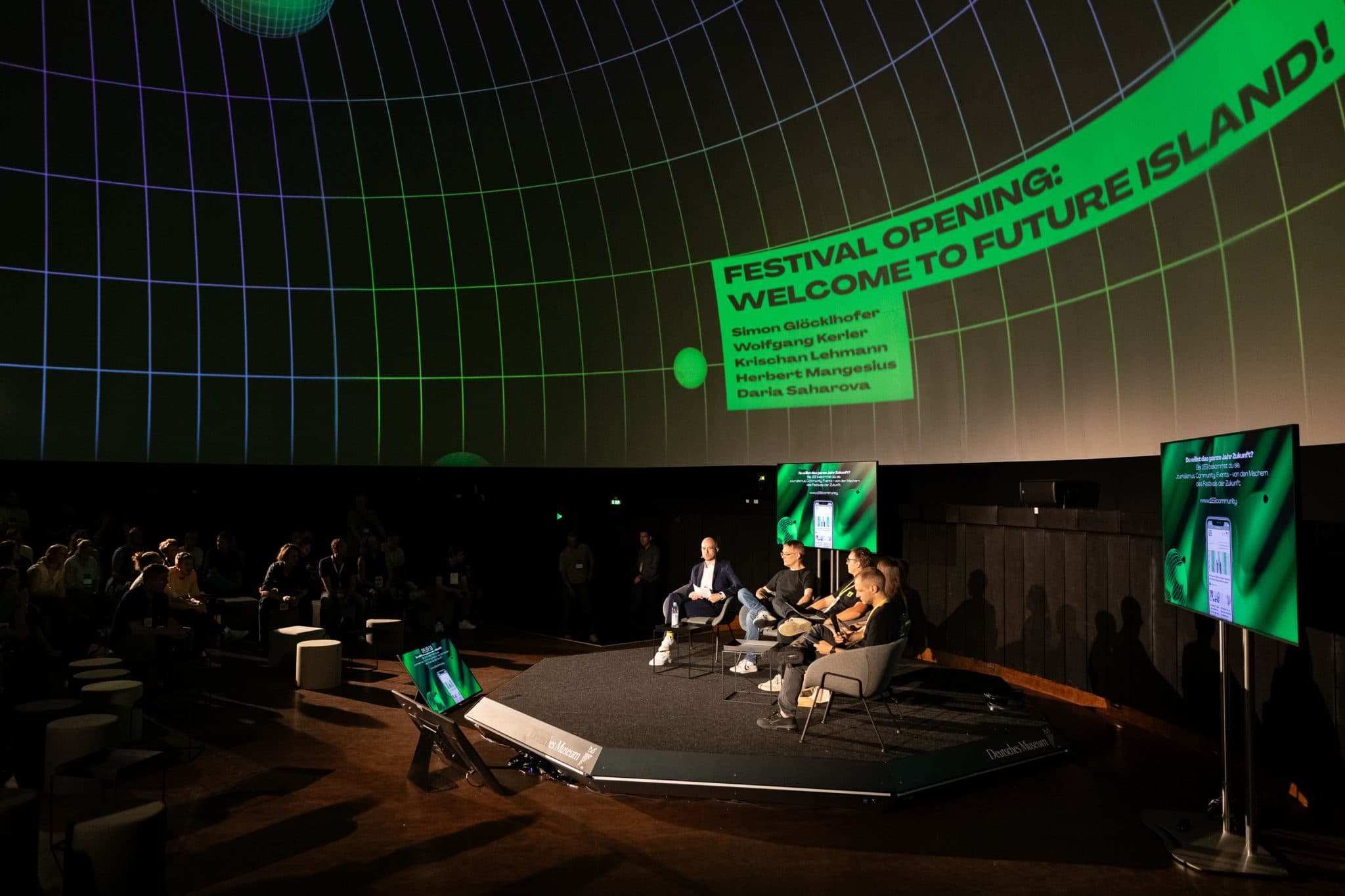

This year’s Festival of the Future from 1E9 transformed Munich’s Museum Island into a future island – because under the motto “Welcome to Future Island”, everything from June 27-30 in the Forum of the Future revolved around the latest developments in technology and science. The event not only provided information, discussions and workshops, but also made the future – or at least one possible version of it – tangible through virtual reality experiences, art installations and various workshops.
Finally the computer understands humans
At the opening of the program, Bavarian Economics Minister Markus Blume and Simon Glöcklhofer, head of the Forum of the Future at the German Museum, discussed how science becomes solutions and new industries. This included, among other things, strategies for strengthening knowledge and technology transfer from research to business, particularly in startups. One technology that has already gone through this process is generative AI Stable Diffusion. Developed by computer science professor Björn Ommer and his team at LMU, the AI is now used in numerous applications.
It makes sense that Ommer spoke at the Festival of the Future about the future of and with artificial intelligence. He not only placed it in a direct line with inventions like the printing press, the steam engine or the computer, which all stand for revolutions in economics and society. Rather, he made clear that what is truly special about current AI solutions is that for the first time, humans no longer need to learn the language of the computer, but the computer understands human language. This means that users no longer need to laboriously learn programs or entire programming languages – instead, it is enough to describe to the AI in their own words what they need. This will radically change and shorten development processes, which will have major effects on the economy. Ommer pointed to estimates that the global economic output of generative AI in 2030 would correspond roughly to that of Germany.
Zodiac signs made of space debris
Just as space travel belongs to any good utopia, spacetech also belongs to the Festival of the Future. This year it was Chiara Manfletti, CEO of Portuguese startup Neuraspace and professor of space mobility and propulsion at TUM, who reported on space travel’s contributions in areas such as logistics, climate research, robotics, microelectronics, materials science and more. But her real message was different: sustainability is not only important for the economy on Earth, it must also make its way into orbit. So there should be increased efforts to use resources from space and to use existing infrastructure for as long as possible. To this end, she presented, among other things, a concept in which water from asteroids is extracted and processed into fuel via an electrolyzer.
Space debris concerned not only Manfletti. While she described the problem from a space travel perspective – currently there is already so much debris (about 160 million objects) in Earth’s orbit that several startups make money predicting satellite operators’ flight paths – her keynote was followed by the presentation of the Space Trash Signs project. The goal of this initiative is to make space debris visible to the public and thus increase awareness of this problem. To this end, space debris constellations were identified and given names and meaning – zodiac signs made of waste, so to speak. For example, the constellation “The Bars of No Service” stands for the failure of communication systems should space debris hit a satellite. Ultimately, as explained by Christopher Kebschull, CTO & Co-Founder of Okapi Orbits, and Shruthi Subramanian, Copywriter at Serviceplan Innovation, Space Trash Signs aims to help put pressure on lawmakers to do more to keep the orbits clean.
A real market for CO2 certificates
Of course, a Festival of the Future must also address climate change, or better yet, find solutions for it. For exactly this purpose, Jörg Eigendorf, Chief Sustainability Officer of Deutsche Bank, Stefan Ferber, CEO & Founder of Treeo, Kathrin McCarthy, Carbon Trader and Biochar Project Manager at Interholco, and moderator Markus Turber, Managing Director at Intuity, discussed the topic of nature-based solutions (NBS) for CO2 removal and cooling. The panelists quickly agreed: there are many solutions, what’s missing is the right market. For Eigendorf, it’s clear that companies currently still lack incentives to actually get into CO2 certificate trading. So the questionable claim of climate neutrality as a marketing promise is not sufficient. Rather, greenhouse gases must finally be included as externalized costs in accounting. And inclusion in the EU taxonomy would also put pressure on companies.
McCarthy brought another important point: there are many projects for CO2 storage in forests (Treeo), biochar (her own project) and other solutions. What they lack is a uniform and reliable standard. Only then can reliable trading also take place. Eigendorf also added that investors are most easily convinced to support these projects when there is definite demand. For example, through government action. He illustrated this with an example: since EU legislation requires the share of sustainable aviation fuel to increase to six percent by 2030, investors are rushing to the producers because there is a guaranteed sales market.
Eternal life in equality
The basic prerequisite for experiencing many of the exhibited and discussed future technologies firsthand is a life that lasts as long as possible. That was exactly the topic of scientist and author Andrew Steele, who addressed the question in his keynote of whether aging could be curable in the future. Because aging, according to Steele, is the leading cause of death and suffering worldwide – not cancer or heart disease. Yet humanity has so far accepted this process as inevitable. That this doesn’t have to be the case, Steele demonstrated with results from cutting-edge research. Even today, laboratories are experimenting with DNA, stem cells, the immune system and so-called aging genes, which in animals have led to a tenfold increase in lifespan. These could in the not-too-distant future lead to treatments that also halt the decline of the human body.
Finally, innovations in health technologies for women were discussed under the motto “Closing the Gap”. Specific topics of women’s health are still often overlooked. To address this gap, more and more startups are engaging in this field, and they also presented themselves on stage: Impact Period brings knowledge about the female cycle to the workplace through workshops, Meliodys Medical offers non-hormonal pain management solutions for menstrual pain. According to AOK board advisor Lisa Feiler, the great advantage of startups is that they see the suffering of those affected holistically. In the primary health market, too many particular interests meet to bring about sustainable change. All panelists saw the biggest challenge in the existing data gaps. The collection of female health data still lags far behind its male counterpart. There would also need to be more capital for research and development and more targeted funding programs for Femtech solutions.
Interstellar solariums and mineral water from Mars
But the Festival of the Future also had much exciting things to offer away from the two main stages, especially at the intersection of art and technology. For example, the media collective Total Refusal showed its short film “Hardly Working”, in which it uses the routines of NPCs in the video game “Red Dead Redemption 2” as a starting point for its critique of capitalism. “As Sisyphus machines, they paint a vivid picture of work in times of capitalism,” it says in the subsequent discussion.
Experimental philosopher and artist in residence at the SETI Institute Jonathon Keats also brought special perspectives. With the installation of an interstellar solarium, he attempted to democratize the experience of space tourism. The idea behind it: many people travel on vacation for a nice tan. Why should space tourism be any different? But since it is very expensive and not very sustainable, everyone can get a tan under the simulated light of different stars in the interstellar solarium.
Moreover, Keats offered all visitors the opportunity to become an alien-hybrid themselves. And here’s how: Keats created a special mineral water with minerals from meteorites that are verifiably from Mars. And since the body binds the minerals it consumes, anyone who drinks some of the water becomes a tiny bit extraterrestrial.
XR in education and art
Numerous interactive VR and AR installations made it possible to cross the boundaries of reality. The startup Salzsammler Studios uses innovations in extended reality to make educationally valuable information accessible through play. What looked like a game mat projected on the floor turned out to be an immersive learning environment. In the interactive game, cameras capture the movements of players and integrate them seamlessly into the application. This is intended to bring a rather dry subject to children: trade and goods transport in medieval Regensburg.
The XR Hub Bavaria was also represented with XR artists from its community. This time the initiative’s focus was on mixed reality art. In virtual reality, visitors could explore the Amazon rainforest or fly through the prairie from the perspective of a threatened bumblebee species. Right next door, visitors could learn about the self-determination struggles of two female aviation pioneers or the future dreams of young people from Lebanon. Sportily ambitious visitors could also bike through Berlin in 2037 on a permanently installed bicycle.
The Current project invited visitors on a journey through ocean currents. After literally immersing themselves in the ocean’s flora and fauna, the 3D environment shows in three phases the effects of climate change and environmental pollution. Plastic swirls up, a siren wails, it begins to snow because temperatures drop, oil droplets pollute the water. The appeal behind it: as part of the ecosystem, everyone is called to act together. For this idea, the artists behind Current received the New Realities Award 2024 at the festival. In the final of the XR competition by 1E9 and XR Hub Bavaria, the best submissions pitched their concepts and products. Bavarian State Minister for Digitalization Fabian Mehring, the patron, awarded the 1,000-euro prize.