
For a long time, defense was a difficult topic for many founders and investors, but at the latest since Russia’s attack on Ukraine, perceptions have fundamentally changed. Defense capability has moved back into the center of the political debate, and with it, the question of what role startups can play in it.
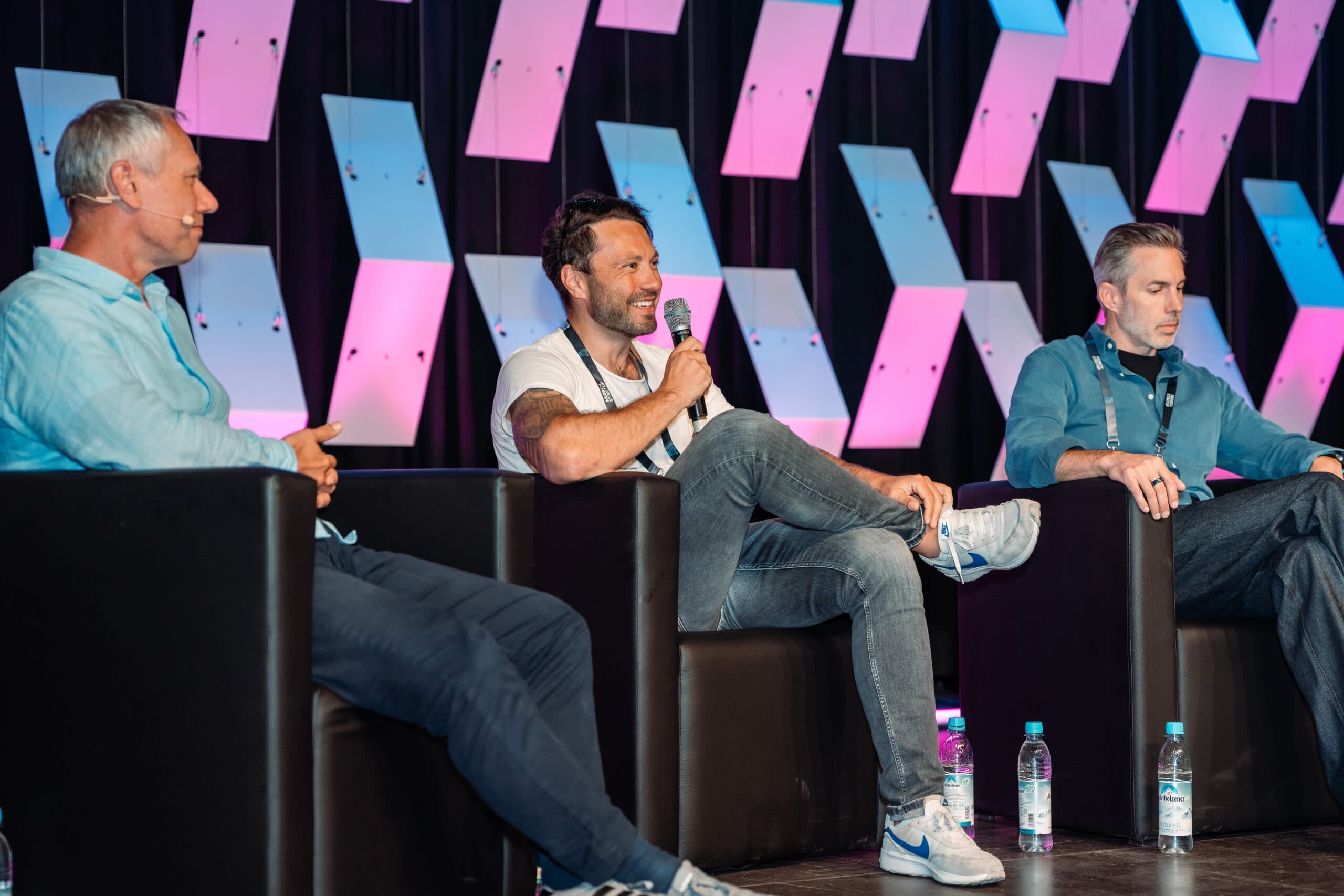
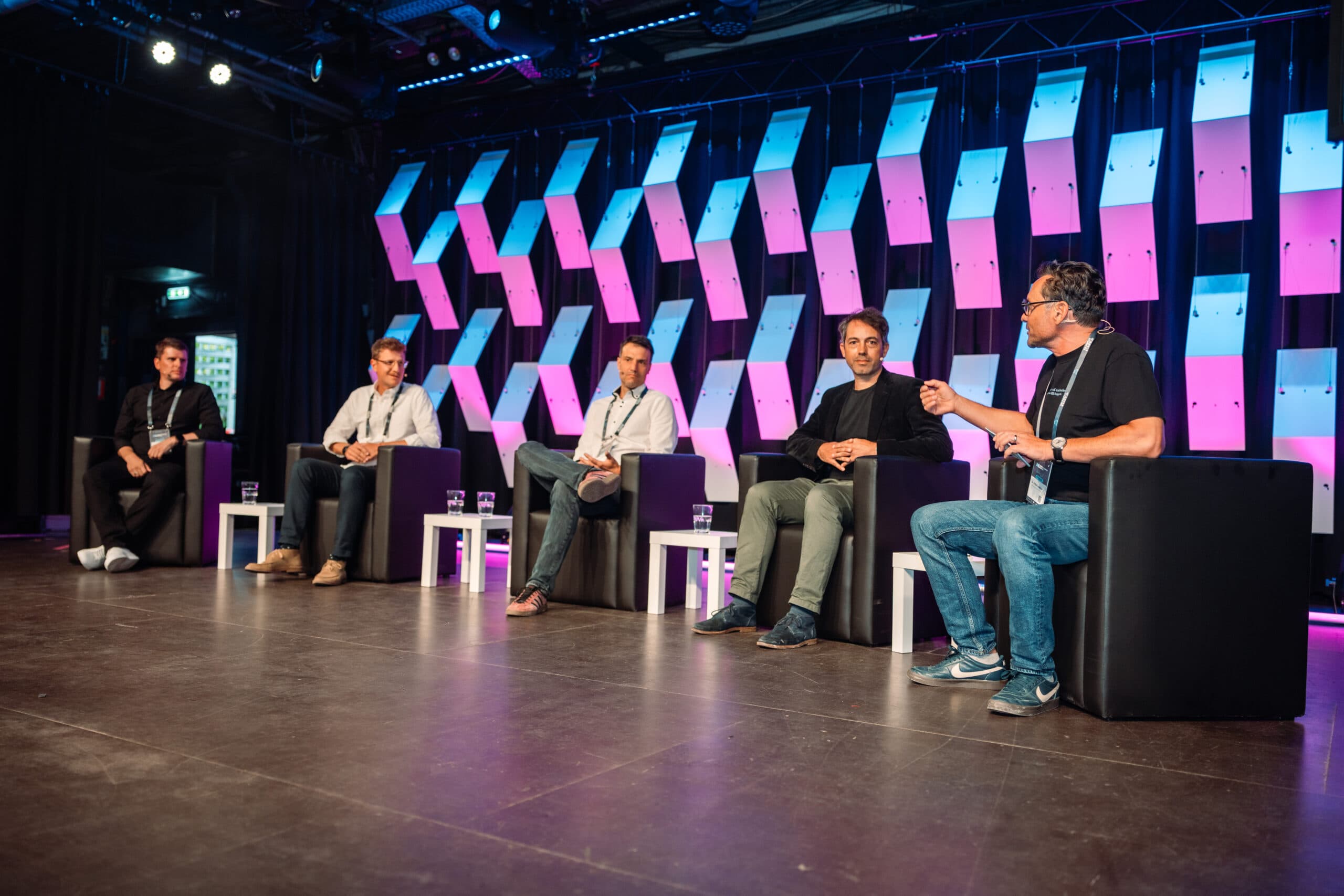
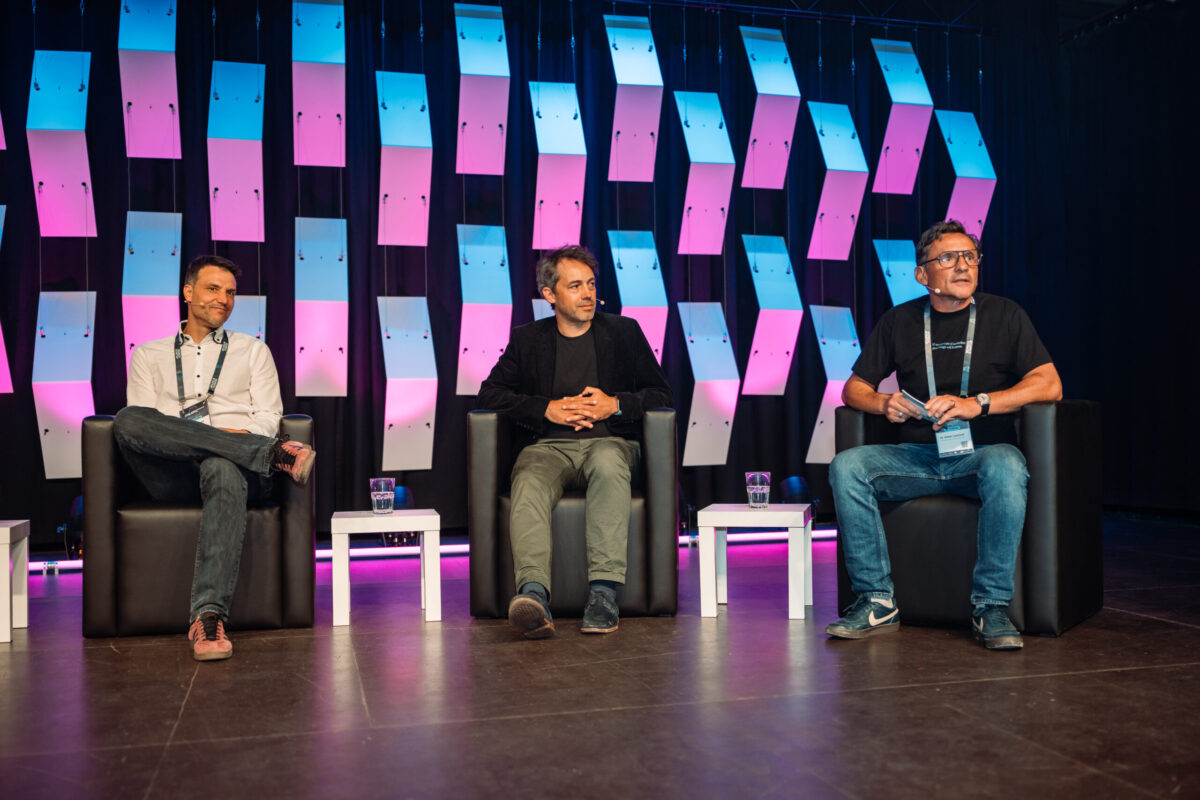
At the Munich Startup Festival 2026, experts from startups, the German Armed Forces, and science discussed precisely this. At the start of the panel “Innovation between Civil and Defence,” moderator Anton Lesnicar made it clear that the traditional separation between civil and military technology is increasingly obsolete anyway.
Today, many technologies are developed quickly and cost-effectively in the civil sector and subsequently used for defense applications. At the same time, innovations from security-critical areas find their way into civil markets. The crucial question is therefore:
“How can these two ecosystems be brought together in a way that allows them to mutually enrich each other?”
Lesnicar knows both worlds. For around 16 years, he developed electric drives at BMW. Today, as part of a NATO Defence Accelerator at Universität der Bundeswehr München, he supports startups in the technical development of their products, from the supply chain to deployment with the customer.
Defence is becoming more socially acceptable
Just how fundamental the shift is, is demonstrated by Timo Zaiser. He is Chief Programs Officer at the startup Project Q, which focuses on sensor networking and was founded in Munich. Zaiser was a soldier himself and recalls times when service members were sometimes advised against traveling home by train in uniform.
Companies, too, preferred to keep their distance publicly from the defence sector. During an earlier project of Zaiser’s with a German car manufacturer, a joint press release was prevented because his company at the time was visibly active in defence. Today, he is observing the opposite trend:
“Ultimately, automotive is pushing into the defence sector.”
From his perspective, the visibility of defence in the public sphere has changed for the better “super well.”
Patrick Jeschke sees a similar shift. As Head of Innovation and Entrepreneurship at the Bundeswehr’s Cyber Innovation Hub, he is responsible for innovation projects implemented together with startups for the German Armed Forces. The hub was founded back in 2017.
Since the start of Russia’s war of aggression against Ukraine at the latest, however, the topic has taken on a different social urgency. It is increasingly about making a contribution.
“Also for our own freedom, for our own peace.”
At the same time, funding and innovation programs are opening up more to defense and dual use. The EU and NATO want to connect young technology companies more quickly with capital, testing opportunities, and potential users. For startups, this creates a market that was long difficult to access.
“Nothing beats Reality”
However, defence tech is not a market that startups can conquer with a convincing pitch alone. This is demonstrated by Steffen Müller. He is the managing director and co-founder of Wolf Radar GmbH from Erlangen. The young defence tech company develops radar technology for detecting, locating, and countering drones.
In its very first year, the team developed two prototypes and tested them with concrete stakeholders, including the Cyber Innovation Hub and established defence companies. Müller’s key takeaway:
“Nothing beats reality. You have to deliver.”
The industry is “very, very results-oriented.” Naturally, a pitch is part of the process, but ultimately, a startup has to prove that its technology can actually solve a specific problem. That is precisely what gave Wolf Radar credibility and visibility with potential customers.
Yet the path from prototype to contract remains demanding. Lesnicar describes three areas where young companies need support: business and financing, product development, and above all, understanding the actual military need.
“If you don’t understand what the customer wants, it will probably become too expensive or take too long.”
In the worst case, it becomes difficult to position your own technology at all.
“The Bundeswehr is not looking for products”
Patrick Jeschke sums up one of the key differences compared to the traditional B2B market:
“The Bundeswehr and the military are not looking for products, but for capabilities.”
For startups, this means that technical specifications shouldn’t be the sole focus. The crucial question is what problem the technology solves for soldiers.
A military requirement might, for example, be “standoff explosive ordnance disposal.” Which technical solution is needed for this must first be derived from that. Anyone wanting to enter the defense market must therefore think much more in terms of the use case than their own product.
The Cyber Innovation Hub assumes precisely this intermediary role between startups and the Bundeswehr. At the time of the panel, according to Jeschke, it had carried out 218 innovation projects. Within twelve months, ideas are to be researched, solutions procured, and tested together with soldiers under real-world conditions, such as on military training areas or shooting ranges.
By Bundeswehr standards, this is, as Jeschke himself puts it, an “incredibly fast” approach.
Where Does the Responsibility of AI End?
However, the defense boom raises more than just economic questions. As AI and autonomous systems become more powerful, ethical boundaries also become increasingly important.
Christopher Koska deliberately brings in a perspective from outside the defense industry. At the University of Augsburg, his work includes research on responsible AI and predictive models in industrial manufacturing.
Koska considers it problematic to attribute responsibility to machines themselves. With a machine, one could rather talk about reliability. Responsibility still lies with the humans behind the system.
“On first reflex and in the final moment, of course, a human is always responsible for it.”
What is crucial, however, is whether this human can still intervene meaningfully at all. Koska speaks of “meaningful human control.” If this control is missing, a human could be held formally responsible, even though they have virtually no actual influence left over the system’s decision.
This question is becoming increasingly relevant, especially with autonomous drones, vehicles, or AI-powered systems. As a result, technological capabilities and responsibility are growing in tandem.
Dual Use Works in Both Directions
At the same time, defencetech does not automatically mean weapons technology. Sensor technology, communications, cybersecurity, and the protection of critical infrastructure show just how fluid the boundaries have become.
Project Q is an example of this. The startup initially developed its technology with a clear focus on defence. Now, Zaiser sees an “enormously high cross-utility” for civilian applications – such as protecting critical infrastructure or railway tracks.
“The line between homeland security and the actual military will blur more and more.”
Müller sees things similarly at Wolf Radar. Whether his radar technology is intended to detect drones around military installations or attacks on civilian infrastructure makes little difference from a technological standpoint.
“We have both feet firmly in both the defense and dual-use sectors,”
says Müller. The goal remains the same: detecting threats and then neutralizing them.
Munich as a Defense Tech Hub
Munich and Bavaria in particular could benefit from this development. Research institutions, the Bundeswehr University, established defense companies, new defense tech players, specialized suppliers, investors, and accelerators all come together here in close proximity.
For Müller, these are precisely the ingredients startups need: access to research, major defense companies and new “neo-primes,” local suppliers and secure supply chains, as well as facilities like Palladion and infrastructure where technologies can actually be tested. He notes that the investor community is also paying significantly more attention to the sector now.
The discussion at the Munich Startup Festival thus strikes a chord. Germany and Europe are investing more heavily in their defense capabilities while simultaneously looking for ways to bring technological innovation into application faster.
This opens up enormous opportunities for startups. However, the new defense market demands more than capital and good pitches. Founders must prove that their technologies work, create concrete capabilities, and at the same time engage with the responsibility associated with their deployment.