
While many fusion energy projects initially aim for the scientific proof of net energy gain, Gauss Fusion is focusing on the industrial feasibility of the technology. The Munich-based company is developing a modular stellarator fusion power plant designed from the outset with maintainability, serial production, and long-term economic viability in mind.
The planned power plants are intended to operate reliably for more than five decades. To achieve this, Gauss Fusion combines high-field stellarator technology with proprietary components, systematic power plant engineering, and the manufacturing expertise of established industrial partners.
The newly closed Seed-to-A financing round is set to advance the technical development and validation of these components. According to the company, founders, industrial partners, and existing as well as new shareholders participated in the round. Gauss Fusion did not disclose the financing amount or individual investors.
In parallel, the company has kicked off fundraising for its Series A. Gauss Fusion reports substantial interest from potential investors, though it has not shared a target funding volume or a timeline for the close.
Three Key Technologies for Modular Stellarator Fusion Power Plants
At the core of the development program are three proprietary technologies designed to address key technical challenges of future fusion power plants.
Demountable Mitchell Magnets (DMM™): The modular high-field magnets are designed to be suitable for industrial manufacturing processes and simplify assembly as well as maintenance. Magnetic fields are a crucial prerequisite for confining the extremely hot plasma in a stellarator.
HEXA™: The modular solid breeding blanket is intended to play a central role in the future fuel supply. Such systems serve to generate tritium from lithium, which is needed as fuel for certain fusion reactions. At the same time, breeding blankets must be able to withstand the high neutron load in a fusion reactor.
PinkCap™: The plasma exhaust technology is designed to address challenges in removing particles and heat from the plasma. Thermal management is one of the essential technical requirements for continuous power plant operation.
The three technologies are components of the GIGA™ power plant concept. According to the company, the development is based on an independently reviewed Conceptual Design Report (CDR).
Gauss Fusion pursues a phased development approach: individual technologies are to be further developed and validated before being integrated into larger systems. This is intended to gradually reduce technical and industrial risks.
Series A to fund engineering, prototypes, and validation
With the launch of its Series A funding round, Gauss Fusion is preparing for the next development phase. The additional capital is primarily intended to flow into engineering, prototype construction, and the validation of critical technologies.
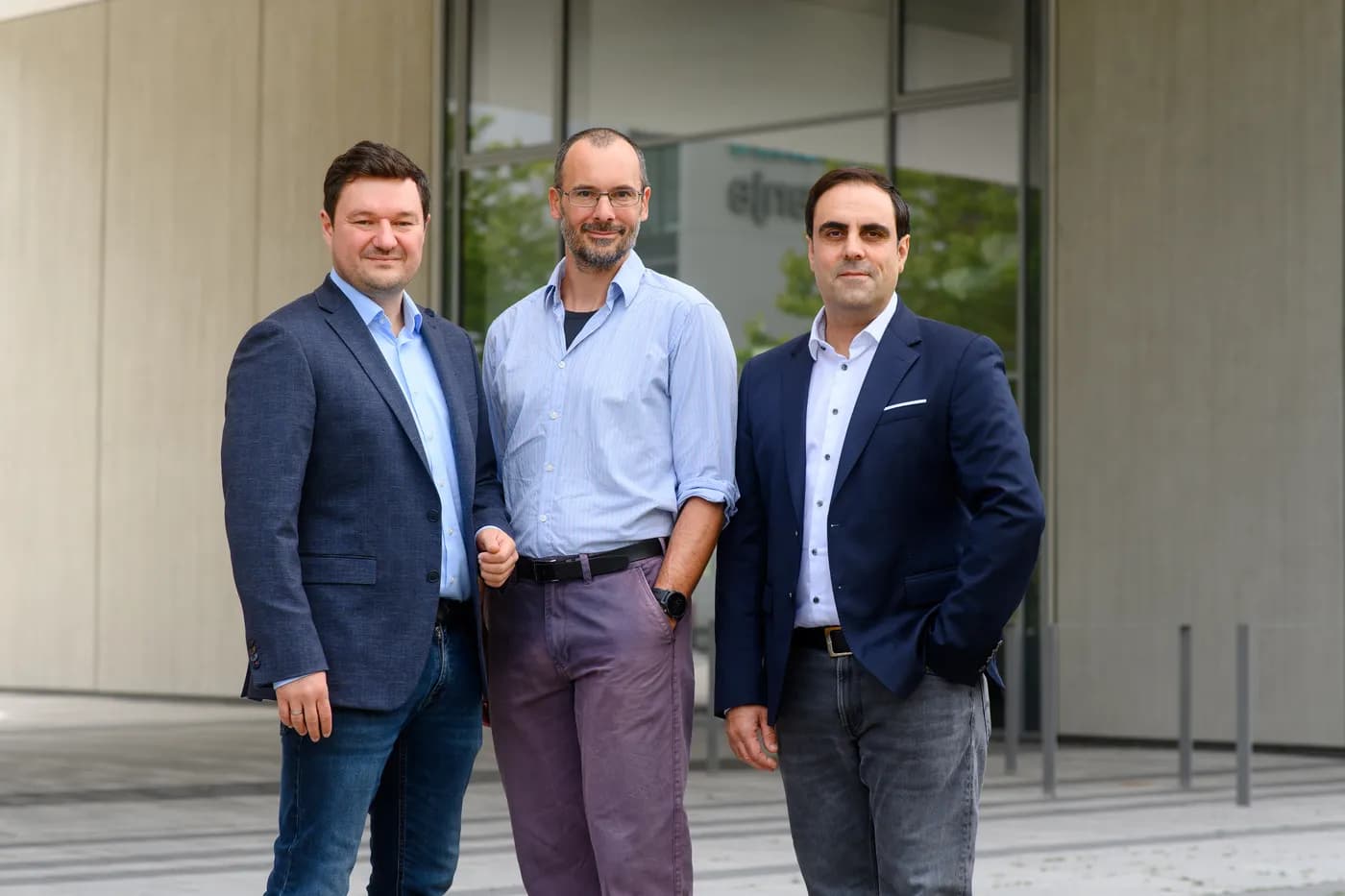
Uwe Bau, CEO of Gauss Fusion, emphasizes the importance of the industrial approach:
“Our goal goes beyond demonstrating scientific net energy gain. We are developing the technical and industrial foundations for power plants that can be reliably manufactured, maintained, and operated over decades.”
This puts Gauss Fusion’s focus on a challenge that goes beyond pure plasma physics: even if a fusion system achieves a positive energy yield, additional prerequisites must be met for commercial power plant operation. These include, among other things, plant availability, the service life of individual components, fuel supply, and cost-effective maintenance.
Gauss Fusion intends to take these requirements into account as early as the development phase, drawing on industrial manufacturing capacities as well as partnerships with public research institutions.
GID-170: Industrial Demonstrator as the Next Development Step
A key component of the medium-term development strategy is the planned Gauss Industrial Demonstrator (GID-170). This demonstrator is designed to bring together core technologies and test their integration.
The GID-170 is thus intended to bridge the gap between developing individual components and the subsequent construction of complete fusion power plants.
Gauss Fusion does not provide a specific timeline for commissioning the demonstrator in the current release. Details regarding the projected total costs or technical performance data of the GID-170 also remain undisclosed.
For further development, it will be crucial whether the company can demonstrate the intended properties of its components under realistic conditions and subsequently transfer the technologies into industrial manufacturing processes.
Industrial Fusion Energy: From Research to Power Plant Engineering
In addition to scientific advancements, the commercial use of nuclear fusion requires solutions to numerous engineering challenges. In particular, the resilience of materials, the handling of high heat fluxes, tritium supply, and the maintenance of complex facilities affect technical and economic viability.
Gauss Fusion positions itself in this environment as an industrially oriented developer of stellarator power plants. Unlike tokamak concepts, the magnetic field of a stellarator is primarily generated by its external coil geometry. This offers inherent advantages for continuous plasma operation, but places high demands on the design and manufacturing of the magnet systems.
Gauss Fusion aims to address these requirements with modular magnets and other proprietary components.