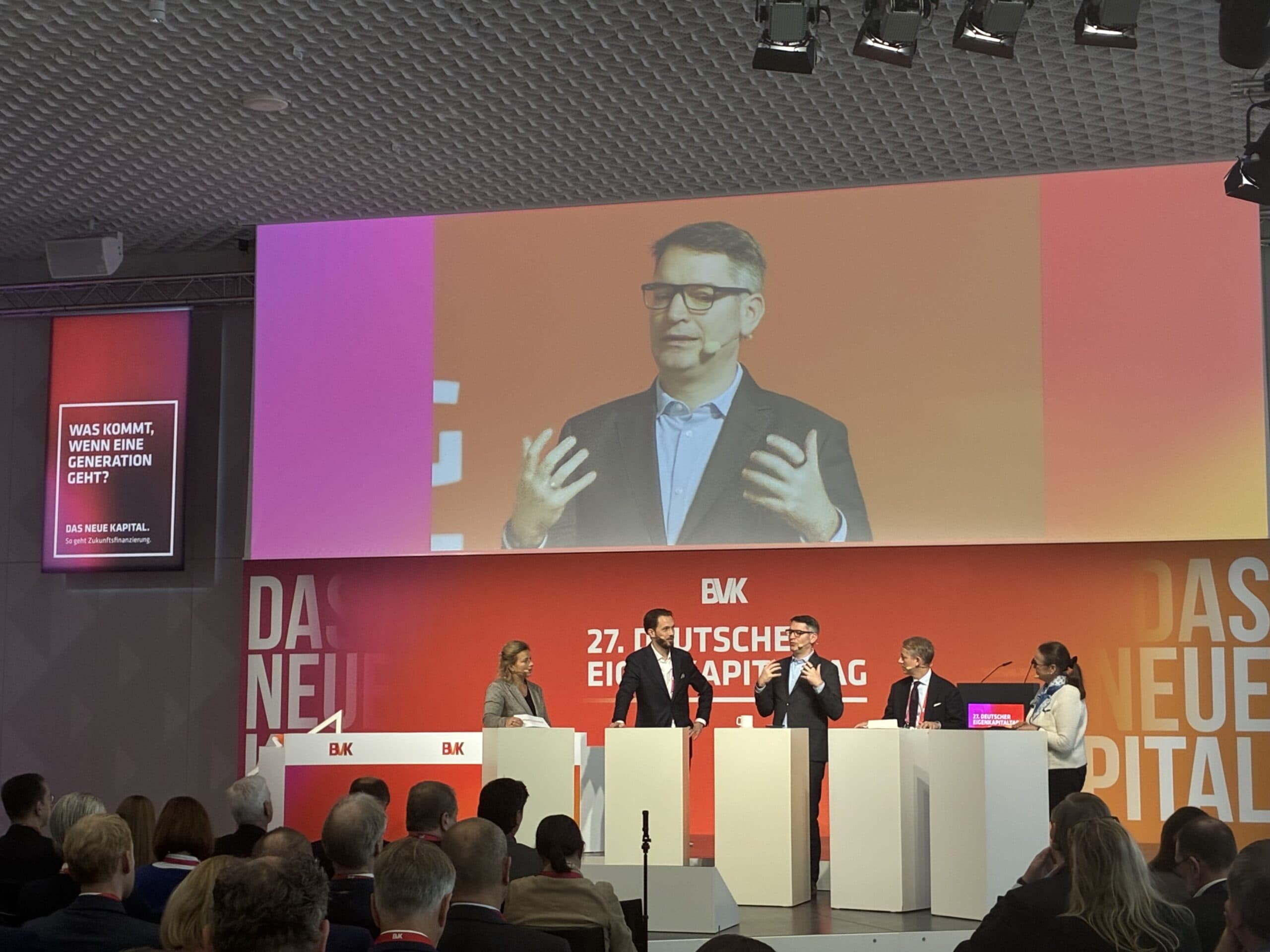

Do German growth companies lack domestic venture capital to lead the global tech race? At the 27th German Equity Day (DET 2026) in Berlin, over 300 investors and industry experts are debating viable ways out of Europe’s persistent capital bottleneck. While the Munich startup ecosystem produces leading scaleups, their late-stage financing rounds are still funded almost exclusively by the US and Asia.
Arno Eggers, Head of Munich Startup, reports from Berlin.
Munich’s Flagship Startups in the Spotlight
Among the experts on site, attention repeatedly turns to Bavaria: startups such as Helsing, Quantum Systems, or Tytan demonstrate the potential of the metropolis on the Isar. Just how important these teams are for the entire business location is also underlined by the recent Germany Tech – 9M 2026 Report, according to which Bavarian tech companies account for substantial shares of venture capital inflows nationwide.
Nevertheless, DET 2026 reveals the familiar dilemma: as soon as funding rounds exceed the fifty-million-euro threshold, European consortia are lacking. Large foreign funds take the lead, securing valuable voting rights in key technologies.
Structural Deficit in European Growth Capital
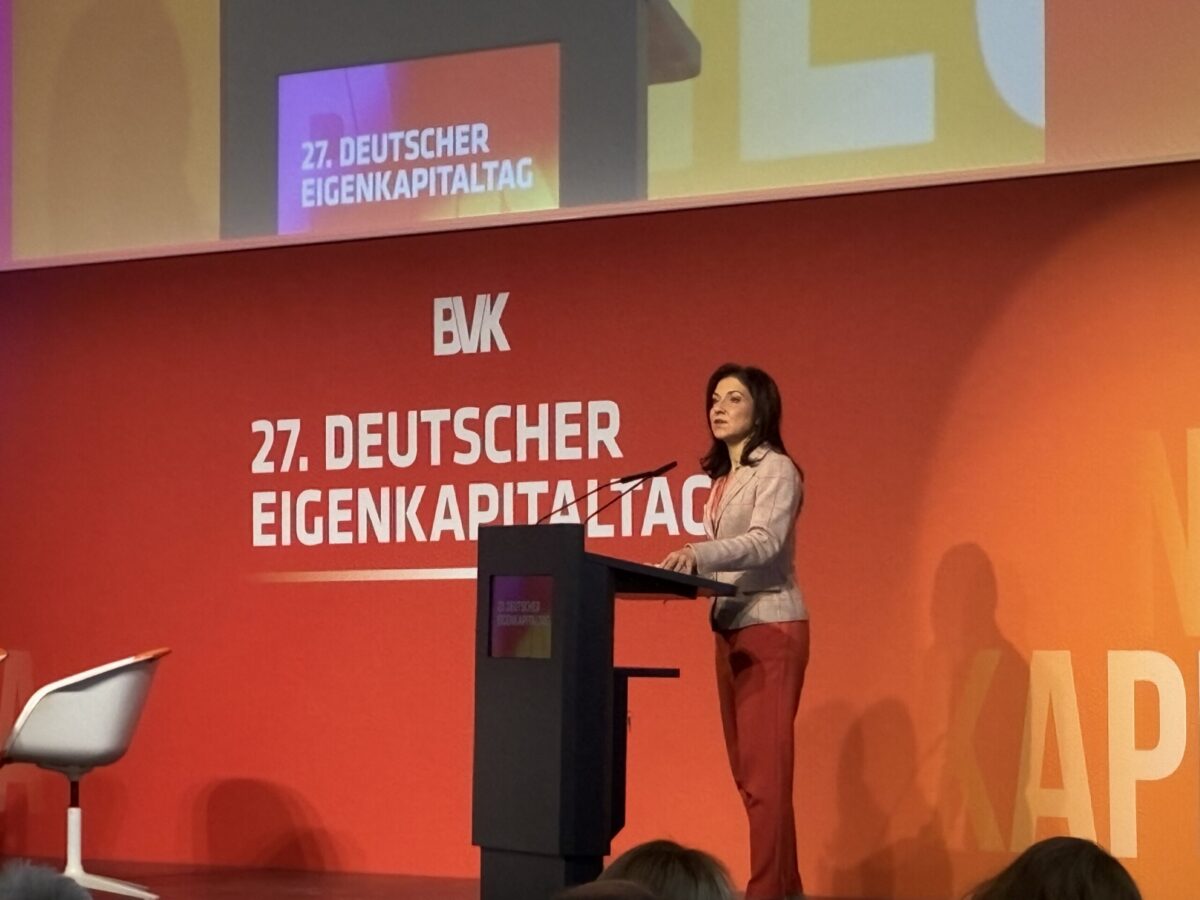
Why does private retirement capital flow so hesitantly into innovative future sectors in this country? European pension funds and insurers predominantly park funds in government bonds or fixed-income securities. At the same time, high-potential returns migrate abroad because domestic funds rarely have the necessary volume. Federal Minister for Economic Affairs Katherina Reiche also emphasizes this:
“When companies like Helsing grow, Canadian pensioners profit. I wouldn’t mind if German pensioners did too.”
Although state initiatives such as the Future Fund are taking effect, they only selectively bridge the gap with North America. The European market lacks tens of billions of euros in private capital to independently finance promising startups all the way to an IPO.
Determination meets bureaucratic reality
The mood during the stage sessions fluctuated between energetic drive and sober powerlessness. Many venture capital teams have been calling for relaxed investment regulations for institutional investors and a genuine European capital markets union for years. But while foreign competitors approve investment initiatives at rapid speed, national regulations continue to slow the pace here. Reiche also emphasized that, going forward, it is crucial to enable faster first and regulate only afterwards.
A race against time
The example of Munich proves that innovative products and first-class founding teams are readily available. However, whether hubs in Germany and Europe can translate this advantage into lasting value creation depends on the swift mobilization of institutional capital. The foundation is in place, but the window of opportunity is closing fast.