Helsing at 18 billion valuation: What the mega-deal means for Germany’s startup scene
Kyrill Ring
According to insider reports, Helsing could raise around 1.2 billion dollars in fresh capital and be valued at around 18 billion dollars in the process. This would make the Munich defencetech company not only one of Europe’s most valuable AI startups, but probably also the highest-valued German startup ever. We spoke with Arno Eggers, head of Munich Startup, about the possible mega-deal.
That a defencetech company of all things reaches this dimension marks a profound shift in the European startup ecosystem. Just a few years ago, defense technology was considered barely investable by many European investors. Today, the sector is developing into a geopolitically charged billion-dollar market — with Munich as one of Europe’s most important centers.
Why Helsing is much more than just another unicorn
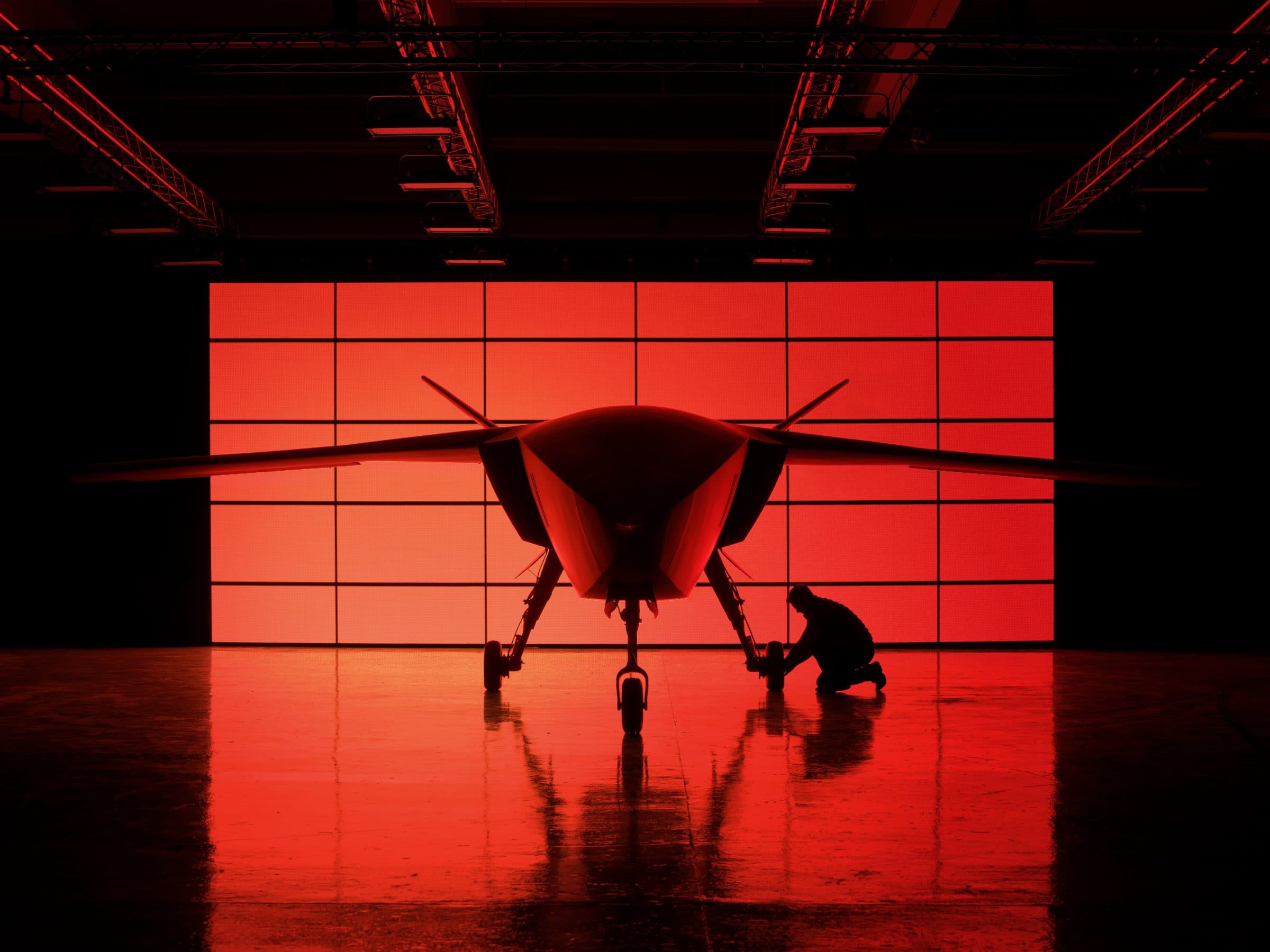
Helsing differs significantly from classic German software or B2B startups. The company develops AI-based defense systems, software for military decision-making processes, and autonomous technologies for modern battlefields. The startup recently gained particular prominence through its activities in AI-controlled drone technology.
For Arno Eggers, head of Munich Startup, a financing round of this magnitude would have enormous signaling power for Germany as a location.
“A deal of this enormous scale is a really strong signal. It proves that we produce startups that compete at the world’s top level both technologically and financially. This case makes clear: we can also build geopolitically decisive, highly complex deeptech giants.”
Until now, Germany was internationally known primarily as the home of industrial mid-market companies, enterprise software providers, and B2B specialists. Helsing could shift this image, at least partially — toward a location for strategic AI and deeptech companies.
Why defencetech suddenly becomes a billion-dollar market
For a long time, defencetech was considered difficult terrain for venture capital in Europe. Many funds categorically excluded investments in military-adjacent technologies. Since Russia’s attack on Ukraine, however, this attitude has changed considerably.
Eggers sees this as the central driver of Helsing’s momentum:
“Defencetech was an absolute taboo topic for European investors for a long time. However, the geopolitical upheavals of recent years have reversed the trend.”
Defense is increasingly understood today as a necessary safeguard for democratic and economic stability.
“That’s why the momentum for such large financing rounds in this segment is exactly so strong right now.”
At the same time, defense spending across Europe is rising dramatically. Governments are increasingly seeking technological solutions for modern conflict scenarios — from AI systems to autonomous drones to data analysis platforms.
For Eggers, it’s clear that Helsing should not remain an isolated case:
“Europe has now recognized that technological sovereignty is vital, and therefore we will experience a major defencetech boom in the near future. But how long it will last remains to be seen, but I think it will be more of a sprint than a marathon.”
Despite the potential record valuation, Eggers sees European technological sovereignty as far from secured. Many large financing rounds for European startups continue to depend on international capital, often from the USA or the Middle East.
“A single large financing unfortunately does not create European technological sovereignty.”
The structural problem persists:
“Too often, purely European venture capital is insufficient for such dimensions, which means that financial control over our key technologies frequently flows back to non-European countries anyway.”
In global competition, the possible Helsing deal is therefore more of a glimmer of hope than a turning point.
Munich positions itself as a European deeptech hub
For Munich, Helsing could still have enormous impact. The city has been developing for years as a center for AI, space, robotics, and defencetech startups. With companies like Helsing, Europe is for the first time creating technology players with global geopolitical influence.
Eggers also sees this as an opportunity for the long-term positioning of the location:
“We are on exactly the right path here in Munich to lay the proper foundation for precisely that. Whether through our strong international appearances like recently in Texas or the upcoming major Startup Festival in July, our local ecosystem is just now aligning everything to produce even more such global players in the future.”
More like this
Related Articles to Read Next
How To
Munich Startup Experts: Scout Checks – What Founders Need to Know
04.09.26
8 Min.
Ecosystem
Young Forum: Opening Doors for Young Talent
03.09.26
3 Min.
How To
Munich Startup Experts: Key Legal Fundamentals When Founding a Startup
17.08.26
6 Min.
How To
Munich Startup Experts: How Startups Benefit from Million-Euro Funding
13.08.26
7 Min.
How To
Munich Startup Experts: Why the best digital talent doesn’t respond to your job ad
28.07.26
10 Min.
How To
Munich Startup Experts: „Because my boss was an idiot.”
26.05.26
4 Min.
How To
With Spezi, grit, and AI: Clera raises 3 million dollars
21.05.26
6 Min.
How To
For a generation taking responsibility – The Young Founders Network in interview
26.02.26
6 Min.
How To
Continuous fundraising: How Tokenize.it paves the way for digital investments
30.01.25
4 Min.
How To
Teilzeit.Talente: job board for part-time-friendly employers
27.01.25
4 Min.
How To
Startup consulting and entrepreneurship at the TU München