“In the legaltech sector, we faced a gap just a year ago: there were increasingly more people who wanted to start startups, but the environment for it wasn’t ideal yet. For these people, we wanted to create an incubator and accelerator with Legal Tech Colab.”
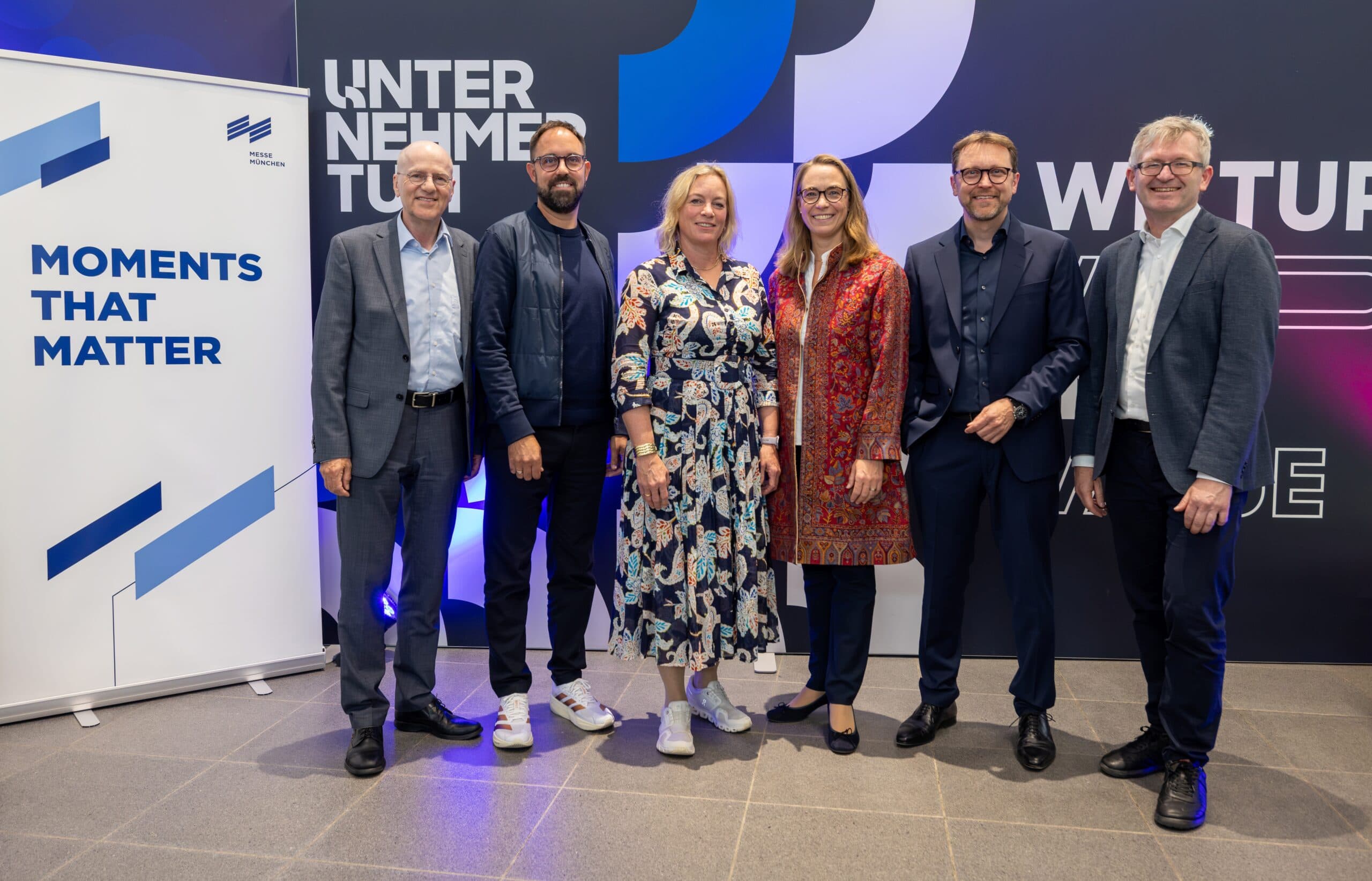
That’s how Bavarian State Minister of Justice Georg Eisenreich described the initial idea behind the project at the celebration of “Legal Tech Colab’s” first anniversary in Munich Urban Colab, which the Justice Minister developed together with UnternehmerTUM CEO Helmut Schönenberger. Today, the Colab’s ecosystem includes major law firms, legal departments of DAX companies, and experts from science, law, business, and technology. The goal is to build Europe’s leading hub for technology-based startups in the legal sector.
That this approach seems to be working is shown by the numbers: in the past year, thirteen startups were accepted into the program out of over 70 interested ones. Three of these teams received seed financing in the seven-figure range.
“And the interest in Legal Tech Colab is not waning! Our ecosystem of leading law firms, legal departments of DAX corporations, and VCs is growing,”
said Stefan Blenk, Managing Director of Legal Tech Colab. With the help of the program, founders receive support on the path to market readiness and for their first financing. In all phases, teams also have access to scholarships and workspaces. Early-stage startups and prospective founders who are developing an innovative and internationally scalable product based on cutting-edge technologies such as AI or blockchain can apply. The core of the business model should have a close relationship to the legal sector. In addition to legaltech, this can also include startups in the areas of regtech, taxtech, insurtech, and fintech.
Legal Tech Colab: “How to build a legal tech unicorn”
At the conference marking the first anniversary, experts from the legal industry and the startup scene discussed the intersection of law and technology and how emerging startups can grow into billion-dollar legaltech companies. Scientists shared their assessment of legal areas particularly suited for innovative solutions and presented practical examples. Professor Thomas Riehm from the University of Passau, for instance, saw significant, yet untapped founding potential in family law, legal protection insurance, and the area of digital learning offerings for students.
Renowned founders such as Nikolaus Volk and Francesco Wiedemann from Kyte or Jorn Vanysacker from Henchman provided insights into their personal success stories and their key learnings. Celonis founder Bastian Nominacher passed on the following advice to prospective founders:
“Focus on customer value and stay persistent – no matter what challenge you face.”
Finally, to give young entrepreneurs a platform, founders of five startups that were or are part of the Legal Tech Colab funding program had the opportunity to present their solutions:
- Suitcase offers a neutral platform for settling legal disputes, designed to help avoid lengthy and costly court proceedings.
- Dskrpt is working on an online tutor for law students. On the platform, teachers can create their lecture materials and students can read, discuss, and learn together.
- Kertos is working on automating data protection. Its no-code SaaS solution is designed to connect a company’s entire infrastructure to manage personal data and automate the entire data protection process.
- The founders of Silberfluss want to support law firms with their automation platform in complete case management. In the medium term, the public administration could also benefit from the solution.
- Certivity aims to simplify the lives of engineers in the automotive industry by digitizing, simplifying, and accelerating the verification of regulations.