
Robots can walk, grasp, and sort objects. Yet there is a massive leap between spectacular demonstrations and reliable deployment in a factory. After all, what works under laboratory conditions is far from guaranteed to hold up in everyday industrial operations. This is precisely where Munich-based startup Microagi comes in.
Founded in 2025, the company aims to bring artificial intelligence out of research labs and into industrial practice. This doesn’t necessarily require new robots. Much more critical are the right data, suitable AI models, and the ability to train machines for specific tasks.
Behind Microagi are five founders: Bercan Kilic, Yoan Iliev, Anton Poletaev, Nico Nussbaum, and Artjem Weissbeck. Kilic previously worked as an aerodynamics engineer for the Red Bull Racing Formula 1 team, while Iliev worked at Mercedes in Formula 1. Now, they want to leverage their experience with complex technical systems to advance industrial robotics.
$55 Million for the Next Generation of Robots
Just a few months after being founded, Microagi caused a stir. In July 2026, the startup raised $55 million in a seed funding round. The round was led by Hummingbird, with participation from Northzone, LocalGlobe, Village Global, and Redalpine.
According to the company, this was the largest seed funding round in German startup history. The capital is earmarked, among other things, to expand the AI infrastructure, acquire training data, and deploy the technology with industrial clients. In doing so, Microagi is collaborating with prominent technology partners such as Google Cloud and Nvidia. These partnerships are particularly intended to facilitate access to high-performance computing infrastructure and robotics technology.
Microagi founder and CEO Bercan Kilic explains why the timing is crucial, in view of Europe’s skilled labor shortage:
“The most experienced workers are retiring this decade, and there simply aren’t enough young people to replace them. Reshoring production only works with robots.”
Why Microagi Doesn’t Need to Build Its Own Robots
The decisive difference compared to traditional robotics companies lies in the business model. Microagi does not develop its own industrial robots, nor is it focused on training large AI foundation models from scratch. Instead, through its Atlas platform, the startup is developing a technological bridge between existing robot hardware and powerful AI models.
To achieve this, workflows in companies are first recorded. The gathered data helps adapt existing AI models to specific tasks and production environments. The trained systems can then be deployed on suitable robot hardware.
This process is known as post-training: an already developed AI model learns to reliably perform a specific task under particular conditions.
The advantage: industrial customers do not necessarily have to commit to a specific robot manufacturer or a single AI provider. According to Microagi, Atlas is designed to be both hardware- and model-agnostic.
Kilic describes the collaboration with AI model developers as follows:
“We provide the labs with data, they deliver models to us, and then we augment these with proprietary data to satisfy our customers.”
Added to this is an unusual go-to-market approach: Microagi plans to lease functioning robot systems rather than selling the hardware to customers. The company describes a performance-based model under which it only gets paid if the robot actually works.
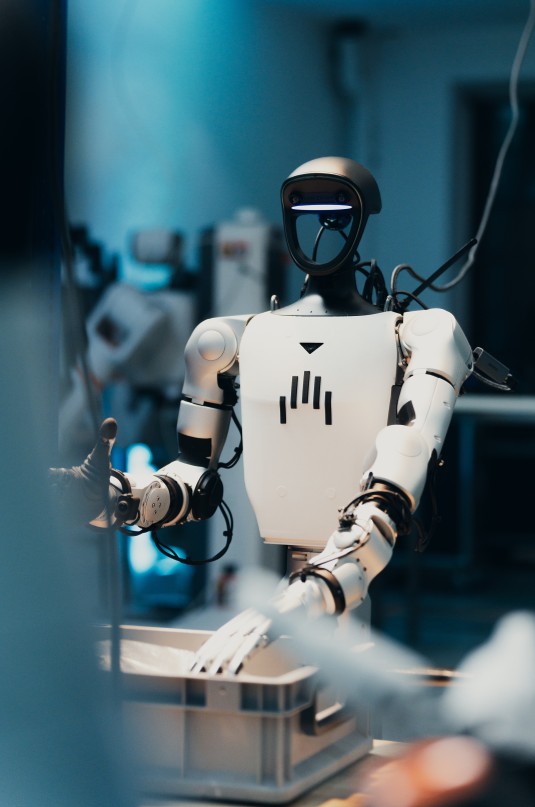
Microagi is a Munich-based AI startup founded in 2025 that trains robots for industrial applications. Using its Atlas and Shift platforms, the company collects training data and adapts AI models to specific workflows. The technology works independently of specific robot manufacturers. Behind Microagi are five founders, including former Formula 1 engineers Bercan Kilic and Yoan Iliev. In July 2026, the startup secured 55 million dollars in a seed funding round. (Photo: MicroAGI GmbH)
Data is the key
A second component of the business model is Shift. Through this platform, Microagi collects recordings of real human activities in order to extract training data for robot models.
For example, people wear cameras that record their perspective during everyday work routines. The data documents movements and manual tasks that robots are later intended to learn.
According to a report by Business Insider, Shift is now active in more than 15 countries. Accordingly, more than 25,000 people are paid to record their activities. These figures are based on company information.
With this, Microagi is addressing one of the fundamental problems in robotics: while language models can draw on vast amounts of publicly available text, comparable datasets for physical activities are lacking.
Robotics researcher Animesh Garg, who leads research at Microagi, also sees this as a key challenge. In essence, he explains:
“The development of leading AI systems in robotics is slowed down far more by a lack of data than by a lack of computing power.”
Garg particularly highlights Microagi’s ability to capture training data at scale.
At the same time, capturing human workflows raises questions regarding data privacy and the consent of those involved, particularly when recordings are made in private or sensitive environments.
From Munich into the Industrial Future
Microagi is already positioned internationally. In addition to its headquarters in Munich, the company has a research location in Zurich and other international sites.
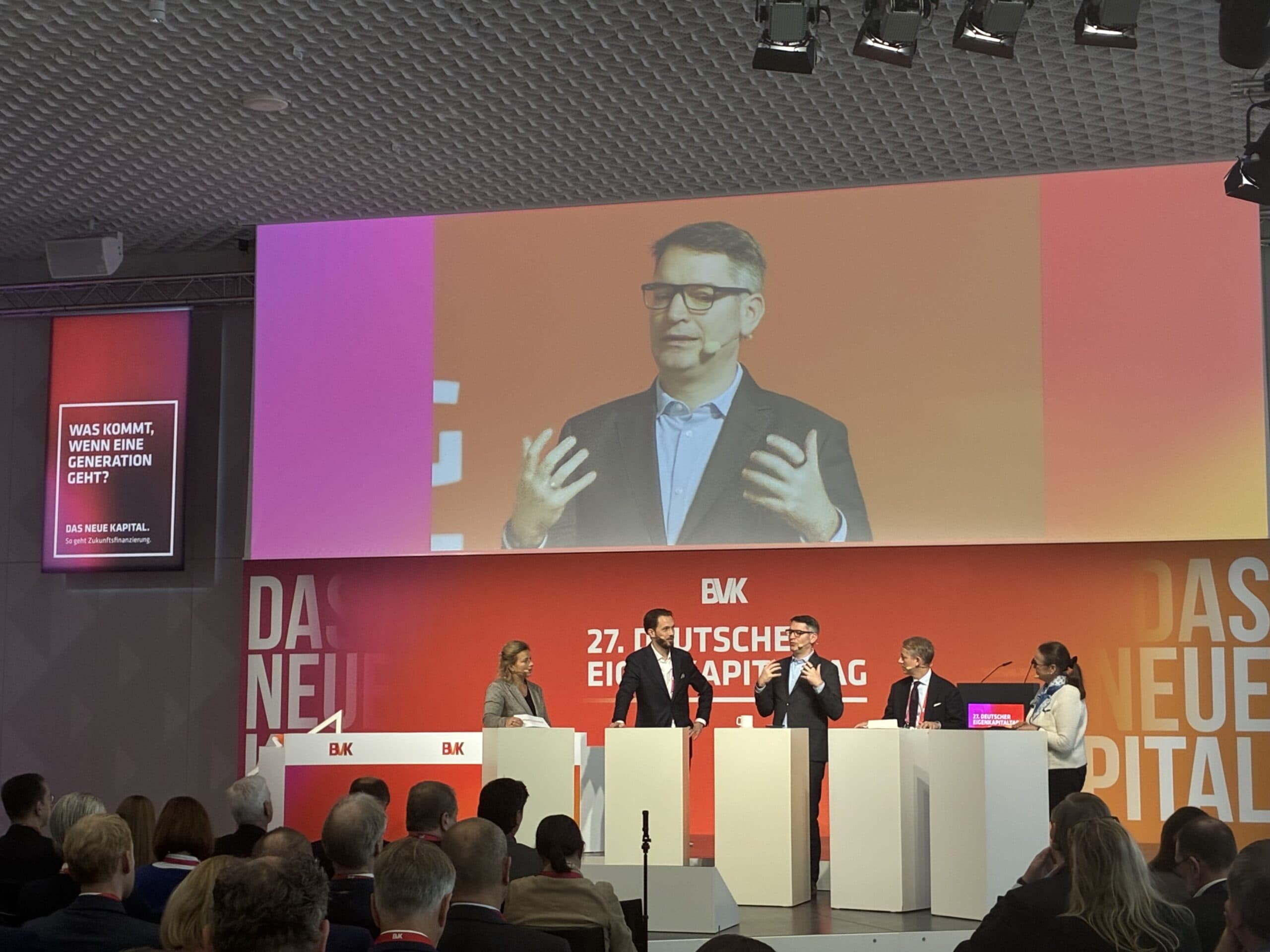
In September 2026, the startup hosted the European Physical AI Summit in Munich. Representatives from industry, robotics, and research gathered there to discuss the future of intelligent machines and Europe’s competitiveness.
Microagi is also expanding its research team. In Animesh Garg, the company brought on board a robotics researcher who previously worked for Nvidia, among others, and conducts research at Georgia Tech. As Chief Research Officer, he will focus particularly on advancing post-training.
Garg clearly states the company’s long-term ambition:
“At Microagi, we have a very simple goal: We want to be the first company to deploy one million robots in the real world.”
In October, Microagi reported another milestone. Just six months after the launch of Shift, the company said it had achieved an annualized run rate of more than 100 million dollars. This metric represents the current revenue pace extrapolated over a full year and is not equivalent to already generated annual revenue. The figures cannot be independently verified through published financial statements.
What makes Microagi special for the Munich startup scene
Munich boasts a strong ecosystem of industrial enterprises, technical universities, AI research, and robotics startups. Microagi bridges several of these fields with a distinctive approach: instead of focusing solely on developing better robots, the company aims to get existing technologies into productive use faster.
This is particularly relevant for Munich as an industrial hub, because the key question is no longer just what robots are capable of doing technically. It is far more important whether they can operate reliably and economically within existing production processes.
Microagi targets precisely this interface. With its hardware-agnostic platform, proprietary data infrastructure, and focus on industrial applications, the startup is pursuing a different approach from traditional robot manufacturers.
Microagi also sets a different focus compared to AI companies such as Skild AI or Physical Intelligence, which primarily work on general-purpose robotics models. The Munich-based startup aims to make existing models usable for specific tasks and integrate them directly into its customers’ production environments.
The potential competitive advantage therefore lies in combining data collection, AI adaptation, and practical implementation. Companies should be able to deploy robots without having to permanently commit to a specific hardware manufacturer or model developer.
Whether this approach will prove more successful in the long run than competitors’ solutions cannot yet be independently assessed. Publicly available comparative data on the cost-effectiveness and reliability of the deployed systems is still lacking.
Yet Microagi is already demonstrating the potential that lies in combining artificial intelligence and industrial robotics. The exceptionally large funding round, international expansion, and ambitious growth targets underscore the young company’s aspirations.
Microagi doesn’t want to build the next robot. The startup wants to ensure that millions of existing and future robots can actually do their jobs.