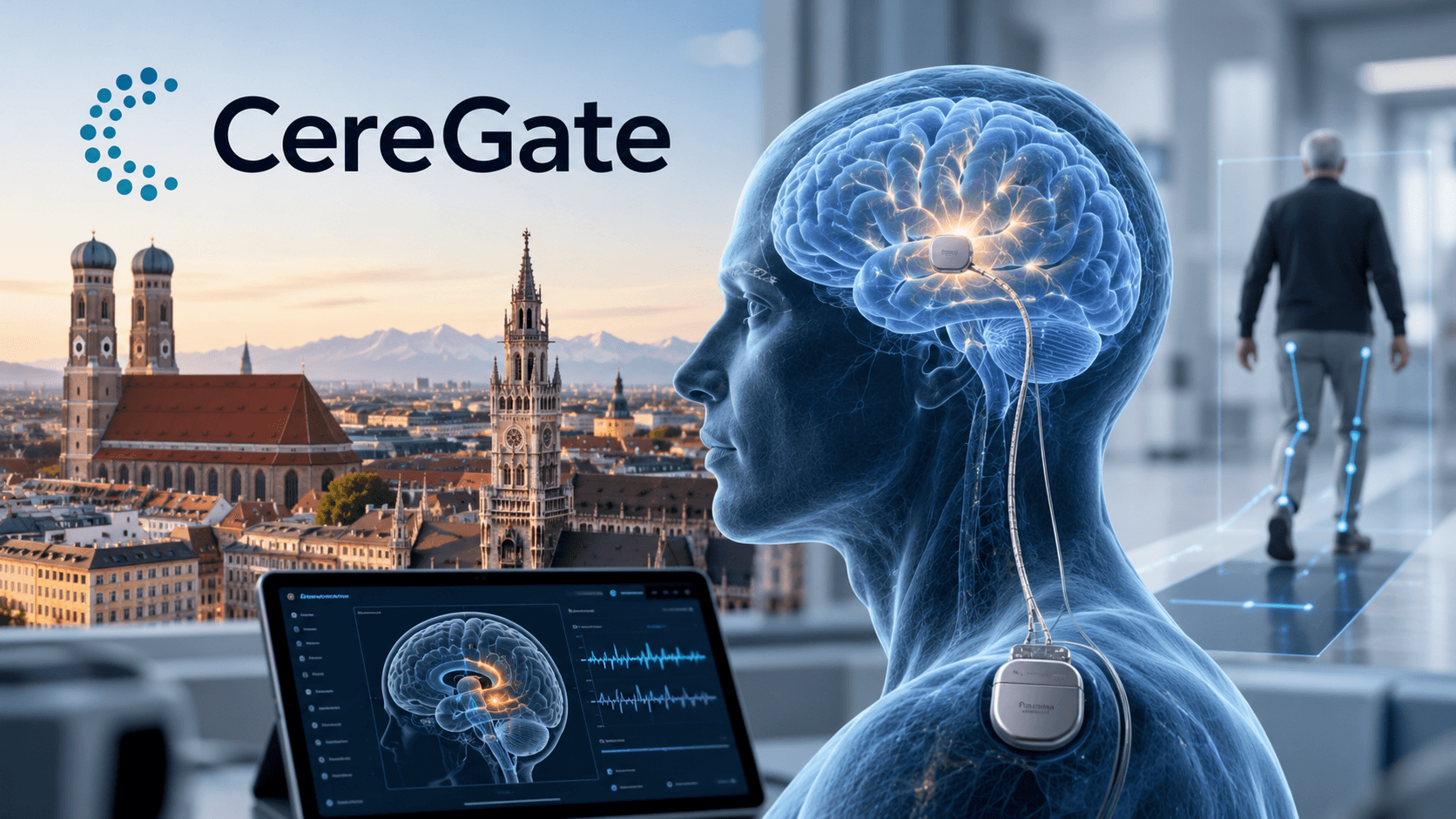

Ceregate develops brain-computer interface (BCI) technology for treating neurological disorders. Unlike many BCI applications designed, for example, to enable the control of external devices via brain signals, the company focuses on therapeutic applications in conjunction with neurostimulation systems.
Ceregate’s software runs on deep brain stimulation (Deep Brain Stimulation, DBS) systems from Boston Scientific and is currently undergoing clinical trials.
The first clinical indication is Freezing of Gait. This involves sudden interruptions in walking, during which those affected are temporarily unable to continue moving. This primarily includes Parkinson’s patients whose symptoms persist despite optimized medication and respond insufficiently to established deep brain stimulation procedures.
Series C: US Medtech Company Leads Financing Round
The Series C round is led by an internationally active medical technology company from the US. Alongside existing investors, Budapest-based Impact Ventures has joined as a new backer. The exact funding amount and the identity of the lead US investor were not disclosed.
Matthias Puls, CEO of Ceregate, explains:
“We are proud to have won a strategic investor of this caliber for this round. We are equally pleased to have Impact Ventures on board, who recognized the clinical potential early on.”
The funding is primarily intended to enable further clinical development. For Ceregate, the focus is now on investigating its technology in medical use.
Neurostimulation: Ceregate also conducts research into spinal cord therapies
In addition to clinical development in the field of Parkinson’s disease, Ceregate is working on spinal cord stimulation (Spinal Cord Stimulation, SCS).
Both research fields belong to neurostimulation, where electrical impulses are used to specifically influence the activity of the nervous system.
For Ceregate, the technological uniqueness lies in combining software with existing stimulation systems. Down the road, this approach could enable additional therapeutic applications, provided that efficacy and safety are proven in relevant clinical trials.