“Public funding? Too much bureaucracy, it’s not worth it for us.” We hear this sentence almost weekly from founders. Many funding programs are complex, slow, and the cost-benefit ratio often doesn’t pay off. But the consequence is costly. Technology-driven startups in particular regularly leave six-figure sums on the table to which they have a legal entitlement. We’re talking about the research allowance (Forschungszulage), and the special thing about it: It can also be applied for projects that have long been completed.
What is the research allowance in the first place?
The research allowance is a tax incentive for research and development to which every taxable company in Germany has a legal entitlement. No competition and no innovation quota: Anyone who demonstrates eligible R&D costs receives the allowance.
The key facts:
- Up to 35 percent of eligible costs are reimbursed.
- Eligible costs primarily include personnel expenses for development, as well as contract research and the own work contributed by founders and shareholders.
- Since 2026, up to 12 million euros in costs can be claimed per year.
- The allowance is offset against tax liability or paid out directly, even if the company is not yet turning a profit.
The key term is “research and development.” While it might sound like lab coats, it actually refers to any work on technical innovations involving development risk: a new algorithm, a hardware iteration, or a novel data pipeline. Failed projects also count. In fact, the risk of failure is an eligibility criterion. Official statistics confirm this: IT services and mechanical engineering together account for more than half of all applications submitted to the certification body.
Why right now: The deadline for 2022 costs is expiring
The research allowance can be applied for retroactively. So anyone who conducted R&D in 2022, 2023, or 2024 and never applied for the allowance can still catch up on it today. In our day-to-day practice, this is actually the norm: on median, an application covers four funding years, usually combining retroactive and ongoing years.
However, the window of opportunity is closing: for the year 2022, the deadline expires at the end of 2026. Anyone who still wants to secure funding for development projects from back then must submit the application this year. After that, the money is irrevocably gone, and each subsequent year another funding year falls outside the deadline. Letting a year lapse means quickly giving away a six-figure amount.
The most common mistake: claiming too few eligible costs
In practice, we repeatedly see the same pattern: a company hears about the research allowance, takes a quick look, and at first glance identifies too few eligible costs. They decide not to pursue it or only apply for a fraction.
The most common reasons for this:
- Only the “official” R&D project is counted. However, much more is often eligible for funding, such as the technically risky parts of regular product development.
- The founders’ own contributions are forgotten. Shareholders who do development work themselves can also bill their hours at a fixed hourly rate without the need for an actual salary to have been paid.
- Failed and discontinued projects are weeded out. Yet these projects in particular are often the clearest cases because the development risk is obvious.
The leverage is substantial: based on our application practice, companies receive between 100,000 euros and over 1,000,000 euros in research allowances with a single application. Two examples from our practice show what this looks like in concrete terms.
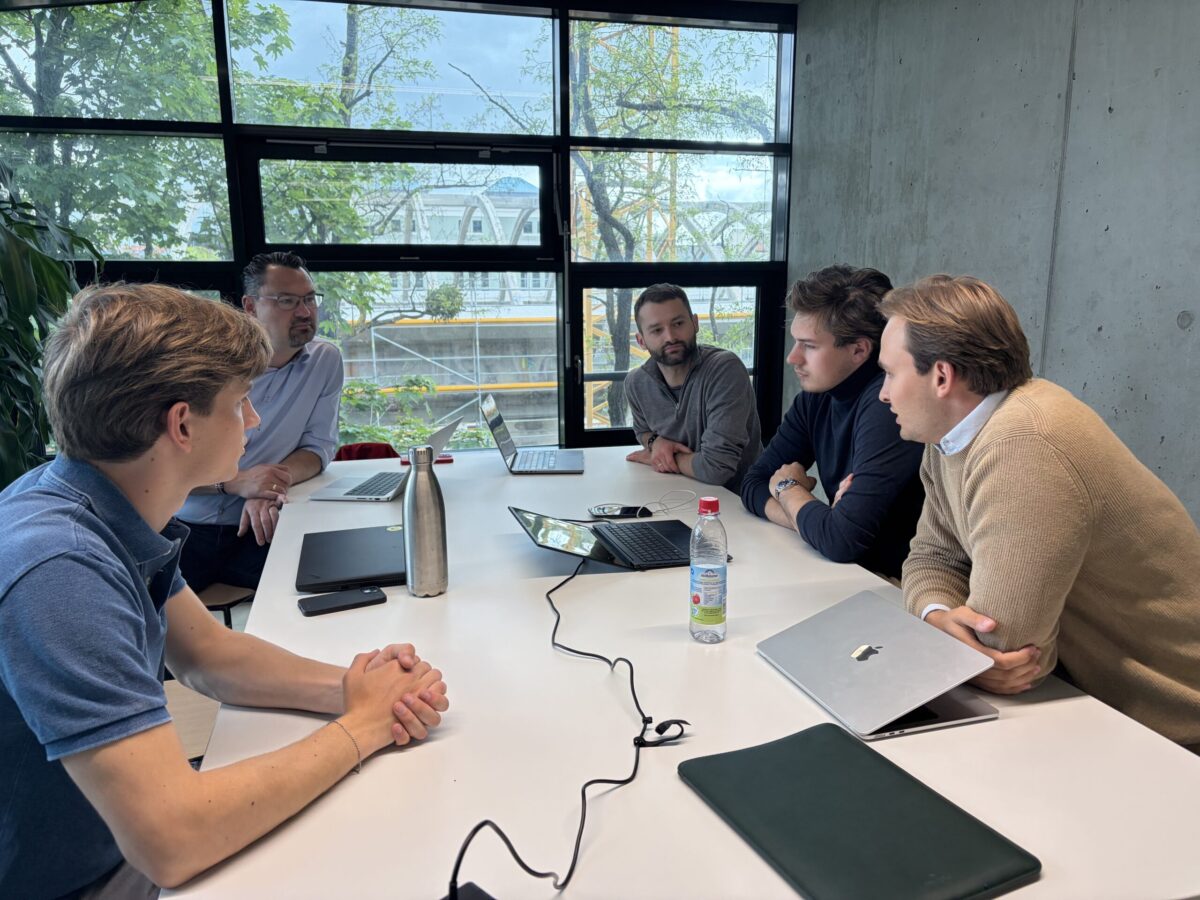
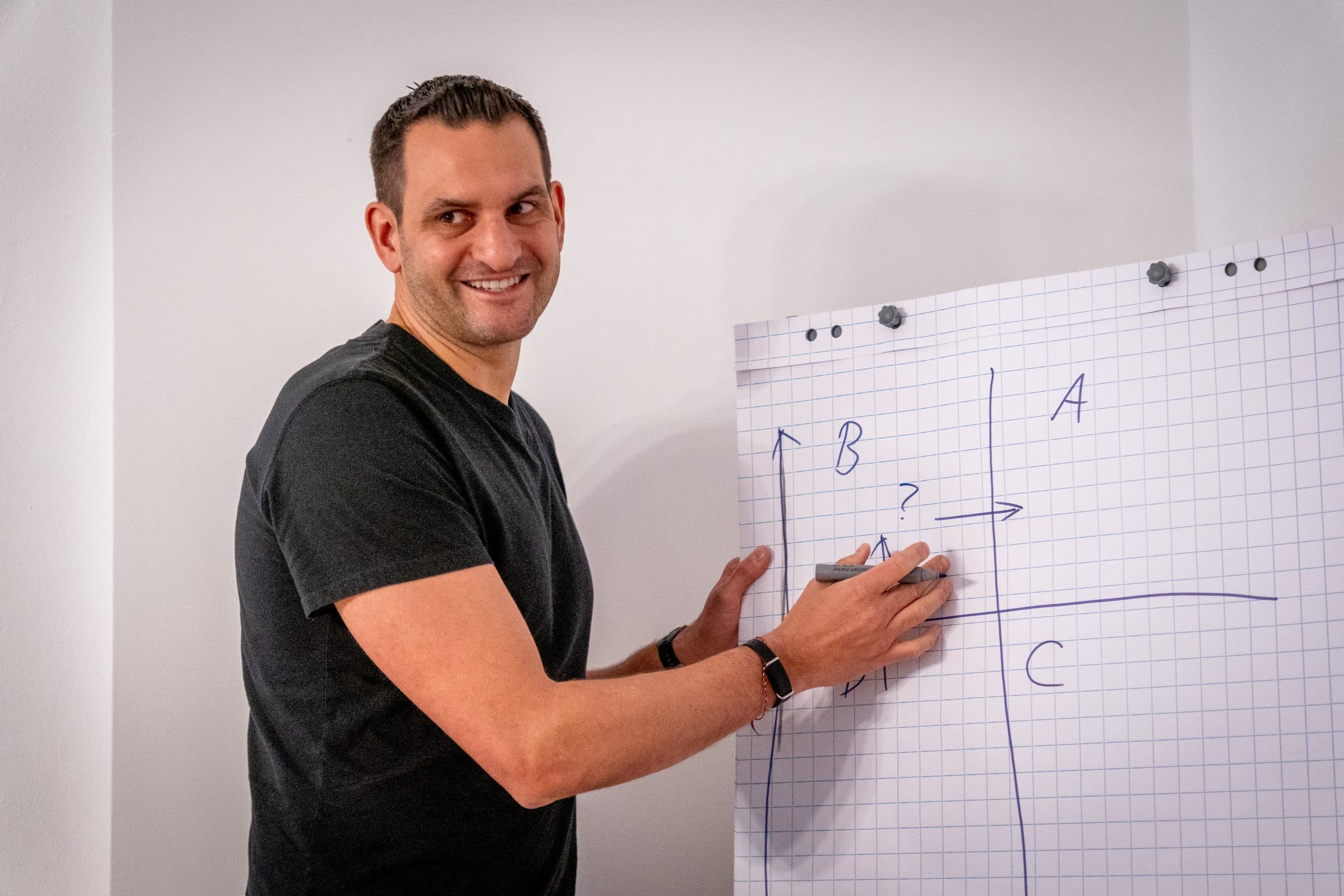
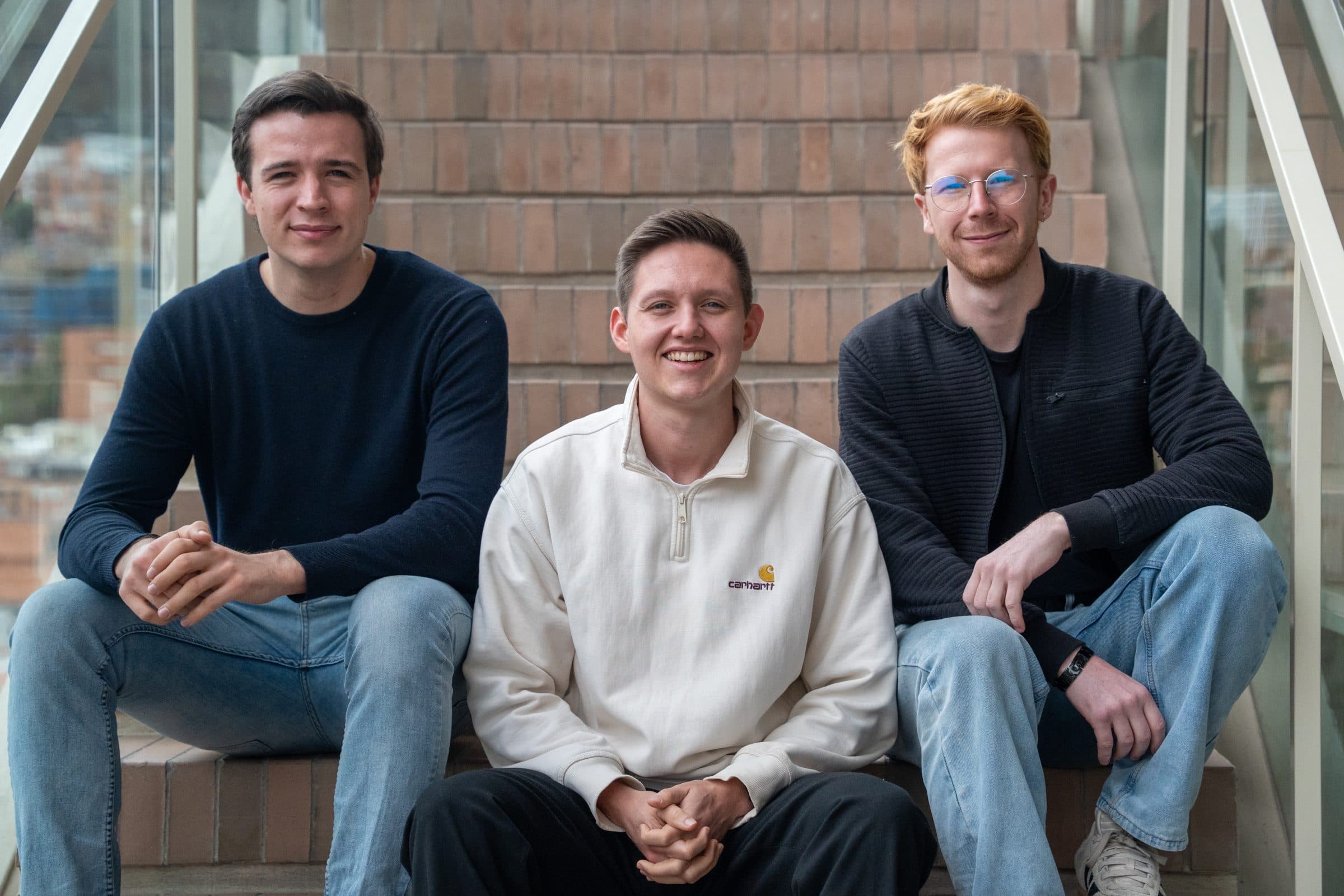
Munich Startup Expert Daniel Höpfner (pictured here in the back left) is the founder of Zeitmaker. He has built and supported various digital startups (Signatrix, PressMatrix), founded the venture capital fund b10.vc, and now, with Zeitmaker, guides startups and medium-sized businesses through the entire research allowance process using a combination of AI-first software and consulting — from identifying eligible projects to payout. In recent years, the team behind Zeitmaker has successfully supported well over 100 applications and generated over 25 million euros in funding for its clients this year alone.
Legalhero is developing what humans can do and AI cannot yet
Legalhero is working on AI-powered processing of legal expenses insurance claims. Currently, lawyers process each case manually, and Legalhero aims to automate this workflow.
The catch: With today’s AI technology, the required reliability cannot be achieved. Language models hallucinate, and existing countermeasures are insufficient for legally compliant decision proposals. Legalhero is therefore developing its own architecture that combines AI workflows with verifiable rules. Whether this will succeed to the planned extent remains open, and it is precisely this uncertainty that makes the project eligible for funding.
The underlying question arises with almost every AI startup: What can humans do that machines cannot yet? As long as this remains unresolved, working on it constitutes research.
Legalhero submitted the entire project from 2022 to 2027 in a single application, and the certifying authority confirmed eligibility in spring 2026. In total, around 1.6 million euros in research allowance are in prospect, about half of which retroactively covers development already carried out, with the remainder allocated for the coming years. The allowance therefore does not just cover the past; it also helps finance the future of an ongoing project.
Hardware startup Scaneca receives funding for work that was happening anyway
Scaneca builds mobile body scanners that create a virtual copy of the body, analyze posture, and measure body circumferences in a single scan. The technical challenge: anatomical measurement points must be recognized from color and depth images with an accuracy of less than one centimeter, despite clothing, changing perspectives, and sensor noise interfering with the measurement. Moreover, the processing needs to run in just a few seconds using the limited computing power inside the scanner. At the start of the project, it was uncertain whether both could be achieved together at all. It is precisely this kind of development work that serves as a prime example of eligible R&D.
The crucial point: the scanner is the core product, and work on it was underway with or without funding. It was never about creating an additional project just for the application.
“We knew about the research allowance and put it off for years. The biggest issue was the worry that, in the end, you’d just be wasting time,”
says Nikolay Leons, Co-Founder of Scaneca
During implementation, the input remained selective: project description during a discussion, access to existing documents, application review. Scaneca started with a single project—the development of the scanner itself—and also secured funding for the work on it in the subsequent years. The result: over 300,000 euros in research allowance for the development of their product.
The path to funding in seven steps
The process is not as bureaucratic as its reputation might suggest. These seven steps are typically involved, with companies providing selective information along the way while the application is often written by specialized consultancies:
- Identify R&D projects
- Record eligible costs: personnel, in-house labor, contract research
- Draft application to the certification body (BSFZ): This is where the project’s technical eligibility is justified
- Assessment by the BSFZ
- Receive certification
- Submit application to the tax office
- Assessment notice and payout or offsetting
The effort is concentrated on steps one to three, and that’s also where success is decided: nationwide, the certification body rejects around every fourth application. When it asks follow-up questions, it is almost always about the novelty and technical risk of the project, and almost never about the plausibility of the figures. We have also documented the exact application process for you here.
Self-Check: Is It Worth Taking a Closer Look?
The typical funded project is by no means a mega-project: five participants and a runtime of just under three years. Startups can use these five questions to check whether they are eligible for the funding:
- Have we been working on something technically novel since 2022 whose success was not guaranteed?
- Have we developed our own algorithms, models, or data pipelines instead of just integrating existing tools?
- Were there projects that we discontinued or scrapped because they didn’t work technically?
- Did we purchase specific equipment, machinery, or test setups for a development project?
- Did we outsource development services?
Anyone who answers “yes” to one or more of these questions should look into the research allowance (Forschungszulage). Not eventually, but in 2026, before funding eligibility for the 2022 calendar year expires for good.