The job has been online for six weeks. This time, there are even plenty of applications coming in. But the right ones aren’t among them. Welcome to the reality of today’s digital market. I hear this sentence regularly: “We just can’t find good people.” And every time I say the same thing: “They exist, but they’re not looking at your job ad.”
More Applications, Lower Quality
The economy is weakening. (Tech) companies have made layoffs, budgets have been cut, digital projects halted. On paper, recruiting should be easy now—the market is full of available talent.
The reality is different. Yes, every job listing receives more applications today than two years ago. But the quality of those applications has dropped. Why? Because while the market has become fuller, it hasn’t become uniformly high in quality.
The truly good ones were never available for long. Anyone who performed well during the layoff waves of recent years found something new within weeks. Top performers have long since been snapped up again, or they were never without a project.
What comes through on job boards is the rest. And that rest has gotten larger, louder, and more professional at applying. Hyper-optimized CVs, AI-polished cover letters, polished LinkedIn profiles. The signals you used to rely on to identify quality no longer work. That is the real challenge in 2026: not too few applicants, but too much noise and too few signals showing who can actually do what.
The Job Ad Paradox
Job ads work. Just not for the people you actually want. They work for people who are actively searching. Who are between jobs. Who are dissatisfied and looking for an exit. That’s not a useless group – right now in particular, strong people are on the market through no fault of their own. But it’s simply not automatically the group with the strongest profiles, the most relevant experience, and the clearest mindset.
The likelihood that the best person for your specific challenge is actively searching at the exact moment your ad goes live is small. And it gets smaller the more specific your needs are.
Top digital talent – whether performance marketers, product managers, CTOs, or digital strategists – operate within networks. They receive inquiries via LinkedIn, recommendations, and communities. They decide who they want to work with, not the other way around.
How to really recognize quality when the CV no longer tells you anything
When CVs have become interchangeable, you need other signals. After many years on both sides of the table – as a freelancer, as an executive, as a founder – these are the ones I pay attention to:
Specificity instead of buzzwords: Ask about the last project. Good people will tell you precisely what the problem was, what decisions they made, what worked, and what didn’t. Weak candidates remain vague: “We optimized performance.” Who? How? By how much? Starting when? People who know their stuff speak in details.
Important: Also ask about KPIs and measurable results.
Dealing with failure: Ask about a project that went wrong. The answer reveals more than any success story. People with real experience have scars and can talk about them without making excuses or blaming others. Anyone who has never failed either never held responsibility or isn’t telling the truth.
Important: Dig a little deeper here too. “Have you ever burned 50k on a project and how did that feel?”
Questions they ask back: Strong candidates interview you just as much as you interview them. They want to know how decisions are made, who the stakeholders are, why the position is open. Anyone who doesn’t ask questions will take any job, and that’s rarely a good sign.
Important: Allow enough time for these follow-up questions.
References you actually call: Sounds obvious. A ten-minute conversation with a former client or employer tells you more than three interviews. Not the question “Was the person good?”, but rather: “Would you work with them again? And for what kind of task?”
Important: Sure, the reference is briefed, but still pay attention to reading between the lines and explicitly ask about any points of uncertainty from the interview.
A case study from the job context: No busywork, no unpaid mini-project – that’s uncool. A realistic challenge that will actually arise on the job. How does the person think? What questions do they ask? How do they handle incomplete information? That’s the most honest impression you can get.
Important: Don’t let it turn into a PhD thesis. The case study should be clearly defined. Send it out well in advance and state your expectations regarding the effort required.
What Really Makes Digital Talent Decide
I worked as a freelancer for years myself, hired people, and am currently continuing to build our team at Dygitized. I know that it’s rarely the job ad that convinces people. It’s three other things.
First: Clarity about the role. Not “We are looking for an experienced Digital Marketing Manager with a hands-on mentality.” But rather: What exactly is the problem this person is supposed to solve? What is going wrong, what decisions will they be allowed to make? Vague requirements signal vague leadership. Top talent reads that and moves on.
Second: An honest picture of the situation. Startups and scaleups like to sell positions like products. “Dynamic team, flat hierarchies, plenty of room for creative freedom.” That sounds like every other job posting. What really works is honesty. Where are you right now? What is difficult? Why is the role still interesting? Anyone who addresses this directly attracts precisely the people who can handle it. Especially in uncertain times, honesty has an added value: candidates have become more cautious. Anyone who sugarcoats things will lose them at the first reality check at the latest during the probationary period. And that is a getting-to-know-you phase for both sides!
Third: Your visibility before the job posting. This is the point that most people completely underestimate. Top talent often decides for or against you before you even post a job. Because they read your content. Because someone in their network raves about you. Because they experienced you at an event. Employer branding is not a (purely) HR issue. It is an organizational, cultural, and sales task. And that doesn’t start when the position opens.
The freelancer market works differently altogether
Anyone looking for good freelancers – meaning truly experienced, project-tested digital experts, not career starters with freelance status – gets almost nothing right with classic job postings. Strong freelancers don’t look on job portals. They have a network and partners who supply them with inquiries. They decide based on project quality, team fit, and client reputation – not daily rate alone.
And even in a weaker market: the good ones can afford to be selective. Maybe their utilization gaps are slightly larger today than two years ago, but they fill them with projects that suit them. Not with the first contract that comes along.
This means for you: If, as a company, you aren’t already part of the conversation, have no reputation as a good client, and don’t have a clear idea of what you want, you will target the wrong people. Or no one at all.
Networks like Dygitized solve exactly this problem: not through volume, but through curation. The difference isn’t access to profiles—everyone has that today. It’s about who actually fits: professionally, personally, within the specific project and organizational context.

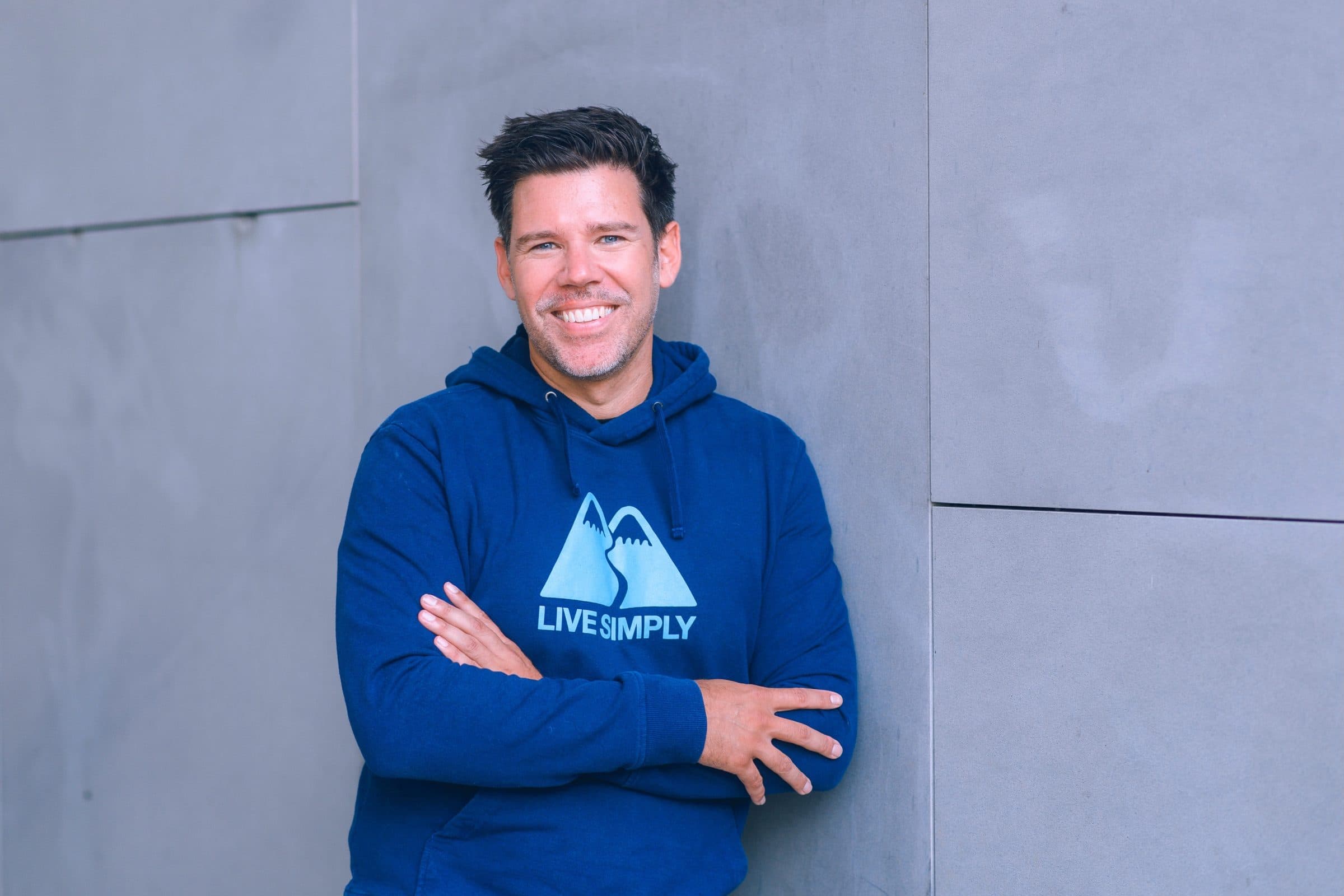
Bastian Deurer is the founder of Dygitized, a curated expert network of experienced digital freelancers.
Before founding the company, he spent over 20 years on all sides of the table—at IBM, PwC, ProSiebenSat.1, and Payback, as well as eight years as a freelancer working on digital projects.
Dygitized matches companies with experts across all digital disciplines, from Marketing, Growth & CRM to E-Commerce, Product, UX & Tech through to Data, AI & Automation. All experts are personally vetted for skillset, mindset, toolset, and cultural fit. Instead of hundreds of profiles, you get a maximum of three perfectly matched proposals: initial matches in 48 hours, project start in five days.
The underrated move: Bridging the gap instead of despairing
Here is a thought that too few founders consider because conventional recruiting logic doesn’t account for it: You don’t have to abandon the search for the perfect permanent hire or wait forever for the ideal candidate to still make progress.
The classic scenario: A key role has been vacant for four months. The project is at a standstill. The team is compensating and slowly burning out. And eventually, under pressure, you make a decision you would never have made in a calm moment – you hire someone who is “good enough.” Exactly the bad hire you actually wanted to avoid.
The alternative: You bring in experienced freelancers for the transition period to fill the role on an interim basis or drive the most urgent project forward. This achieves three things at once: Business operations continue, and the burden on the team is relieved. You can conduct the search for a permanent hire without time pressure and make a better decision. And: By working with interim experts, you learn more precisely what the role actually needs. Many job profiles look completely different after three months of interim experience than they did before. Bridging the gap is not a stopgap measure. It is often the difference between a panic hire and a genuinely good one.
What you can specifically do to get your position filled
- Describe the problem, not the person. Don’t write a list of requirements. Describe the situation: Where are things getting stuck, what needs to change, what is the outcome at the end? This attracts people who are excited about taking on exactly this challenge.
- Activate your network before you post a job listing. Before a job goes live: Who in your network could fit the role or know someone who does? A personal message to ten relevant people will bring you more than a thousand impressions on a job board.
- Screen candidates differently than everyone else. When CVs no longer reveal anything, shift the evaluation to where it is honest: concrete project discussions, genuine reference calls, working together on a real problem. This costs more time per candidate, but saves you months per bad hire.
- Build visibility when you don’t need it. Content, community, presence. Anyone who is visible in digital circles – as a founder, as a company, as an employer – will be found when the time comes. This isn’t a quick fix. But it’s the only one that works in the long run.
- Be honest about what you offer. No glossed-up version. No empty buzzwords. Share where you stand, what’s difficult, and why it’s still a damn good place to work. Anyone who can’t handle that isn’t the right person anyway.
- Think in sequences, not in either-ors. Not every gap needs to be filled immediately with a full-time position. Sometimes the smartest sequence is: experienced freelancers now for speed and relief – and searching for a permanent hire in parallel without pressure.
Conclusion
The market has become more crowded, but not better. Good people remain scarce, well-networked, and selective. What has changed: the noise has gotten louder, and the old quality signals no longer work.
Those who keep waiting for applications will continue to be disappointed. Those who start positioning themselves as an attractive employer and client, evaluating candidates differently, and thinking more flexibly in terms of roles and outcomes are playing a different game. And that is the game that wins.