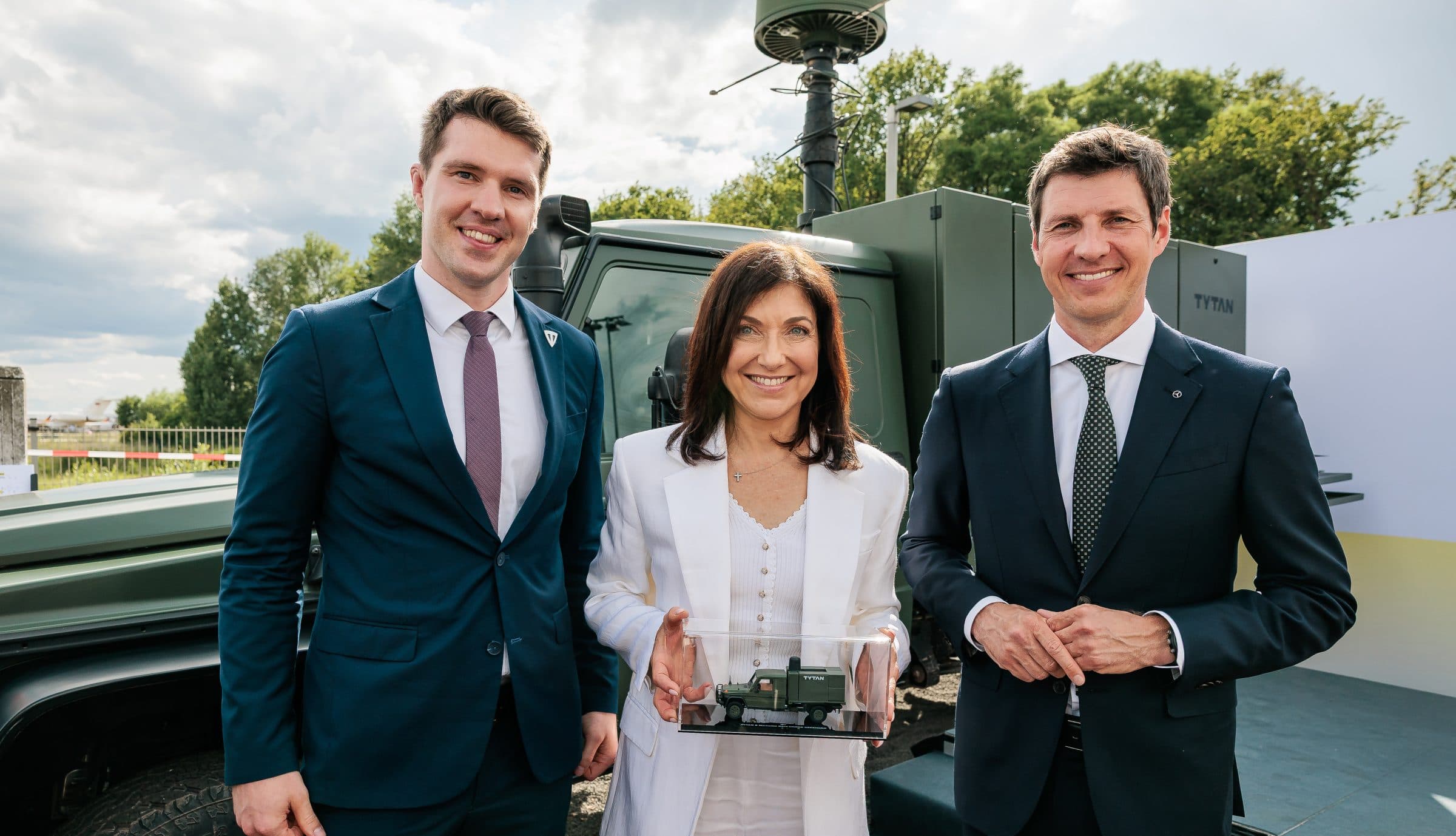

The planned collaboration between Mercedes-Benz and Tytan aims to combine vehicle platforms such as the G-Class and Sprinter with drone, sensor, and mission systems to better protect critical infrastructure and people from unmanned threats. For Tytan, the cooperation opens up the opportunity to translate its technologies into concrete applications together with a global automotive company and potentially into industrial scaling. At the same time, the agreement underscores the growing importance of defence tech as a strategic technology field for Germany and Europe.
Munich defence tech meets industrial scaling expertise
The agreement brings together two very different areas of expertise: while Tytan Technologies specializes in autonomous air defence, counter-UAS technologies, and sensor and mission systems, Mercedes-Benz brings its decades of experience in developing, producing, and scaling robust vehicle platforms.
The memorandum of understanding was signed at the International Aerospace Exhibition (ILA) 2026 in Berlin. The signatories include Michael Schiebe, member of the board of Mercedes-Benz Group AG, and Balázs Nagy, CEO and co-founder of Tytan Technologies. The signing was accompanied by Federal Minister of Economics Katherina Reiche.
The cooperation also illustrates the increasing importance of defence tech companies within Europe’s security architecture. Against the backdrop of growing geopolitical tensions and rising numbers of drone overflights over critical infrastructure, the market for mobile protection and defence systems is gaining relevance.
Focus on G-Class and Sprinter as mobile mission platforms
At the centre of the collaboration are vehicle-based mission and counter-drone platforms. Mercedes-Benz and Tytan presented a first prototype of a networked system at the ILA, demonstrating possible integration approaches for technology-based applications on mobile vehicle platforms.
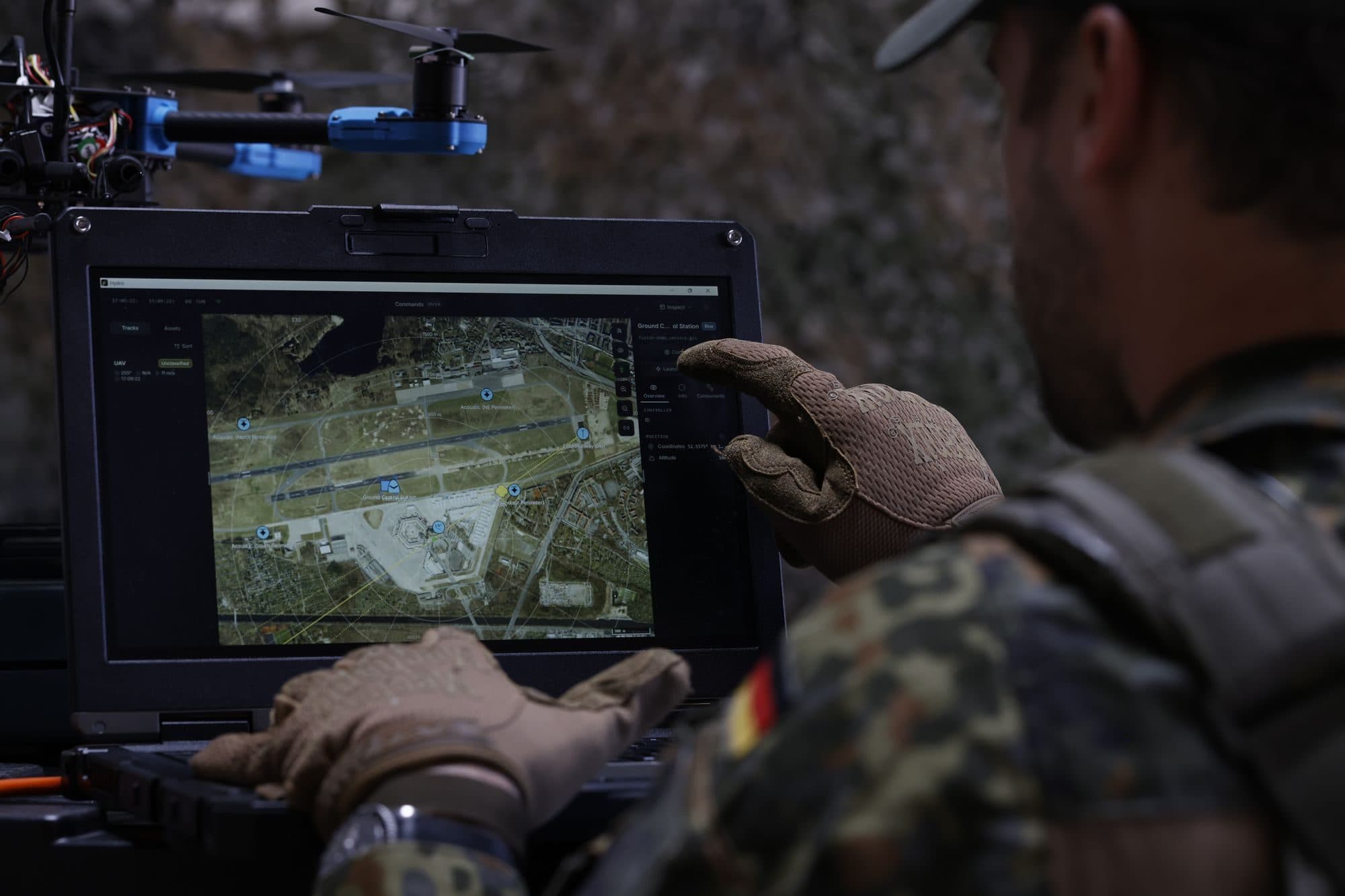
At the centre of the collaboration are mobile counter-UAS and drone defence systems to be integrated into Mercedes-Benz vehicle platforms. In addition, both companies want to develop solutions for sensors, reconnaissance, and mission and command tasks. The goal is to create modular and scalable systems that can be used especially to protect critical infrastructure and can flexibly adapt to different operational scenarios.
The base vehicles include the Mercedes-Benz G-Class and Sprinter, among others. Both platforms are considered suitable for security-relevant applications due to their robustness and adaptability.
Defence tech as a strategic growth market
For Mercedes-Benz, expanding existing expertise in the defence and security sector represents a strategic growth field. Michael Schiebe emphasized that the cooperation pools the respective strengths of both companies: Mercedes-Benz provides robust vehicle platforms, while Tytan brings highly specialized know-how in the field of drone, sensor, and mission technology.
Tytan CEO Balázs Nagy points to the growing threat posed by unmanned systems:
“The threat is real – every day we observe overflights over critical infrastructure in Germany and Europe. Flexibility and interoperability are no longer wishes, but a necessity. In Mercedes-Benz, we have found a partner who brings world-class industrial excellence and institutional knowledge. Tytan Technologies contributes operational know-how and technical expertise in the field of autonomous air defence and anti-UAS systems. Together, we are creating a platform architecture that effectively protects against unmanned threats – not in 2029, but today.”
Planned industrial scaling under regulatory requirements
The signed memorandum of understanding initially provides the framework for joint projects. Both technical deployment options and future industrial scaling options will be examined.
In doing so, both companies want to take relevant regulatory requirements into account. These include in particular export control regulations as well as defence and security legal frameworks.