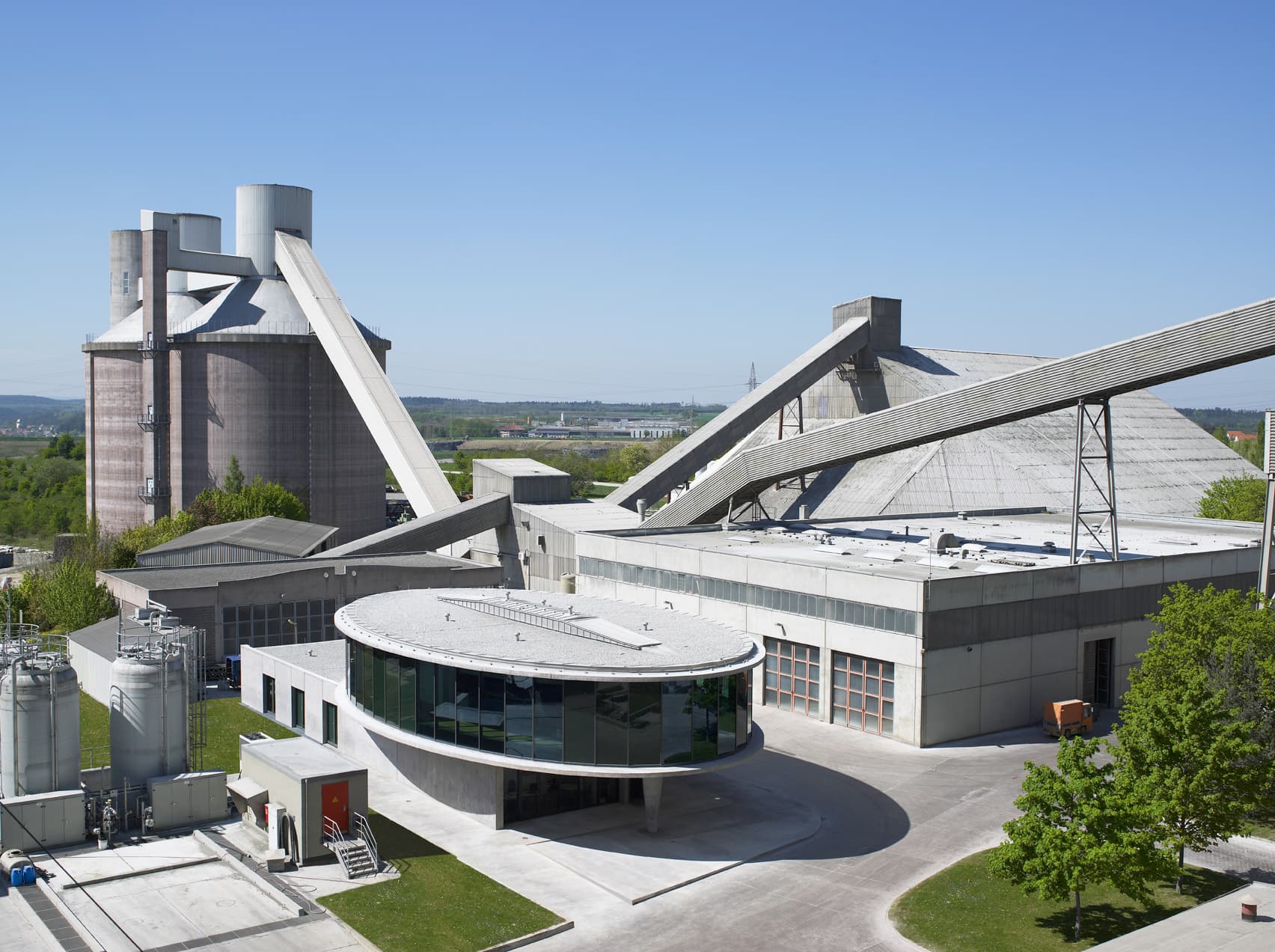

Orcan Energy is realizing a large-scale industrial waste heat recovery project together with Holcim and Eon Energy Infrastructure Solutions. At Holcim’s cement plant in Dotternhausen, previously unused waste heat from the production process is to be made usable. The energy flows into internal processes, potential district heating networks, and electricity generation.
The strategic partnership is designed to establish an economical and scalable model for greater energy efficiency in energy-intensive industries. The focus is on recovering around 10 megawatts of thermal energy from the rotary kiln. At approximately 70 meters high, a heat exchanger couples the waste heat from the exhaust gases. The heat reaches the respective customers via a high-temperature thermal oil circuit.
ORC technology as the key to energy transition
A central component of the project is electricity generation through Orcan Energy’s ORC technology (Organic Rankine Cycle). The new high-performance eP 1000 system, which was specifically developed for large-scale industrial applications, is being deployed. The installed turbine responds flexibly to fluctuating heat quantities and operates efficiently at full and partial load.
“Together with Holcim and Eon, we demonstrate how ORC technology can drive industrial energy transition – scalable, efficient, and economically viable,”
explains Andreas Sichert, CEO of Orcan Energy.
Eon assumes planning, construction, financing, operation, and maintenance of the system under an energy-as-a-service model. Holcim thus benefits from CO2 savings over the entire operating life – without its own initial investment. Dieter Schillo, plant manager Holcim Southern Germany, adds:
“With this project, we are setting an important milestone on our path to decarbonizing cement production. Smart utilization of industrial waste heat not only reduces our Scope 2 emissions, but also strengthens our role as a pioneer for sustainable building materials.”
Orcan Energy planning further projects
The Bundesministerium für Wirtschaft und Klimaschutz (BMWK) is funding the project. Additional roll-outs are already in the planning stages. Eon CEO Marten Bunnemann also sees great potential in this:
“For energy infrastructure, our goal is to reduce energy consumption where the greatest potential lies. This is especially the case in very energy-intensive industries. Initiatives like this demonstrate how industrial waste heat can not only be used efficiently, but also integrated into the regional heat market.”
Orcan Energy currently employs over 80 employees and develops modular ORC systems for various industries in Munich. According to the company, it has more than 650 modules with over seven million operating hours in use worldwide.