
Reverion is celebrating a Series B financing round of approximately 153 million euros ($175 million). The funding is intended to increase production of its reversible fuel cell power plants tenfold, enabling Reverion to expand into larger projects as well as the growing market for data center power supplies.
The energy startup is aiming to transition what has been a comparatively small volume of complex power plant systems into industrial mass production. According to the company, up to 800 new jobs are set to be created at the planned production site.
The lead investor in the Series B is Kembara, a European growth fund focusing on deeptech and climate technologies. New participants also include Allianz, KfW Capital via an SPV managed by UVC Partners, aurum Impact, and Carbon Equity. Existing investors Extantia, Energy Impact Partners, alfa8, UVC Partners, EIC Fund, and Possible Ventures are also taking part in the round, according to Reverion.
From 62 to 175 Million Dollars: Reverion Accelerates Scaling
For the company, the Series B marks the next major financing milestone following its nearly 56 million euro (62 million dollar) Series A in 2024. Back then, the round was led by Energy Impact Partners and was primarily intended to finance the launch of series production. At that point, Reverion was already reporting customer pre-orders totaling more than around 88 million euros (100 million dollars).
Now, production capacity is set to increase significantly once again. For the planned megafactory, Reverion projects an annual capacity of 250 megawatts – which, according to company figures, represents a tenfold increase over its previous manufacturing capacity. In parallel, Reverion plans to continue scaling its systems to serve projects in the multi-megawatt range.
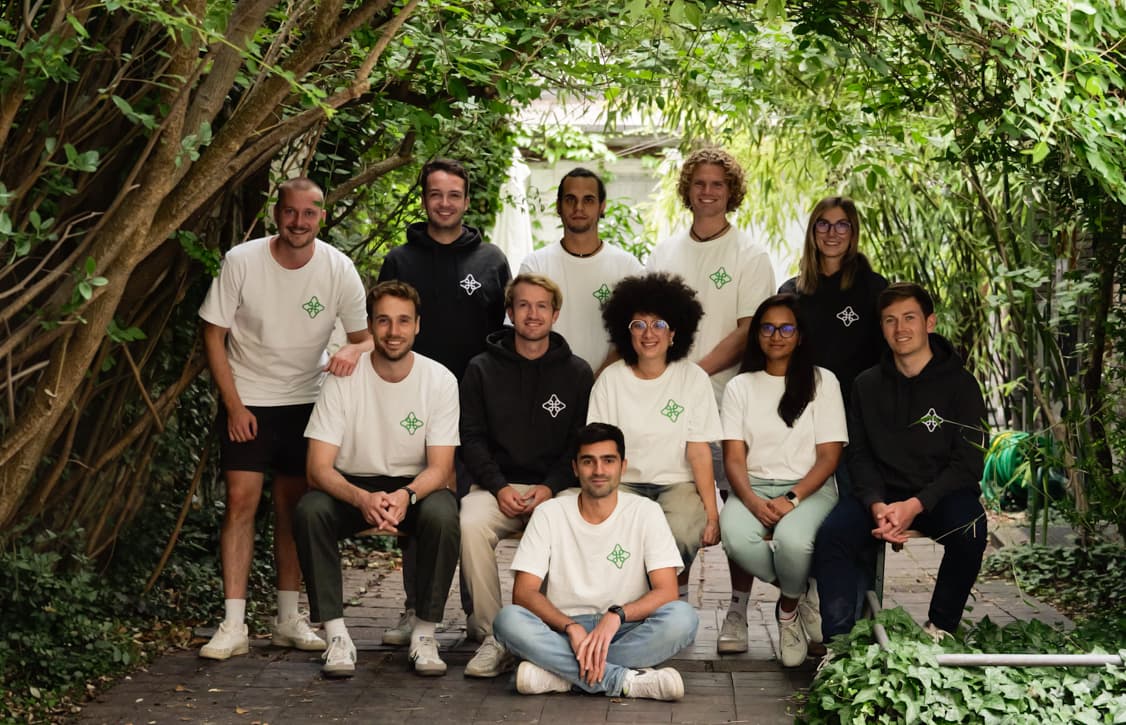
According to the company, the team at its headquarters in Eresing has already grown from around 100 to more than 200 employees. Up to 800 additional jobs are planned for the new production site in the future. The announcement does not yet disclose the exact location where the factory will be built or when it is expected to reach full capacity.
74.2 percent efficiency: How Reverion’s fuel cell power plant works
Technologically, Reverion relies on solid oxide fuel cells (SOFCs). They electrochemically convert energy stored in gas into electricity, rather than burning the gas as in conventional gas engines or gas turbines.
In September 2025, Reverion reported an electrical efficiency of 74.2 percent for a plant operating at a customer site. The company describes this figure as a world record for thermal power plants. For comparison, Reverion cited the previously documented efficiency record of 64.18 percent held by the British combined cycle gas turbine power plant Keadby 2; TUM energy systems researcher Hartmut Spliethoff also categorized the figure achieved by Reverion as exceptionally high at the time.
Another unique feature is the system’s reversibility. When electricity is needed, the plant generates power from gas. When surplus electricity is available, however, it can operate as an electrolyzer and convert energy back into storable gases. Reverion thus combines power generation, power-to-gas, and energy storage in a single system.
According to the company, when biogas is used, the resulting biogenic CO₂ is captured in concentrated form. If this CO₂ is permanently stored, the overall system can achieve negative CO₂ emissions. The climate impact therefore depends, among other things, on the gas used and how the captured CO₂ is handled subsequently.
Data centers become a new growth market for Reverion
With the Series B, the target market is shifting as well. Reverion originally emerged strongly from the agricultural biogas plant sector. In the meantime, the company sees data centers in particular as a growth field.
Instead of relying exclusively on an adequately dimensioned power grid connection, data centers could generate electricity directly on-site using Reverion systems. According to the company, both biogas and natural gas from existing gas infrastructure are suitable energy sources.
Reverion is thus addressing a problem that is becoming increasingly important with the expansion of cloud infrastructure and AI data centers: large, continuous power demands are regionally meeting limited grid capacities and long connection lead times.
For Reverion, this development potentially opens up significantly larger projects than the original business with individual biogas plants. The company therefore plans to scale its technology into the megawatt class.
Seven Reverion power plants in the field, pipeline over two billion dollars
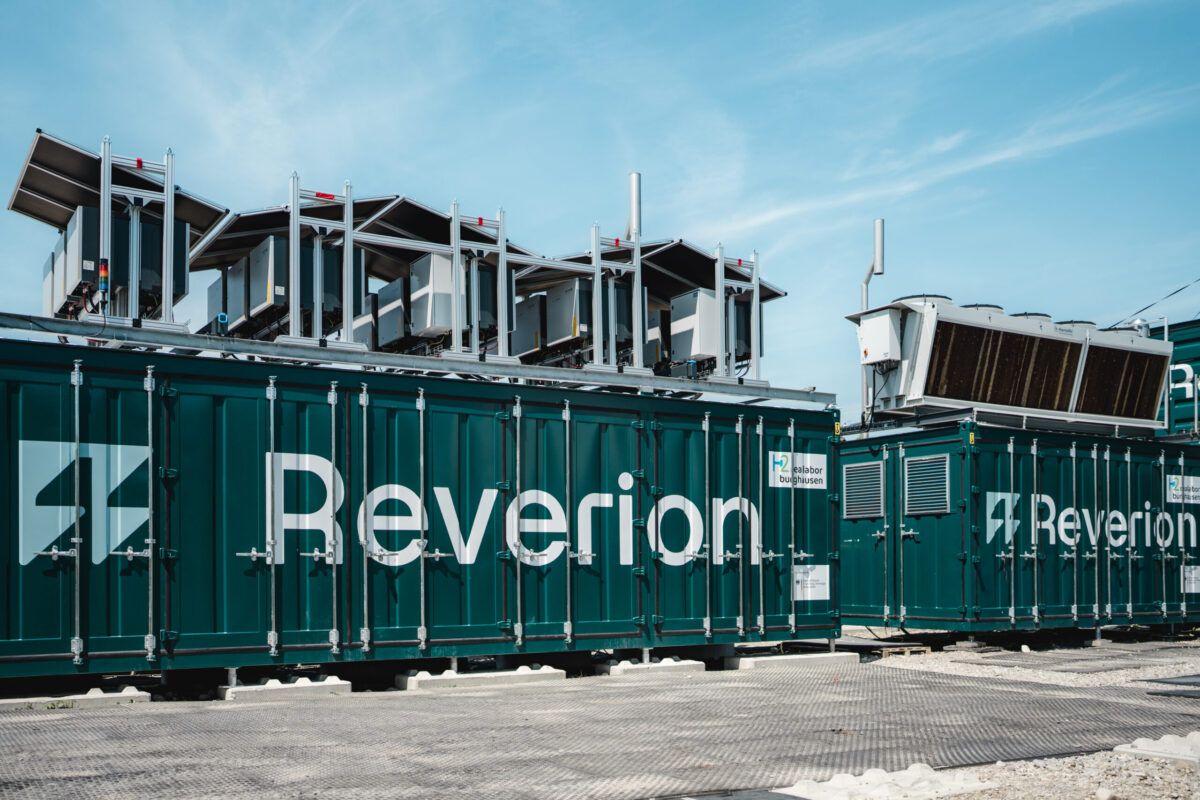
According to the company, seven Reverion units are currently in regular commercial operation. Capacity per unit is now up to 500 kilowatts.
Reverion’s reported project pipeline is significantly larger, reportedly comprising a potential revenue volume of more than 1.76 billion euros (2 billion dollars). However, this is a pipeline and not revenue that has already been realized or is necessarily secured by contract. According to the company, initial international projects are in development.
The new factory is now intended to provide the industrial foundation to meet a larger share of this demand.
Reverion at a glance
Headquarters: Eresing near Munich
Industry: Energytech / Climatetech
Technology: reversible solid oxide fuel cells (SOFC/SOEC)
Series B: approximately 153 million euros (175 million dollars)
Lead investor: Kembara
New investors: Allianz, KfW Capital, aurum Impact, Carbon Equity
Planned manufacturing capacity: 250 MW per year
Employees in Eresing: more than 200
Planned new jobs: up to 800
Systems in customer operation: seven
Electrical efficiency: 74.2 percent according to Reverion
Project pipeline: more than two billion dollars in potential sales volume according to the company