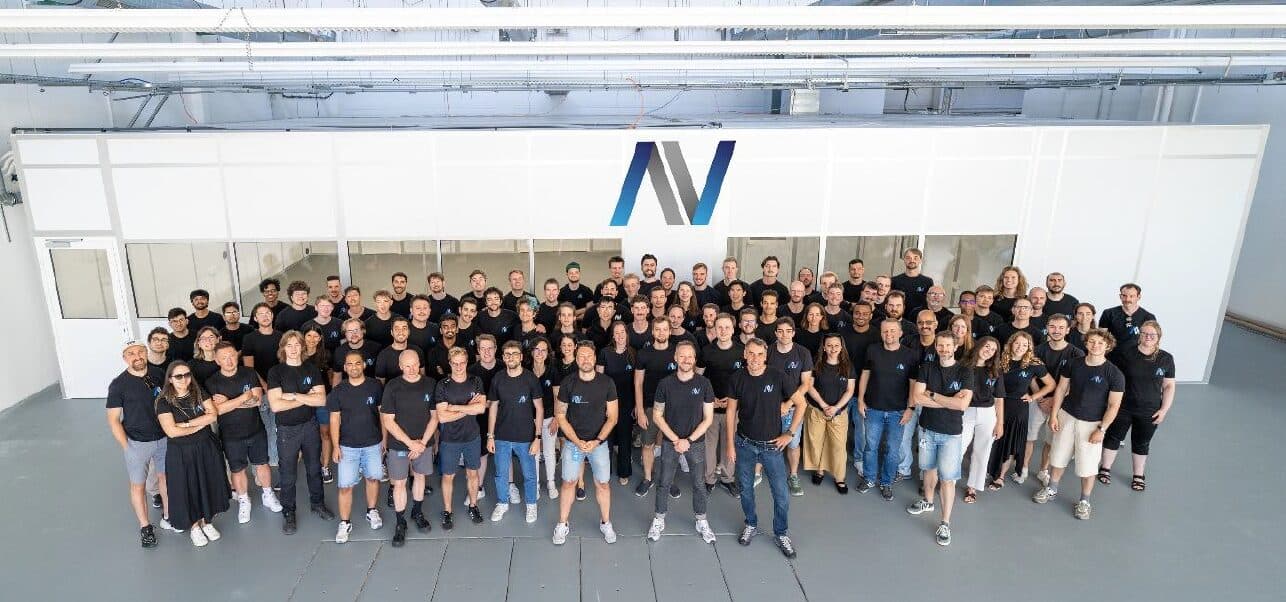

Plectonic Biotech has developed a nanoscale switch that connects immune cells to tumor cells. This is intended to make immunotherapies against cancer more targeted and with fewer side effects. So-called immunotherapies are considered a particularly promising approach for treating cancer. This involves directing the body’s own immune system against cancer cells. A major challenge is combining high effectiveness of the immune response against cancer cells with minimal side effects. The Plectonic team, led by founders Klaus Wagenbauer, Jonas Funke, Benjamin Kick, and Hendrik Dietz, has therefore developed an “on/off switch” for antibody-based immunotherapies.
The construct, which measures just a few nanometers, can dock onto cells on two sides. On one side, the researchers place antibodies against tumor cells, with which it identifies tumor cells and binds to them. In doing so, a switch is essentially flipped that activates other antibodies on the opposite side that were previously hidden. These are recognized by the body’s own immune cells, which are thus recruited to fight cancer cells.
“Fewer side effects of immunotherapies”
Co-founder of Plectonic Biotech, Klaus Wagenbauer, explains:
“With this technology, we can connect cancer and immune cells in such a way that the immune system only fights when a tumor cell has been identified. In this way, we aim to achieve lower activity in healthy tissue and thus fewer side effects from immunotherapies.”
Different antibodies can be deployed on the switch, each targeting different tumor types. In collaboration with pharmaceutical companies, the startup now aims to develop new therapeutics against various tumor diseases. The goal of the collaboration between Sprind and Plectonic is to conduct the studies necessary for an investigational new drug (IND) application and to launch a clinical phase 1 trial.
Guidance through the “valley of death”
Mario Brandenburg, Parliamentary State Secretary at the Federal Ministry of Education and Research and member of the supervisory board of the Federal Agency for Leap Innovations Sprind, says:
“Plectonic, with its groundbreaking therapeutic approach, is once again an excellent example demonstrating Sprind’s role in the innovation ecosystem: With Sprind, we identify and support technologies with leap innovation potential and guide them through the ‘valley of death’ from basic research to market maturity. Companies like Plectonic Biotech GmbH do not yet receive sufficient equity capital from private investors at their technology’s stage of development, since drug approval, revenue, and profit are only expected in a few years, and the path to these goals is risky and costly. For this promising approach—one that is important for many cancer patients—to have a chance to realize its medical and economic benefits in Germany, instruments like Sprind are essential.”
The Plectonic team developed the technology at the Munich Institute of Biomedical Engineering at TUM. Several patent families have already been granted or filed with TUM’s support. The spin-off was supported in the TUM Venture Lab Healthcare.