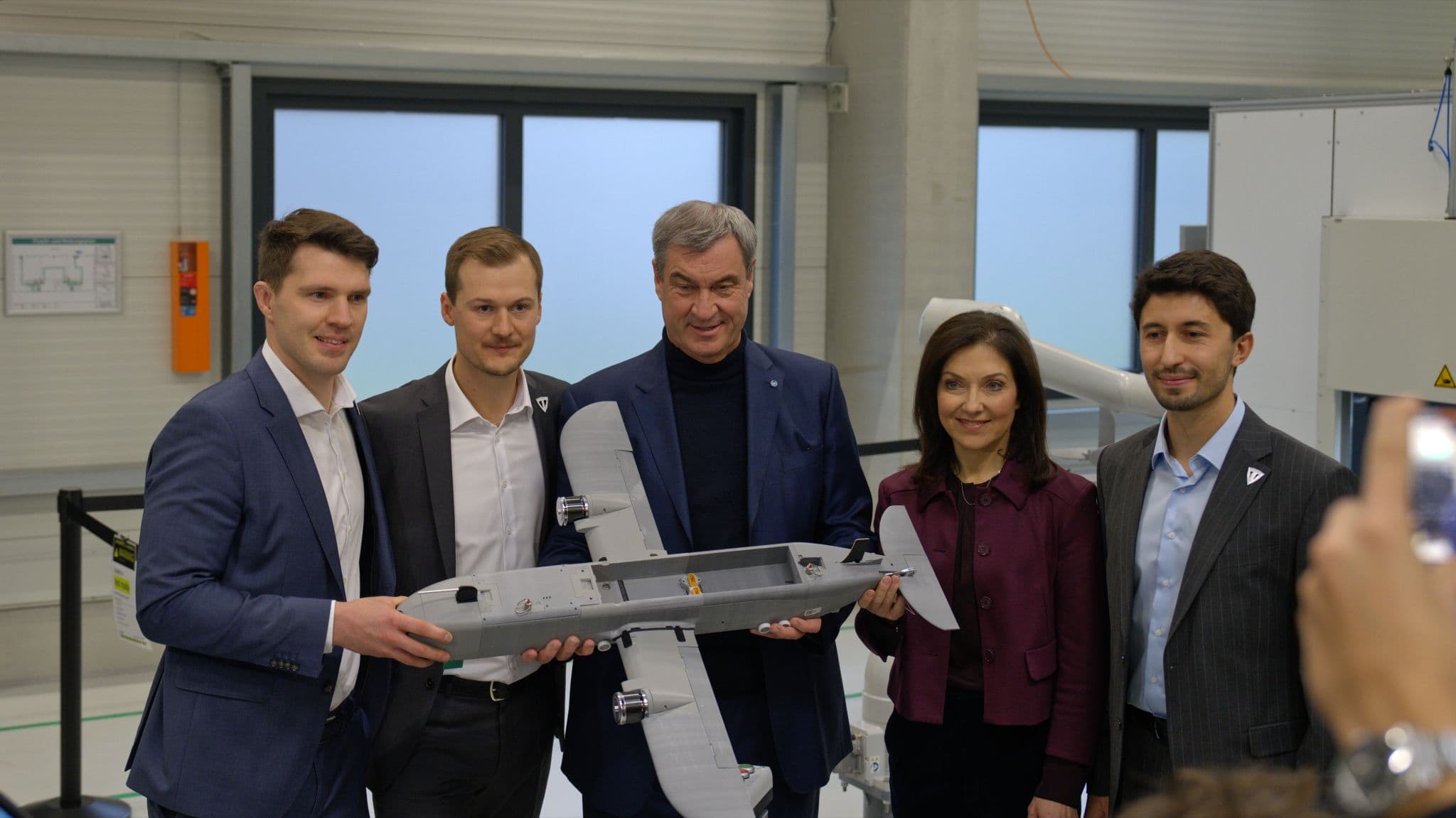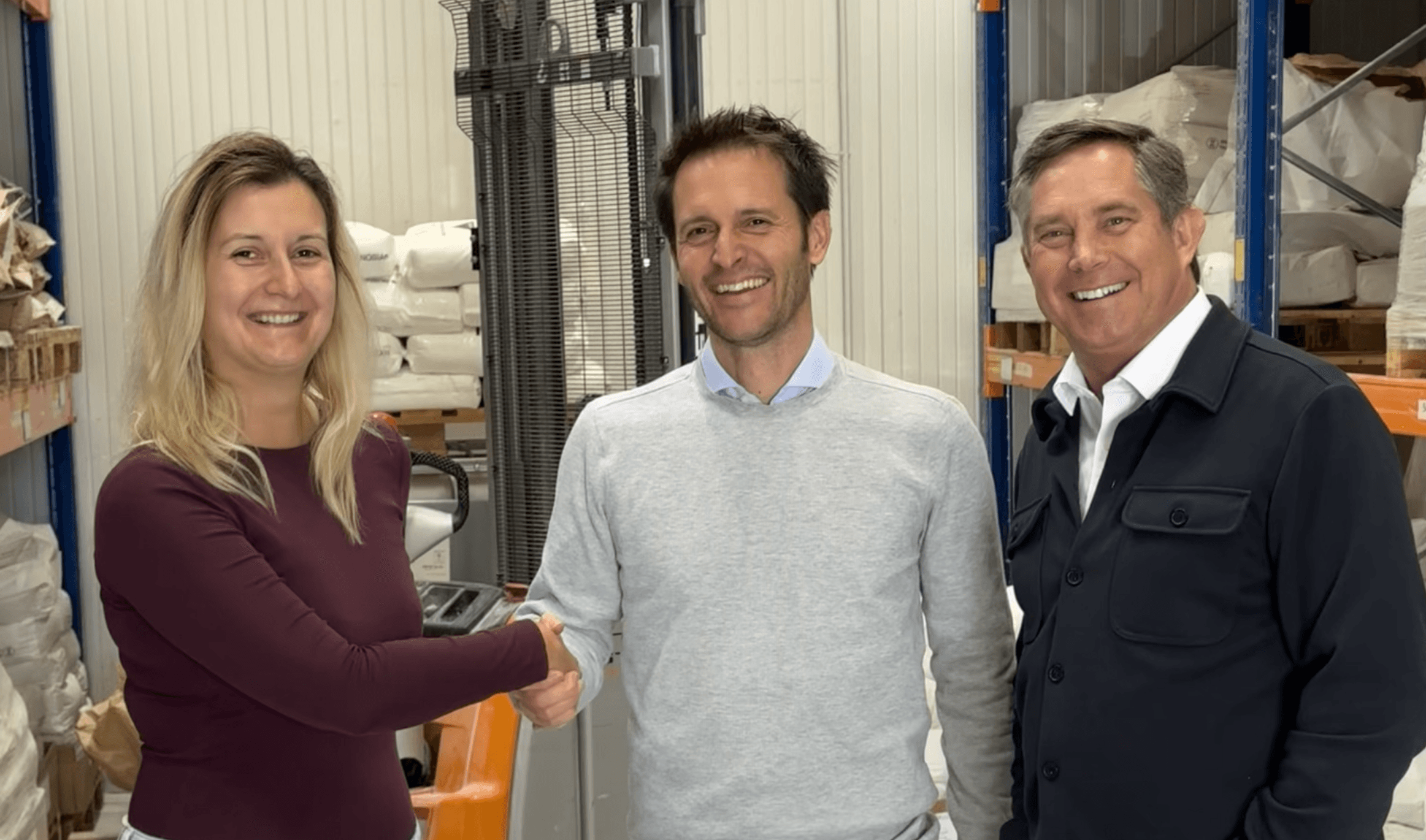

For the first time, Tozero has delivered recycled lithium carbonate from its demonstration plant at the Gendorf Chemical Park to industrial customer Botz GmbH. The delivery, tailored to customer specifications, marks an important step toward the commercial application of the recycling technology and lays the groundwork for the planned industrial scale-up.
With its first customer delivery, Tozero is tapping into a sales market outside the battery industry: the ceramics sector. While many battery recycling companies focus on returning valuable raw materials to new batteries, the Munich-based startup is also pursuing industrial applications with different quality requirements. This allows recycled lithium to be commercialized already, while the company works in parallel on producing battery-grade lithium.
Co-founded by Dr. Ksenija Neumann, the company recovers critical raw materials from spent lithium-ion batteries. The focus is on processing black mass, an intermediate product from battery recycling that contains lithium, among other materials.
Lithium Recycling: Botz GmbH Receives First Delivery from Tozero
The lithium carbonate delivered to Botz GmbH comes from Tozero’s demonstration plant in the Gendorf Chemical Park in Burgkirchen an der Alz. There, the startup optimizes its recycling processes, product quality, and the efficiency of raw material recovery.
The delivery takes place as part of a collaboration backed by a long-term, binding supply agreement. By successfully manufacturing to customer specifications, Tozero has achieved a major milestone toward regular deliveries.
Dr. Ksenija Neumann, Founder and Co-CEO of Tozero, explains:
“We have deployed our capital very strategically: first we prove the technology, then we validate it directly with the customer—and we use precisely these insights to target the next phase of the industrial ramp-up.”
The industrial customer also sees potential in the collaboration. Daniel Schulze Zur Verth, Managing Director of Botz GmbH, describes the use of recycled raw materials as an important lever for reducing dependence on primary raw materials and lowering the ecological footprint of industrial manufacturing.
Tozero did not provide details regarding the amount of lithium carbonate supplied, the order value, or specific purchase volumes.
Battery recycling for the ceramics industry and battery production
Tozero’s approach differs from fully integrated battery recycling models. The startup focuses on recovering and refining critical raw materials from already processed black mass, rather than covering every process step from battery collection to the finished recycled product itself.
This allows the company to collaborate with existing partners in collection, pre-treatment, and downstream processing. According to the company, this approach is designed to limit the capital intensity of the business model.
The ceramics industry represents an additional sales market for recycled lithium carbonate. Lithium compounds are used in ceramic glazes and other industrial applications, among other things.
In the long term, Tozero also aims to produce battery-grade lithium. This battery-grade lithium must meet particularly high purity standards to be used again in battery cell production.
European lithium supply: Recycling aimed at reducing import dependency
The recovery of lithium is gaining importance for European industry. The raw material is not only needed for electric vehicle batteries, but is also used in other industrial sectors.
Greater use of recycled materials could help reduce Europe’s dependence on imported primary raw materials. The prerequisites for this are economically viable recycling processes, an adequate supply of end-of-life batteries, and industrial demand for the recovered materials.
Axel Strotbek, former automotive executive and business angel:
“This is exactly the kind of tangible industrial progress we need. Proving the ability to extract lithium from used batteries and produce recycled lithium carbonate according to customer specifications is an indispensable step toward battery-grade raw materials. In Europe, less than two percent of available black mass is currently utilized for lithium recovery. Building a resilient battery circular economy in Europe requires more than promising concepts – it takes proven operational execution strength, strong industrial partnerships, and a clear path to industrial scaling.”
However, the economic viability of the business model can only be assessed more accurately as production volumes increase and recurring customer orders materialize.