
Munich Startup: Please introduce the SCE Precelerator briefly.
nnnnJulia Zipf: The Strascheg Center for Entrepreneurship (SCE), the founding center of Hochschule München, supports around 60-70 young founders every year with business development and market entry. The university has made entrepreneurship a priority across all faculties. The SCE offers a wide range of courses and programs to engage students in the topic of founding early on. An important building block for this is the Precelerator. It is deliberately an offline community space for students who love project work, want to develop as problem-solvers, and want to get a taste of the startup scene. To this end, we offer a diverse workshop program, ranging from hands-on printing of team t-shirts to AI tool training and software or hardware prototyping workshops.
nnnnOur maker community should of course network well with each other and with our experienced startup founders. To make this work well and, above all, quickly, we host the “Brezelerator,” a free “Meet-our-Startups” breakfast, on the first Thursday of every month, as well as numerous theme-specific events.
nnnnOur event highlight this semester will definitely be the robot contest “Clash of Trash” on November 14, where self-built robots compete against each other. Alongside this, our robotics startups will present themselves.
nnnnSCE Precelerator focuses on tech fun
nnnnMunich Startup: What makes your offering special?
nnnnJulia Zipf: The Precelerator focuses on tech fun and offers a playground for anyone who wants to experiment with technical implementation or who wants to test the technical feasibility of their business idea or invention with the help of our tech experts. Of course, we also help with idea generation in the early stages, for example with small ideation challenges as exercises or case studies based on real tasks from a startup. Students from other universities in Munich interested in founding are also already using our Precelerator program.
nnnnThe Precelerator consists of a café (with free coffee), the workshop and event program, the lending of technical equipment (such as cameras, podcast microphones, drones, Raspberry, etc.) and close cooperation with the student-organized MakerSpace of the university.
nnnnHands-on and practice-oriented
nnnnMunich Startup: Who can participate in the SCE Precelerator?
nnnnJulia Zipf: From first semester students to aspiring founders, everyone can participate with us. We deliberately design the workshops so that no prior knowledge is required and anyone can join at any time. Our workshops are very hands-on and practice-oriented. We want to motivate and enable people to take action. We are open to students with diverse backgrounds and from all faculties. They can meet new like-minded people with us and network.
nnnnMunich Startup: Who should interested parties contact if they want to talk with you?
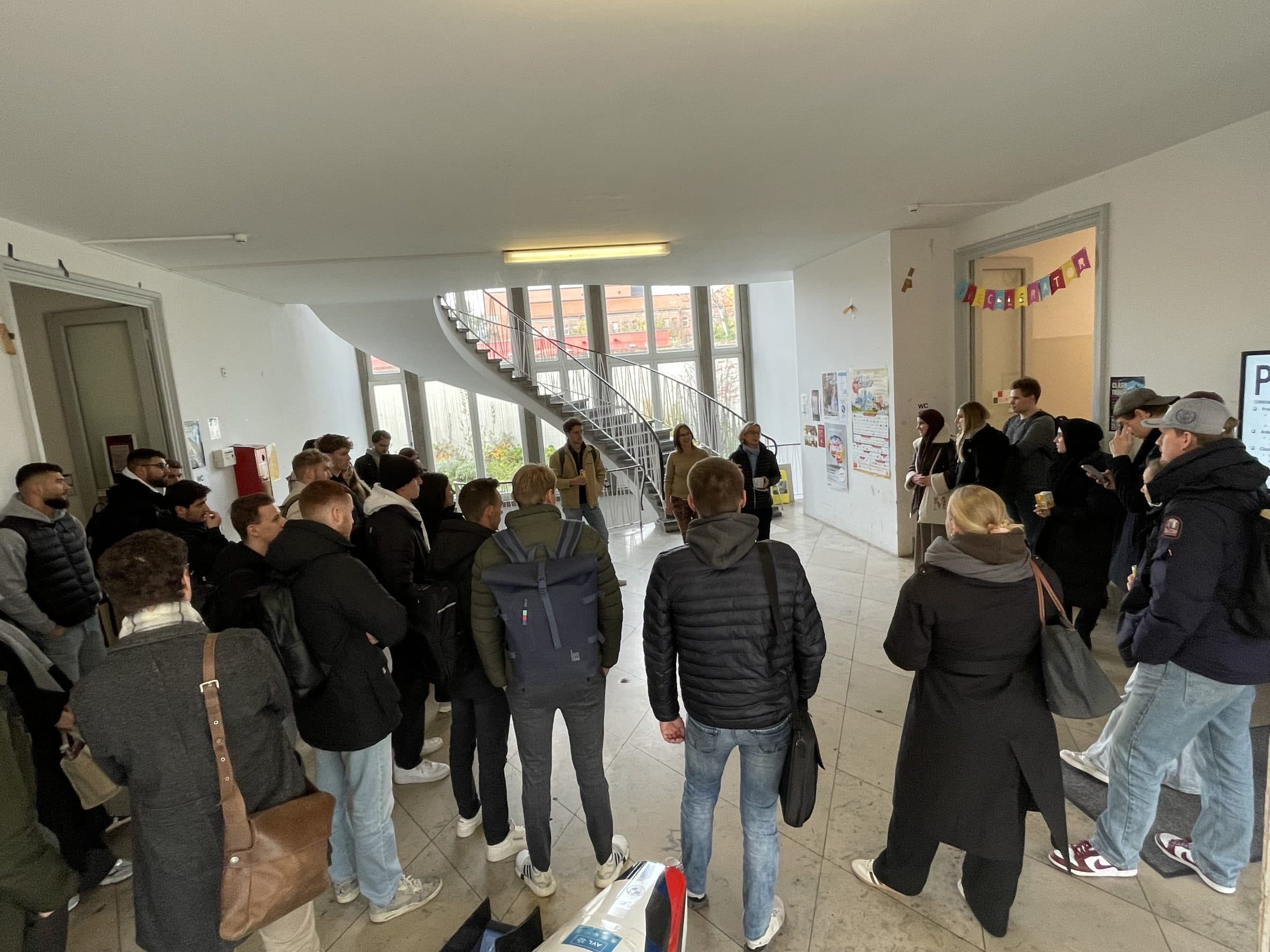
nnnnJulia Zipf: Students interested in founding can register for our workshops and event offerings at www.precelerator.de and follow us on Instagram at @precelerator to stay up to date with our offerings. We also offer a tech open hour with our tech experts on Mondays and Tuesdays from 1-2 PM. A time slot can be booked here. For all students who want to work with a startup for their M.S./B.Sc. or would like an initial consultation, I am the first point of contact. Professors and lecturers who would like to book a tour through the Precelerator in connection with a brief startup presentation should also contact me. The tours are very popular – around 20 professors visit us with their courses per semester, as well as various company representatives. We welcome around 1,600 visitors per semester.
nnnnTalent pool of doer personalities
nnnnMunich Startup: Why do good founding teams even need you?
nnnnJulia Zipf: The Precelerator offers existing founding teams a talent pool of doer personalities with great interest in entrepreneurship and various expertise in prototyping. With the help of this pool, matching co-founders and helping hands (in the form of student assistant work) can be found faster. Startups can also delegate tasks to entire courses or B.Sc. thesis writers to focus on core topics. Through the many tours, startups benefit from ongoing pitch training, feedback from entire classes, and potentially even the personal networks of the supervising professors.
nnnnAspiring founders can make contact with advanced teams early on at networking events and learn directly from them. Of course, they can also use the community to find potential co-founders for their own ideas and learn important founding skills.
nnnnMunich Startup: Please give a few examples of who has been in your Precelerator.
nnnnJulia Zipf: Micro Factory began its journey in the cLab, the MakerSpace. Here, the passion for prototyping emerged. With the help of Precelerator tech consulting, their own invention – a machine for small-batch 3D printing – was developed. Numerous pitches during our tours brought valuable contacts, and many tasks could be delegated to students and courses – from feedback on the business model to hands-on support for assembling the first ordered machines. Hebio, a startup for intelligent robotic systems for intralogistics, and Boxing Babe, a company for sportswear for female boxers, also began their journey in the Precelerator.
nnnnSuccess stories: Micro Factory, Hebio, and Boxing Babe
nnnnMunich Startup: How do founders view the support provided by the Precelerator?
nnnnMaximilian Strasser, Micro Factory founder: To turn a good founding idea into a successful startup and ideally an established company, you need not only the idea, courage, and a great team, but also supporters who help you master new and complex tasks and apply them to your own company. In the early phases of our startup, we were supported by workshops, conversations, and materials from the Precelerator. With the help of the Precelerator, we felt well prepared and knew that we could count on competent support.
nnnnJulian Ernst, Hebio founder: We found new team members at the Precelerator’s networking events and were able to delegate tasks to courses as case studies or to individual B.Sc. thesis writers through the Precelerator tours. This saved us a lot of time and helped us move forward much faster.
nnnnNadia Skuse, Boxing Babe founder: I had never created a pitch deck before. The consulting and workshops at the Precelerator really helped me put my presentation together concisely and practice pitching.
n