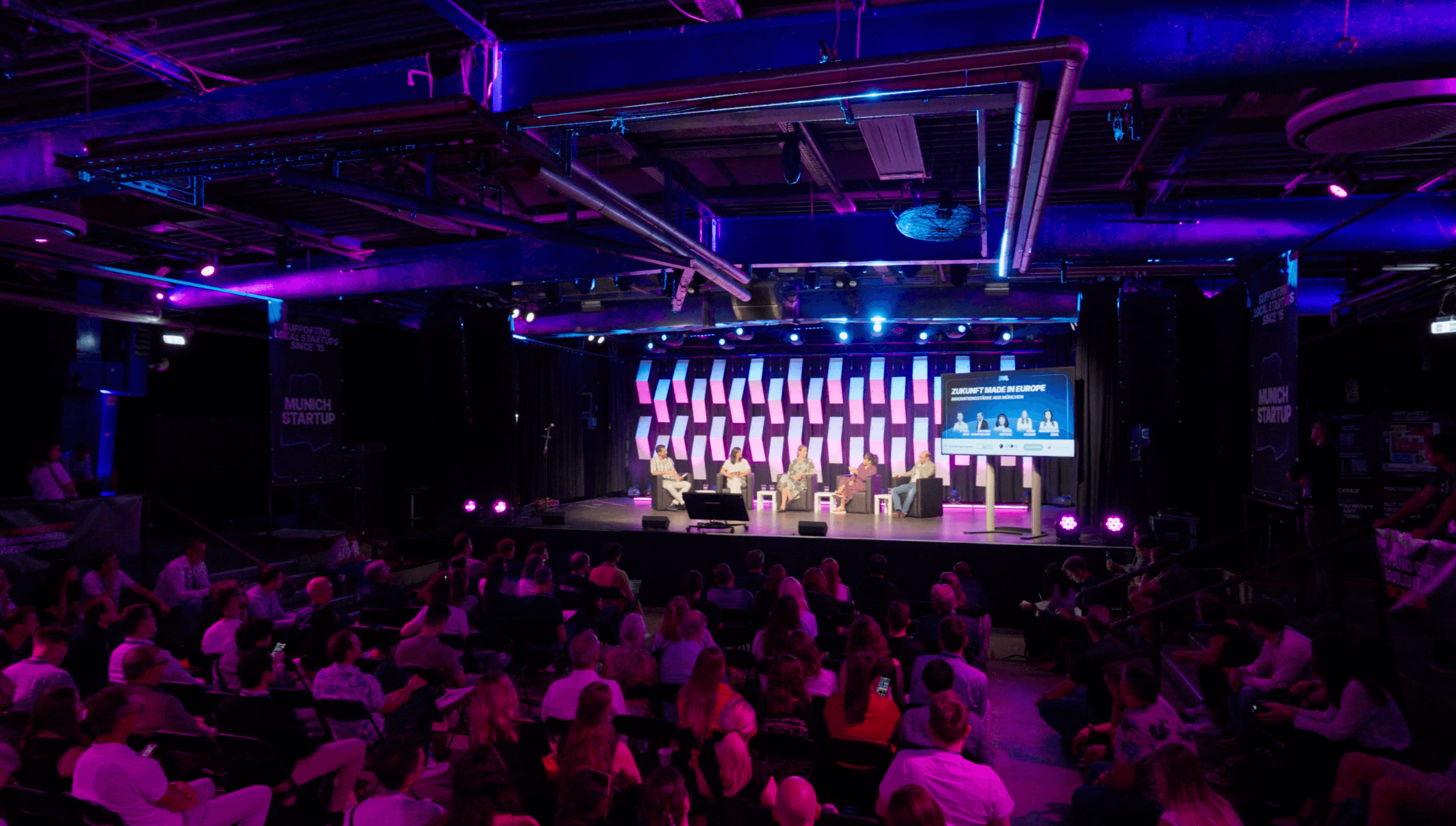
How do you turn a European company into a global player? Who could answer this question better than Munich’s Decacorn Celonis, which continues to grow on both sides of the Atlantic and confidently leads the global process mining market. On Slush’s main stage, Martin Klenk, co-founder and CTO of Celonis, and Harry Nelis, partner at Accel, discussed exactly this question. The talk focused on organizing internal processes and how to convince experienced developers to join your company. For Nelis, what was particularly interesting was how – and why – Celonis globalized its development structures instead of just internationalizing its sales. You can watch the entire conversation on the Slush YouTube channel, at the beginning of the livestream for the second day of the conference.
Martin Klenk says about Slush:
“Despite its size, Slush is a very nice and intimate event. You’ll find a lot of ambitious and creative ideas here. It’s therefore a great place, especially for young companies, to meet investors, network, and learn.”
But Munich startups were easy to spot on other stages too. In the Startup Studio, Slush’s pitching stage, speakers included Amelie Binder, CEO of Cargokite, and Ivor van Dartel, CEO and cofounder of Vaeridion, in the transportation & logistics area. And in the energy showcase, Sarah Fleischer, CEO and cofounder of Tozero, presented her solution.
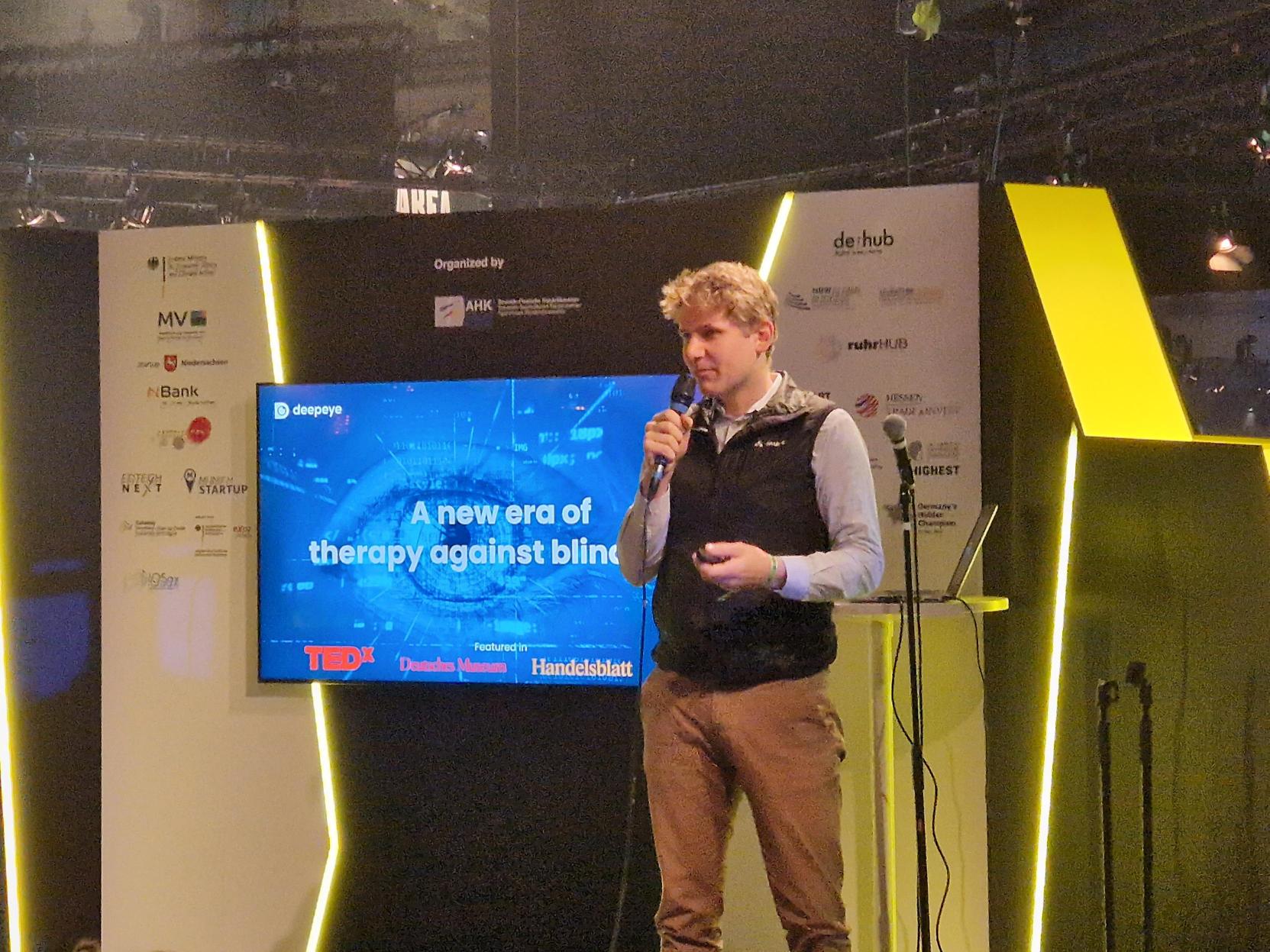
At the Startup Champs booth
Startup Champs Berlin Partner, Hamburg Invest, Cologne Business, and Munich Startup organized a booth at Slush again this year. As part of Germany’s booth at the AHK Finland, both the ecosystems themselves and various startups from the cities presented themselves. For Munich, these were Flow Eye, Exomatter, and Deepeye Medical, winner of this year’s Startup Champs pitch competition. The startups not only had the opportunity to use the booth for half a day each, they also pitched on the German Pitching Stage.
Thomas Schinke, founder and CEO of Flow Eye, says:
“The quality and number of participants here at Slush, especially when it comes to investors, is excellent. All participants are very open and engage with each other. They are very interested in the startups and in facilitating good conversations.”
Manuel Opitz, CEO and co-founder of Deepeye Medical, also praises the investors at Slush:
“I’m impressed by the response rate to investor inquiries we received at Slush: seven out of ten replied to our inquiry, we set up six meetings, and all investors showed up. We even received three additional inquiries from investors. I’m not used to that from Bits & Pretzels. Second, I thought the side events and day 0 pre-events were fantastic – you can exchange with sector-specific investors and startups in a smaller setting.”
Josua Vieten, co-founder and CEO of Exomatter, sums up his time at Slush:
“This is my first time at Slush and it’s very impressive. The entire startup ecosystem is here in one place, and you meet a lot of new people as well as people you already know – so you can maintain your network well.”
Carsten Rudolph: “What I particularly like about Slush is that it’s very startup-focused”
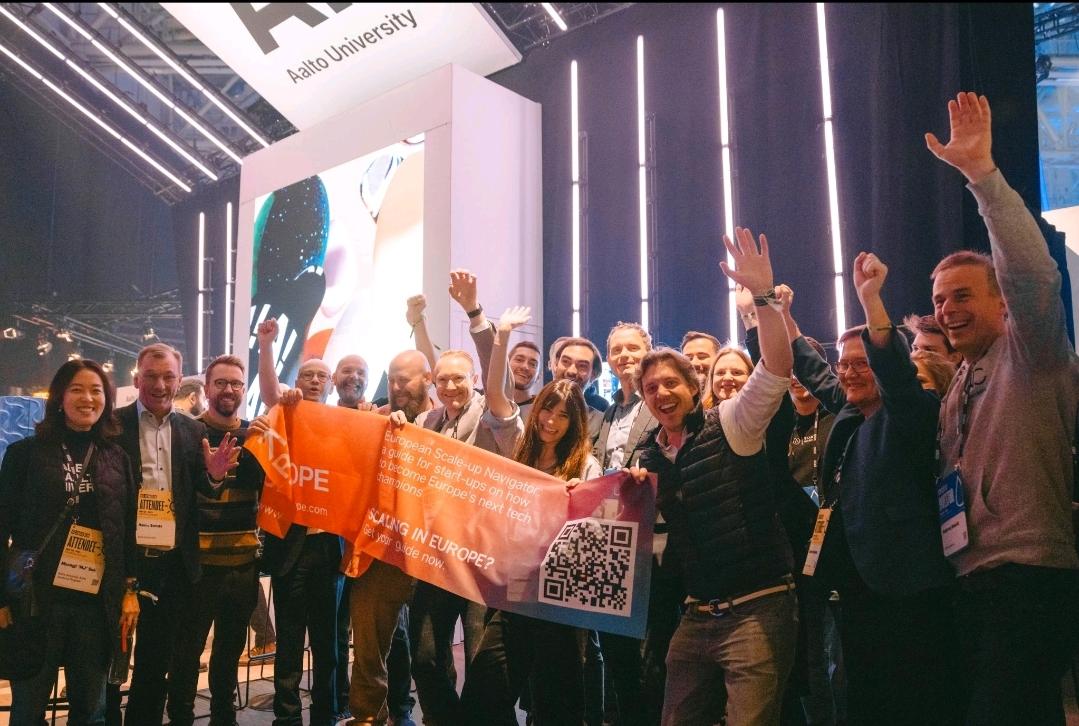
UnternehmertTUM had something to celebrate as well. At the Aalto University booth, the official launch of the European Scaleup Navigator was announced. The project of the Rise Europe initiative launched by UnternehmertTUM provides a guide for startups seeking to conquer the European market. To this end, the Navigator offers insights into the European innovation landscape and highlights the specific characteristics of individual countries. It presents various funding options and potential for industry partnerships in respective markets and outlines individual regulatory frameworks.
Carsten Rudolph, managing director of Baystartup, sums up the event:
“What I particularly like about Slush is that it’s very startup-focused and I can also take away many things from the talks. The startup presentations also showed a lot of substance and content.”