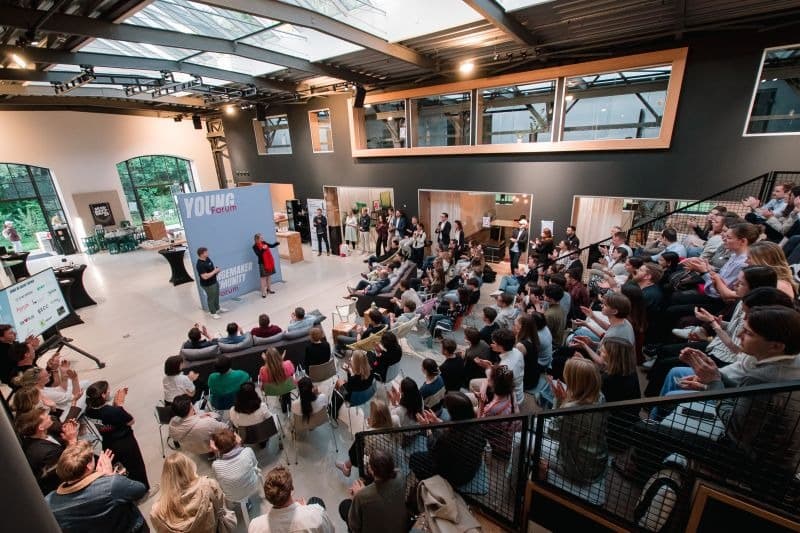

Slush 2025 in Helsinki starts with a bang. Pyrotechnics, booming bass, and a performance artist on the main stage. Europe wants to grab attention. For the century moment that the Slush organizers have announced in the far north. 13,000 participants, including 6,000 startups and 3,500 investors. Europe’s most important founder event and Munich Startup is there, just like in previous years.
Lovable: The fastest-growing startup in history
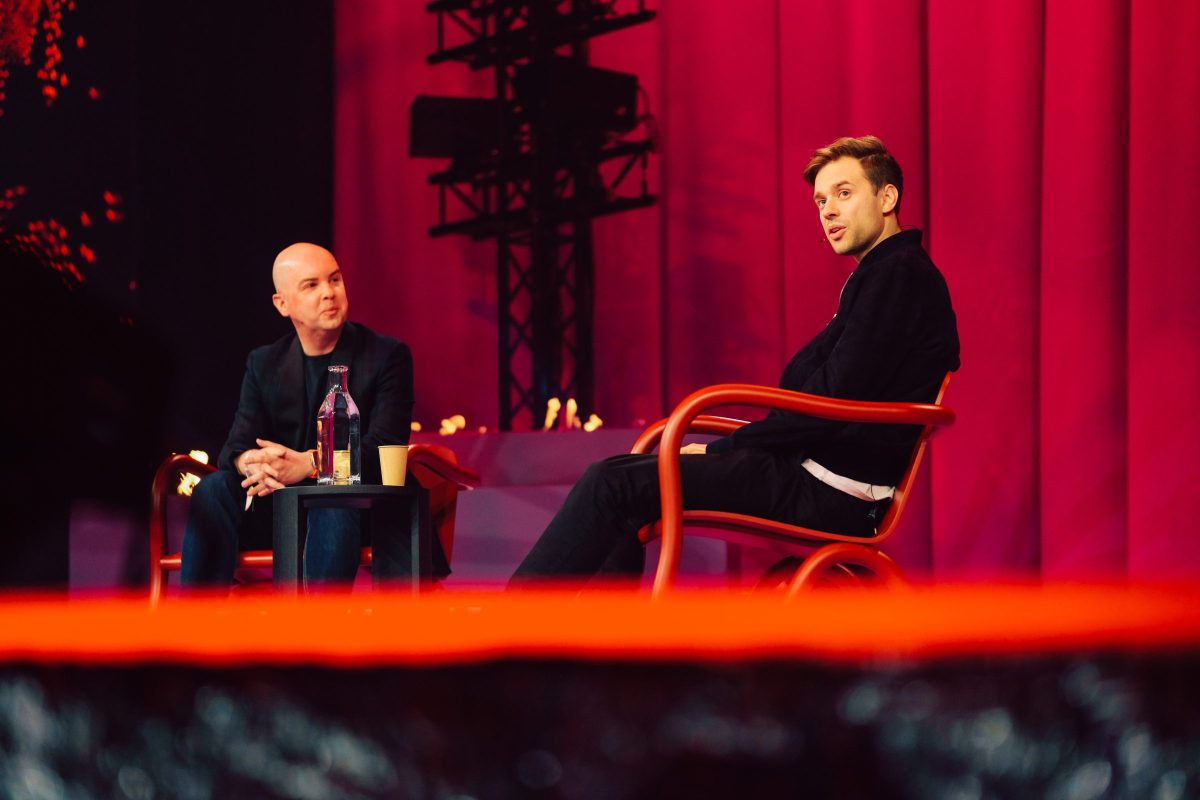
Shortly after the opening, Anton Osika, founder of Lovable, takes the stage. In his home country Sweden, the 35-year-old is something like a superstar. Because Lovable is the fastest-growing startup in history. A year ago, Osika presented his platform, which allows people with little or no coding knowledge to create websites and apps simply by using natural language input, at Slush.
“Just before the official launch, we were only eight people in a co-working space. Then Slush put me on stage here a year ago and I was incredibly nervous.”
From experiment to unicorn
What started as an open-source experiment developed at breakneck speed into an AI unicorn. In July, the startup closed a Series A financing round of 200 million US dollars. With this financing round, the company joined the ranks of unicorns just a few months after its founding and became a flagship of the European tech scene due to its rapid growth.
Osika reports that the foundation of his thinking did not come from a classical market analysis, but from the question: What is the most ambitious thing I can build? His background in physics and his work in AI research eventually led him to a predecessor of Lovable, a tool called GPT-Engineering. However, he quickly realized that the vision had to be bigger:
“We didn’t want to be a tool for developers. Only 0.5 percent of the world are developers. We wanted to create software that is accessible to everyone. I called my future co-founder Fabian Hedin and said: ‘Fabian, we’re starting a company. And we’re going to change how software is created and who creates it.'”
One year after launch, Lovable can show impressive numbers. Osika explains:
“Every day, more than 100,000 new projects are built on our platform. Over five million people use applications created with Lovable every day.”
Europe stands at a historic turning point – and the tech scene feels it clearly
Unlike many companies from Europe, Osika decided not to move to Silicon Valley:
“I didn’t do that just so I could sit here now and say: You can build a global company from Europe too.”
He sees many reasons why Europe is a strong place for AI companies today: talent, vision, work culture. Instead of moving, he brought expertise to Stockholm: executives from companies like Notion, Slack, and Gusto are now part of the team.
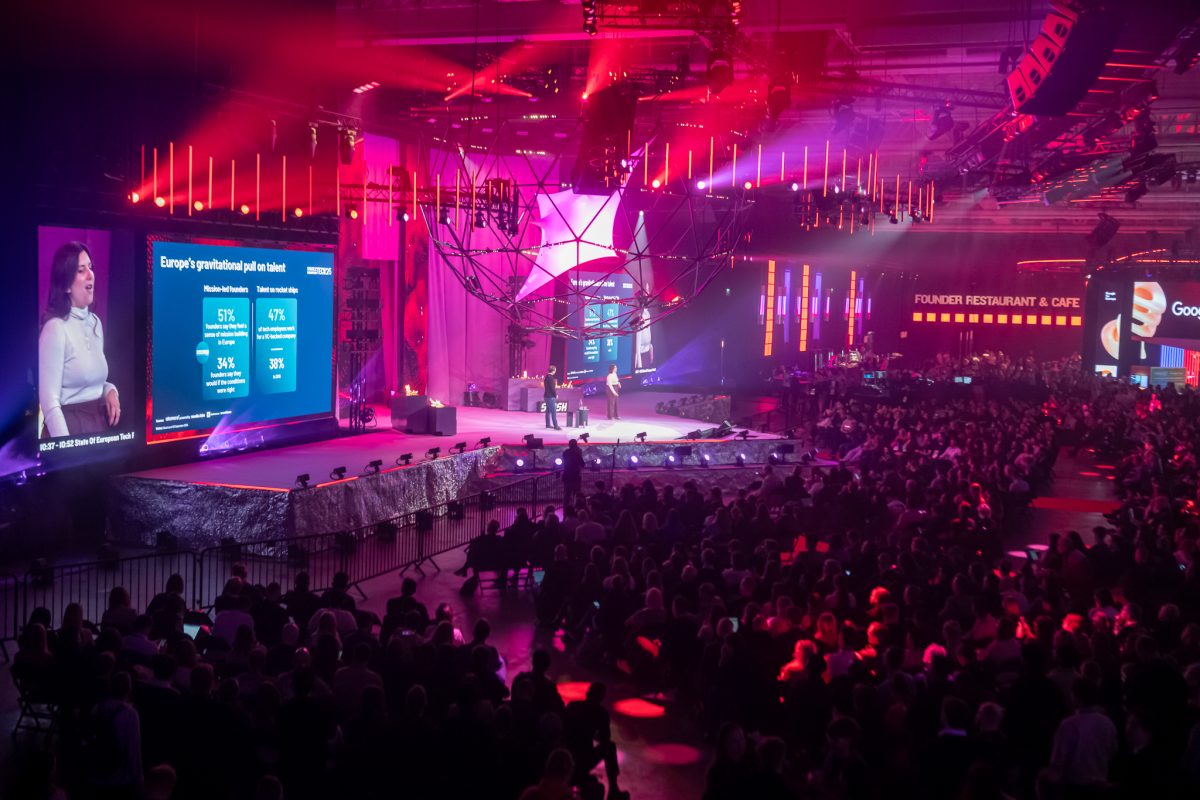
Because Europe is experiencing a moment that, according to venture capital firm Atomico, feels bigger than anything the European startup landscape has seen in recent years. Technology is becoming the central lever that reorganizes economic structures and shifts global power dynamics. As the world advances rapidly, Europe faces a decisive question: Will the continent seize its opportunity or will the future be shaped for it?
An ecosystem that is maturing and founders who want to stay
The good news first: Europe’s tech sector is showing impressive dynamism despite all geopolitical and economic uncertainties. In just two years, approximately one trillion US dollars in value has been created. The industry now employs 4.6 million people and records a new record high in new startups: 27,000 new startups this year alone. The strongest increase Europe has ever seen.
What has also changed: Founders are no longer leaving Europe in droves. On the contrary: over 80 percent build their companies from Europe and many do so deliberately for Europe. Over 1,200 companies generate more than 100 million euros in revenue or are worth over one billion euros. More than 400 unicorns now belong to the European landscape. 28 new unicorns have emerged this year alone – a global record share.
Growth has limits
While founders accelerate, the rest of the system often lags behind. Tech investments have stagnated for three years at around 44 billion US dollars annually. In the US, the figure in the same period is almost 500 billion, more than ten times as much. Add to this structural brakes: capital moves too slowly and in too fragmented a way in Europe, the regulatory environment remains unwieldy, risk is often culturally understood as a threat rather than a driver, and two trillion euros in IT spending flows out of Europe annually, even though European solutions are often leading.
Four missions for Europe’s future
Atomico explains what Europe needs now to make the most of this century moment.
- Remove regulatory hurdles – a real European single market for innovation.
- Strengthen and retain talent – Europe must remain a global magnet for founders.
- Deepen capital markets – liquid, domestic financing from seed to IPO.
- Establish a risk culture – bold entrepreneurship as social infrastructure.
“If there were more of this really extremely high ambition in Europe, we would see many more successful companies from here,”
Anton Osika told journalist Antoine Buteau in September. And hardly any sentence fits better to this moment when Europe decides whether to build its technological future itself or leave it to others.
Munich Startup at Slush 2025
We took four startups from Munich Startup to Helsinki to support them in their internationalization. In addition to Jessy Works, Lynkt and UniteLabs, Enna was also there. Tobias Bily, co-founder of Enna, sums up Slush like this.
“We experienced Slush as an extremely inspiring stage where innovative power and purpose come together tangibly. A big thank you to Munich Startup for allowing us to be part of it.”