
In mid-October, it became known that Lilium’s approximately 300 patents were sold to American company Archer Aviation Inc. for around 18 million euros. The ultimate downfall of the once so visionary flight startup is thus sealed. With the sale of the patents, the American competitor acquired, among other things, the design of the aircraft, concepts for battery control and electric motors, and especially the ducted propeller of Lilium’s electric vertical takeoff aircraft, which it plans to use in its own aircraft.
Particularly bitter: Lilium once invested 1.5 billion euros in the development of a purely electrically powered aircraft. Only a fraction of that remains. The problems were multifaceted. But ultimately, the Bavarian startup never managed to complete its prototypes. The planned manned maiden flight in Spain never took place.
On the 6,000 square meters of space at Oberpfaffenhofen special airport, a new tenant is now moving in as well. Quantum Systems wants to build drones where the flying taxi was once welded together. Another sign that the Lilium Jet is history. But how did it come to this?
Retrospective: From soaring to crash
When Lilium was founded in 2015 by four engineers from the Technical University of Munich, the vision sounded positively revolutionary: an electrically powered aircraft that can take off and land vertically – a so-called eVTOL. With this, the Bavarian startup wanted nothing less than to reinvent urban mobility of the future. The idea quickly found enthusiastic supporters: In no time, Lilium raised over a billion euros in investments and was considered one of Europe’s most promising tech companies.
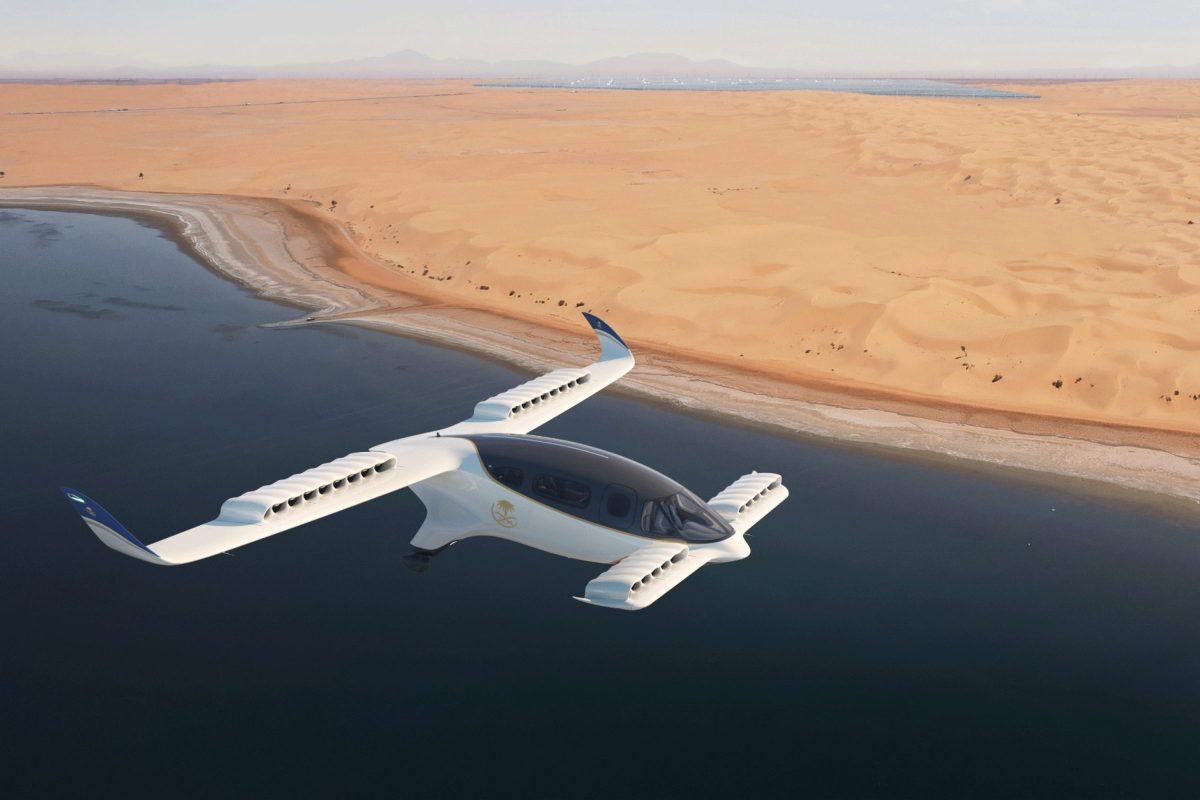
With the Lilium Jet, the company presented a futuristic aircraft that was supposed to shuttle silently, emission-free, and efficiently between cities. Production facilities were built in Oberpfaffenhofen near Munich, hundreds of jobs were created, and Lilium seemed to be on its way to writing aviation history.
But the dream of electric flying proved to be far more technically and regulatory challenging than expected. Again and again, schedules were delayed, certification by the European Aviation Safety Agency (EASA) remained distant, and development costs exploded. While the competition – such as Archer or Joby Aviation – gained momentum in the USA, Lilium struggled with financing problems and heavy losses.
Finally, in autumn 2024, the break came: Two German subsidiaries filed for insolvency after neither new investors nor government guarantees could be found. A year later, it was clear that the history of the Munich aviation pioneer would end in this form.
Why Lilium failed
The failure of Lilium is the result of a combination of technical, financial, and structural problems – and at the same time a lesson in how difficult it is to drive an aviation revolution from a startup.
One of the central reasons lies in the technical concept itself. From the start, Lilium relied on a particularly complex design: the Lilium Jet was supposed to take off vertically with multiple small, electrically powered jet engines and then transition to horizontal flight. This architecture promised efficiency and quiet flying, but proved extremely demanding in practice. Engineers and industry experts warned early on that the intended range and performance could barely be achieved with available battery technology. Development took longer than planned, and certification by the European Aviation Safety Agency (EASA) receded ever further into the distance.
At the same time, the company struggled with massive financing difficulties. Despite investments in the billions, development consumed enormous resources without a market-ready product in sight. Lilium was dependent on continuous capital inflows, but the confidence of many investors waned as schedules were repeatedly delayed. A hoped-for government guarantee of 50 million euros, which was supposed to enable a new funding round for the company, ultimately never materialized – a heavy blow that severely restricted room for maneuver.
Regulatory hurdles also played a decisive role. Certifying an entirely new type of aircraft is a lengthy and expensive process in which every component must be tested and approved. Lilium’s novel propulsion system meant that many of these processes had to be developed from scratch – a feat that even large aerospace corporations can barely manage alone.
In the end, this combination of technical complexity, capital requirements, competitive pressure, and political uncertainty led to insolvency. With the subsequent sale of approximately 300 patents to American rival Archer Aviation, a line was drawn under one of Germany’s most ambitious aviation projects.