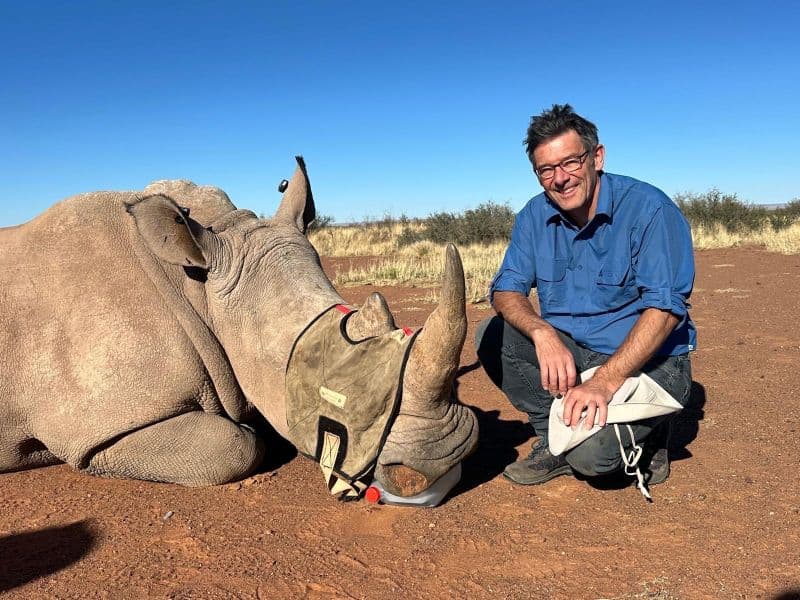

Munich-based new space startup Talos has reached an important milestone for the research project Icarus 2.0. For the first time, the satellite Raven successfully exchanged data with animal trackers currently being tested in Namibia. The communication worked in both directions: The satellite not only received information from the transmitters, but was also able to send commands back. This marks a decisive step toward establishing an independent, satellite-based system for global wildlife monitoring.
The successful test took place on November 6, 2026. Talos is working closely with the Max Planck Institute of Animal Behavior on the initiative. Following the field tests in Namibia, further trials are planned on the Galápagos Islands.
Relaunch for the “Internet of Animals”
Behind the technology is the international research project Icarus (International Cooperation for Animal Research Using Space). Its goal is to enable scientists to study the movements and behavior of wild animals worldwide. In addition to position data, the small transmitters deployed also record information on environmental conditions.
Originally, the project relied on an antenna aboard the International Space Station (ISS). However, cooperation with the Russian space agency Roscosmos ended in 2022 as a result of Russia’s war of aggression against Ukraine. Consequently, the previous technical infrastructure had to be replaced.
In January 2025, Talos and the Max Planck Society therefore announced the development of Icarus 2.0. Instead of the ISS, a dedicated constellation of at least five small satellites is set to handle data transmission in the future.
At the beginning of 2026, the partnership with Bulgarian satellite manufacturer Endurosat followed, which provides the satellite platform for the project. Talos is responsible for, among other things, mission planning, operations, and the development of the animal observation technology.
Four more satellites planned for 2027
With the successful test of Raven, Talos has now proven that direct communication between satellite and animal transmitters also works under real-world conditions.
Bidirectional data transmission is particularly crucial here. While the transmitters send information from the field to the satellite, the satellite can conversely transmit control commands. This allows the devices to be reprogrammed from space, for example, without researchers having to retrieve them again.
The next step is the expansion of the satellite constellation. For 2027, Talos plans to launch four more satellites. Together, they are intended to enable more regular tracking of animal movements in the future and make data available to researchers worldwide.
The combination of dedicated satellite infrastructure and smaller transmitters could significantly expand wildlife monitoring. In particular, smaller animal species could be researched more effectively in the future. The data obtained is intended, among other things, to help understand migratory patterns, investigate shifts in biodiversity, and track the spread of animal diseases.