
Germany and the UK plan to collaborate more closely on future technologies. On October 8, 2026, both countries announced the new “Industrial Tech Corridor.” The initiative aims to connect tech companies with industry partners and investors. A joint funding pot will also provide 20 million euros for quantum research. Munich companies are also benefiting from the collaboration: Microagi is creating 180 jobs in London, and Proxima Fusion is expanding its UK site.
The initiative is part of the Kensington Treaty, through which Germany and the United Kingdom are strengthening their bilateral cooperation. Supporters include major industrial corporations such as Allianz, Bosch, RWE, and Siemens. The new technology corridor is intended in particular to help high-growth companies build international partnerships, acquire new customers, and bring their technologies into industrial application more rapidly.
Microagi creates 180 jobs, Proxima Fusion expands
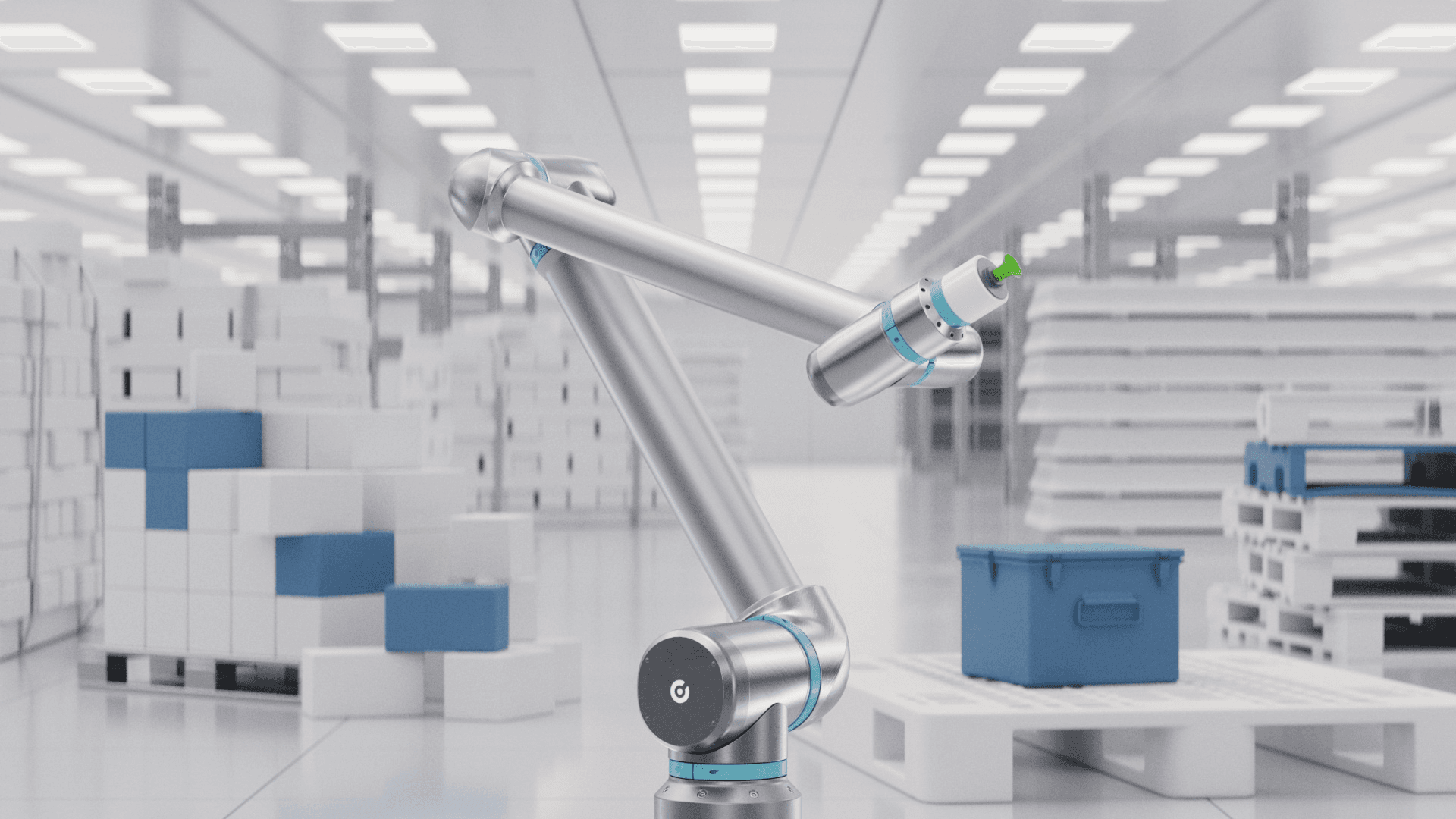
For two Munich deep tech companies, the cooperation brings concrete expansion plans. Robotics startup Microagi is expanding its presence in London and aims to create 180 new, well-paying jobs there. The company develops technologies in the field of physical AI—artificial intelligence that interacts with the physical world and is used, for example, in robots.
Bercan Kiliç, CEO of Microagi, explains:
“The UK and Germany are home to some of the world’s strongest industrial companies. Our goal is to enable them to take a leading role in the next industrial revolution with the help of physical AI.”
Proxima Fusion is also setting its sights on the UK market. The Munich-based fusion startup is expanding its site in Culham, a major British center for fusion research. By 2028, the number of employees there could quadruple.
Proxima Fusion is working on developing a commercial fusion power plant, with British engineering expertise playing a key role. Francesco Sciortino, co-founder and CEO of Proxima Fusion, says:
“We share the goal with our British partners of translating cutting-edge scientific excellence into a new fusion industry and creating skilled jobs in the UK and Germany.”
20 Million Euros for Joint Quantum Research
Alongside industrial collaboration, both countries also want to expand their research activities. To this end, they are jointly providing around 20 million euros for projects in the field of quantum technology.
Among other things, the funding is intended to advance the development of quantum computers, financial sector applications, and quantum sensors. The latter could, for example, open up new possibilities for medical research.
In addition, there is a joint research funding scheme of 2.4 million British pounds launched back in September. It is aimed at research projects in the fields of clean energy, life sciences, and synthetic biology. Individual projects can receive grant funding of up to 350,000 pounds.
Collaboration is also set to become closer in the field of artificial intelligence. For instance, British software company Quantexa is planning to establish a dedicated business unit for sovereign AI solutions in Germany.
Federal Digital Minister Karsten Wildberger sees the initiative as an opportunity for European technology companies:
“Together with the UK, we are creating an ideal launchpad for AI companies looking to scale internationally.”
The tech corridor is thus not only intended to facilitate market entry, but also to strengthen Europe’s digital sovereignty.
Celonis and Siemens support the initiative
Munich-based software company Celonis is also among the supporters of the new partnership. The company sees great potential particularly in connecting technological innovation with industrial demand.
Bastian Nominacher, co-founder and co-CEO of Celonis, explains:
“The new tech corridor creates an essential foundation for closer German-British collaboration by connecting technological innovation with industrial demand under a common regulatory and security policy framework.”
The UK is already a strategic growth market for Celonis. The company particularly aims to drive the adoption of enterprise AI there.
Siemens also supports the initiative. Cedrik Neike, Member of the Managing Board and CEO of Siemens Digital Industries, emphasizes that the greatest economic benefit of artificial intelligence comes not from the technology alone, but from its application in the real economy.
The Industrial Tech Corridor is designed to address precisely this: technology companies gain access to industrial partners, while established corporations can deploy new solutions more quickly. For the Munich startup ecosystem, the partnership thus opens up additional opportunities for internationalization.