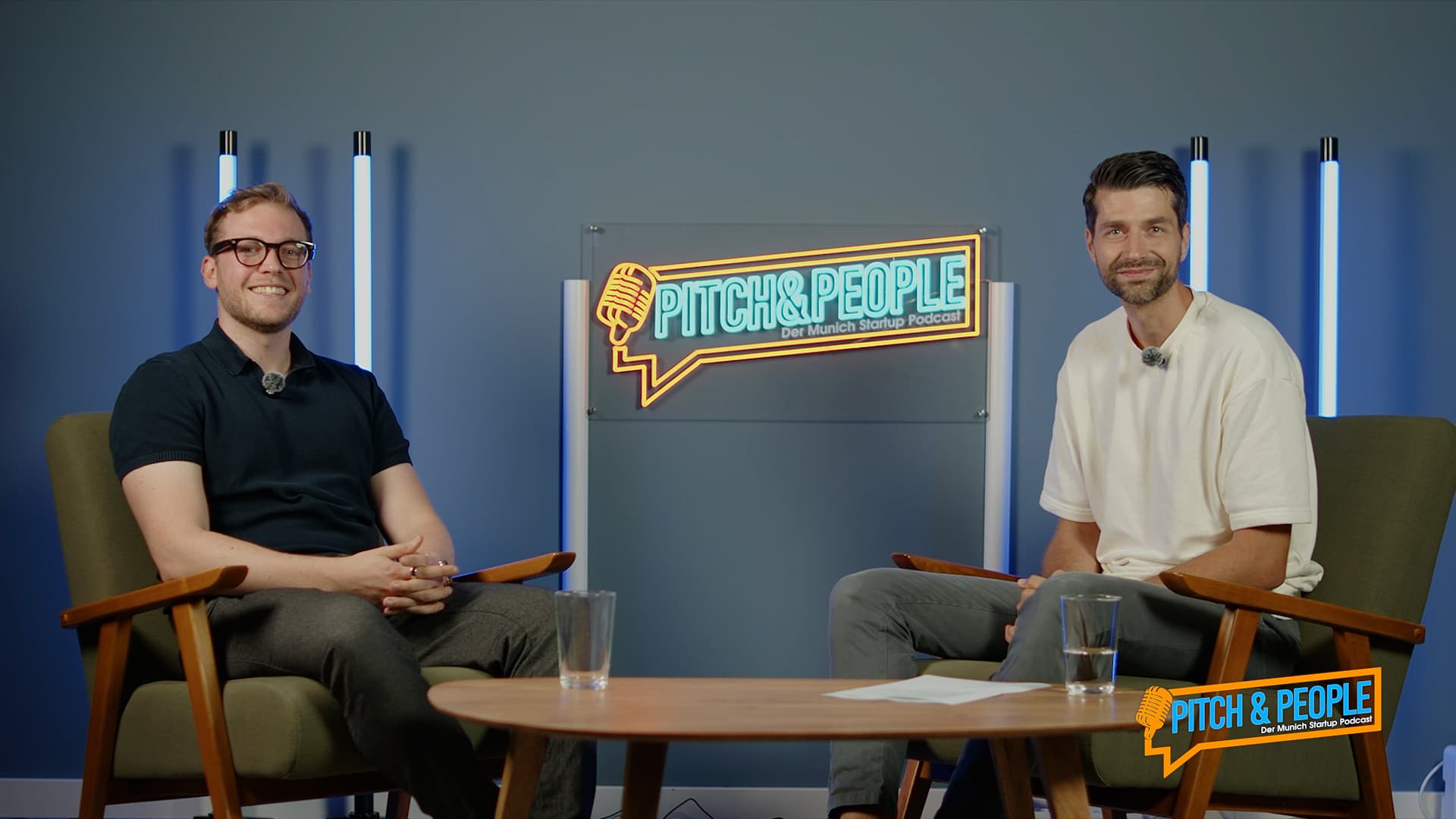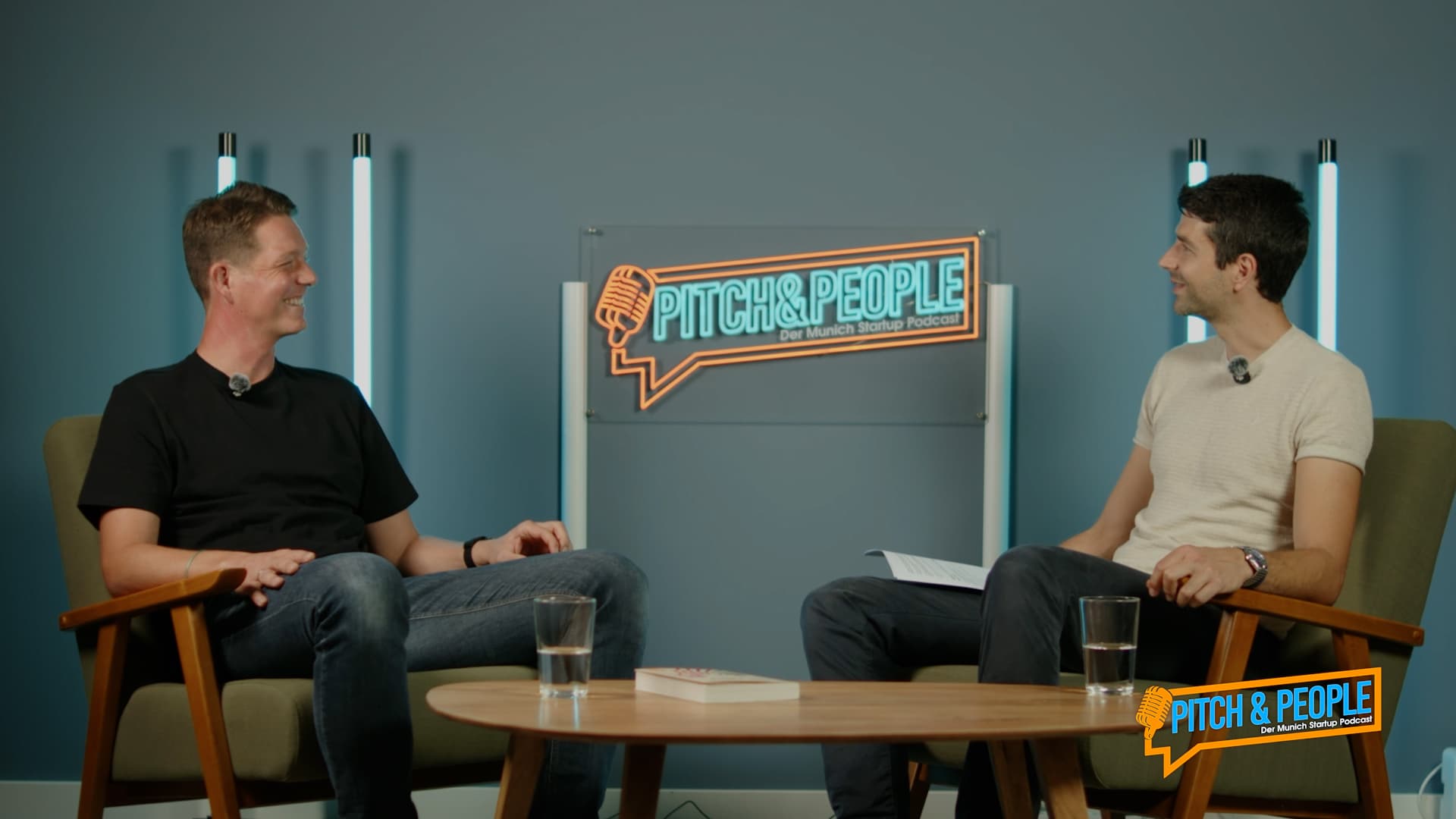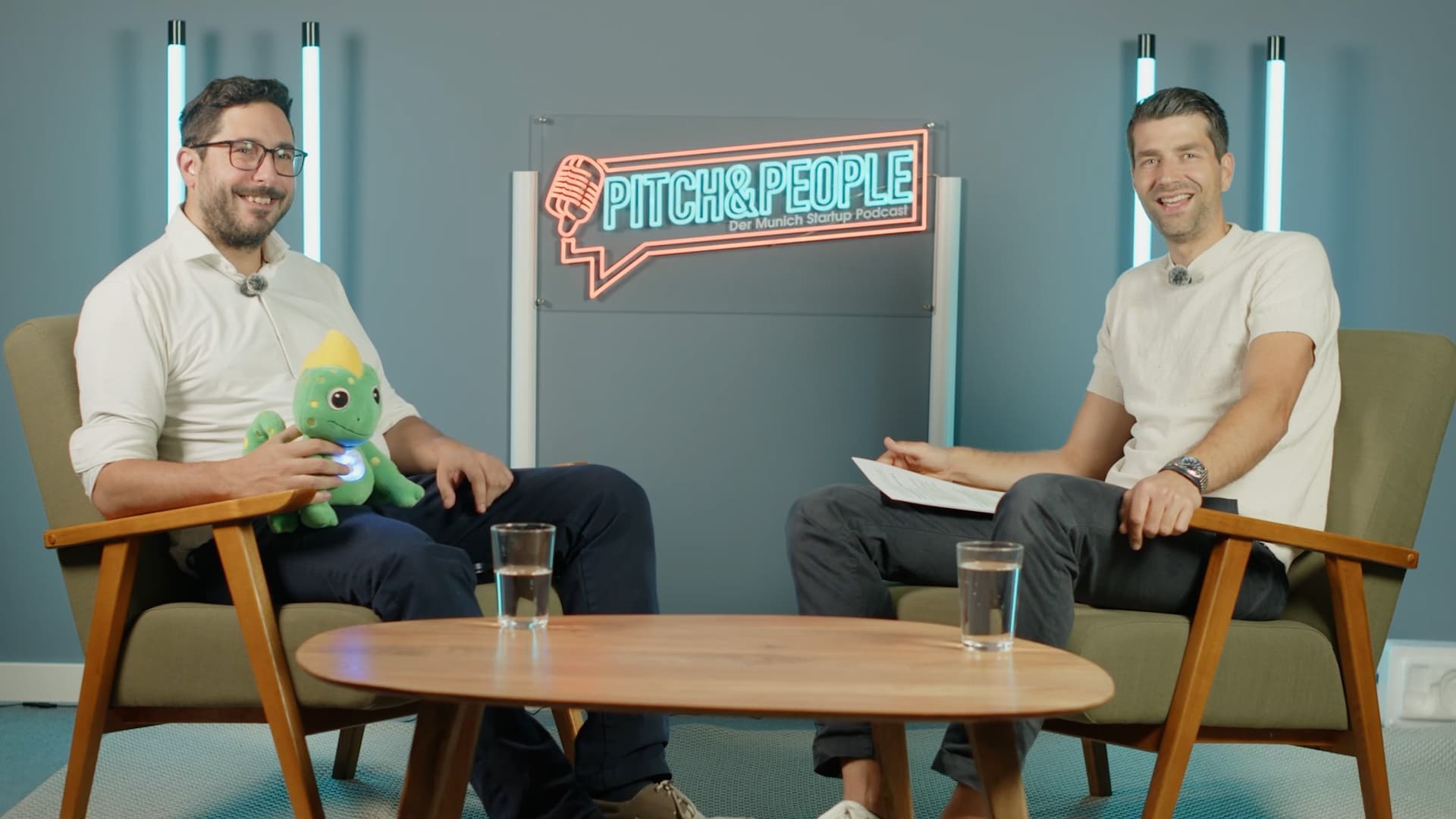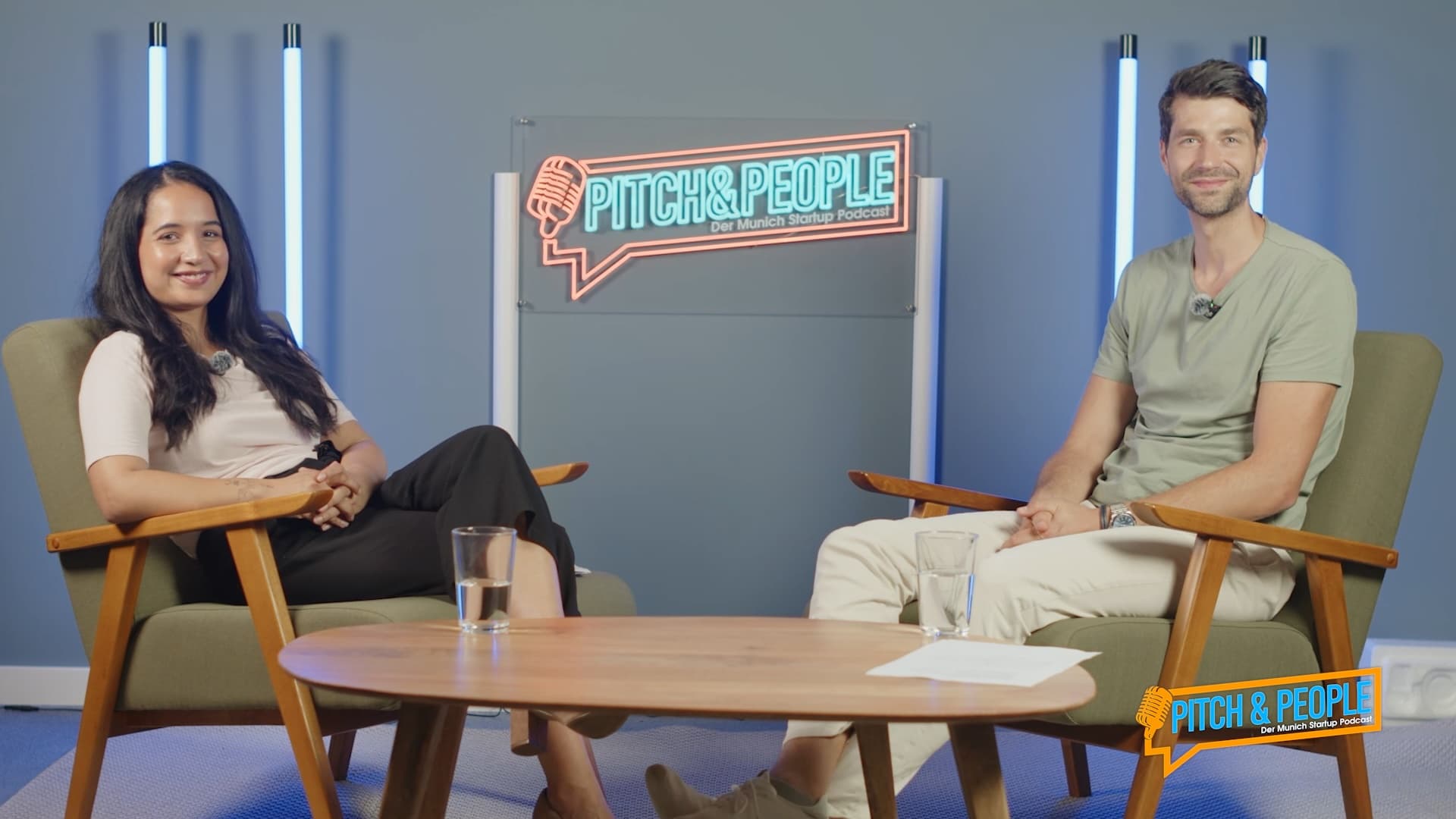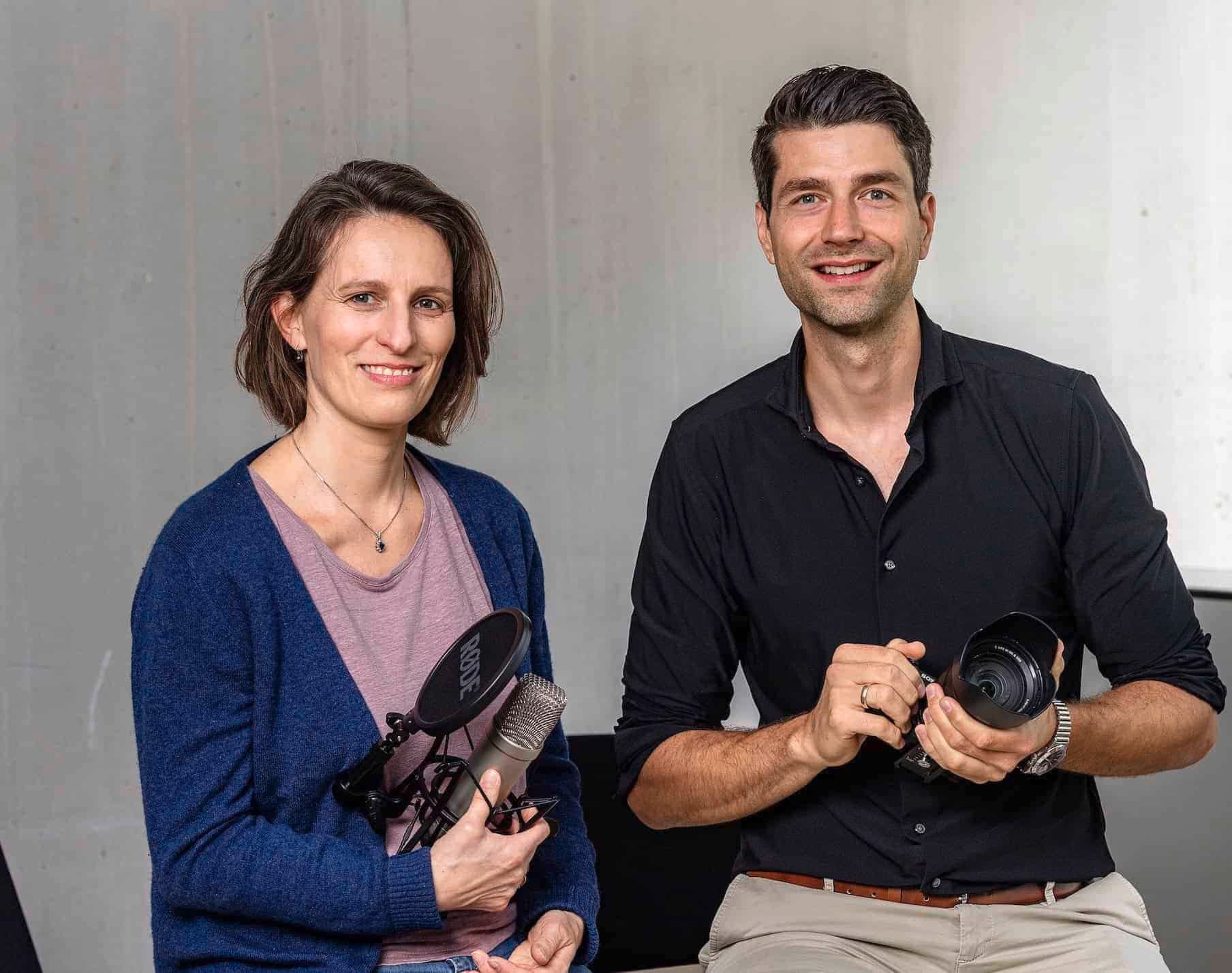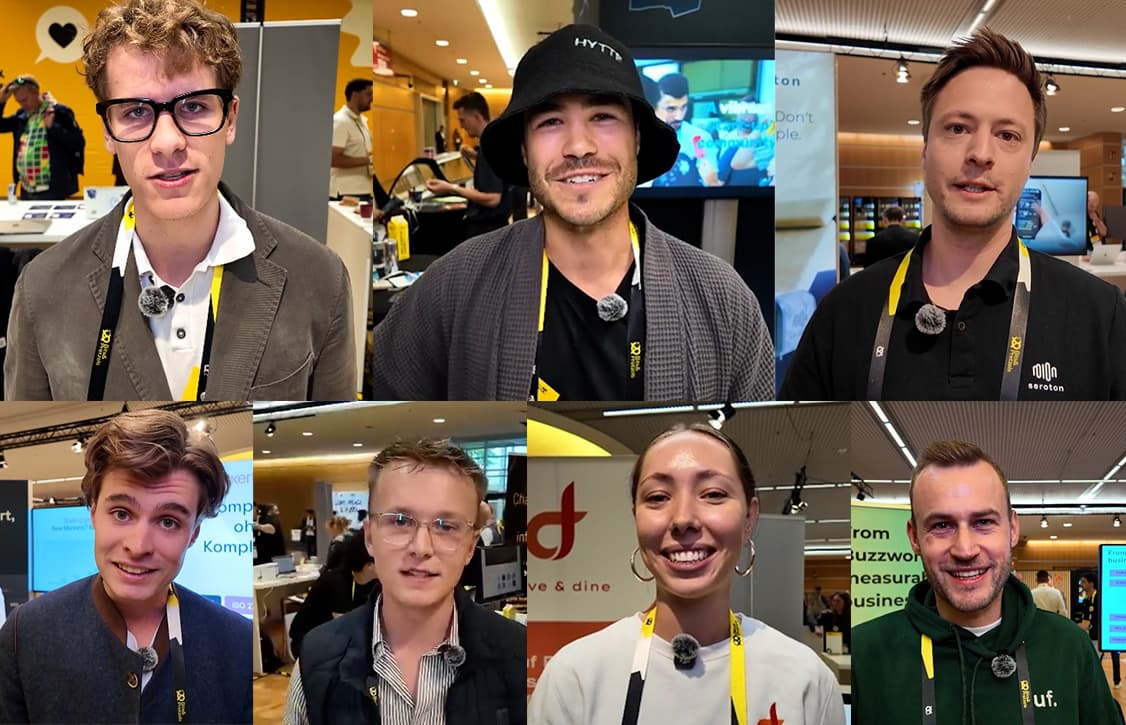

Seven startups, up to 90 seconds, and one task: explain their business model as precisely as possible. For a special edition of our videocast Pitch & People at Bits & Pretzels 2026, we brought founders from AI, defense tech, compliance, recovery, and rescue tech in front of the camera.
Bits & Pretzels brings around 7,500 founders, investors, and decision-makers to Munich. For our special edition, we stripped the format down to the essentials: camera on, 90 seconds – and go.
The result showcases not only seven very different business ideas, but also seven different approaches to structuring a pitch: ranging from personal experiences and specific customer pain points to numbers and product demonstrations.
1. Seroton: Audiohaptic relaxation powered by AI
Chris from Seroton kicks off the pitch round with a premise: people track and optimize sleep, nutrition, and stress – yet tracking stress is far from actually relaxing.
To address this, the Munich startup is developing an audiohaptic system that can be integrated into furniture and mats. Audio content is combined with physically perceptible impulses. For example, anyone listening to the sound of the ocean should also be able to feel a wave on their body. Vital signs are intended to help customize the application to each user.
Seroton initially launched in the B2B sector, working with rehabilitation clinics, among others. The company now also offers its technology to private consumers.
2. ZeroPhase: Software-defined radios for drones
Munich-based dual-use startup ZeroPhase develops software-defined radios (SDRs) and focuses its pitch heavily on drone applications.
The focus is on communication and control systems for so-called “contested environments”—areas where electronic countermeasures, for example, disrupt communications. ZeroPhase is working on both a mobile ground unit for operators and an air unit for drones.
The startup describes its goal as bridging “intent and outcome”: software and hardware are designed to help unmanned systems carry out their missions even under challenging communication conditions.
3. Kertos: Compliance Platform for ISO 27001, NIS2, and GDPR
Felix from Kertos focuses on a problem that many growing companies are familiar with: an enterprise deal is on the horizon, but the necessary certification is missing.
The Munich compliance startup bundles various regulatory requirements and frameworks on a single platform. These include ISO 27001, NIS2, and GDPR, among others. Software, AI, and support from compliance experts are designed to help companies prepare for audits within just a few weeks.
According to its own statements, Kertos employs more than 70 people across two locations in Munich and Berlin. The company positions its platform as a European compliance partner and, in addition to ISO 27001, NIS2, and GDPR, also supports frameworks such as SOC 2 and the EU AI Act.
In 2025, Kertos had also announced a Series A funding round of 14 million euros.
4. Unternehmensfreund: AI Agent Identifies AI Use Cases
Where does the use of artificial intelligence in a company really pay off? That is precisely the question Unternehmensfreund—uf. for short—addresses.
In its pitch, the company reports on a survey of 35 managers from manufacturing companies. According to the findings, 85 percent indicated they wanted or needed to do something with AI, but didn’t know where the tangible added value lay.
uf.’s solution is designed to work in three steps: First, an AI agent interviews up to 75 employees simultaneously about tasks, challenges, and problems. Next, the interviews are analyzed automatically to identify potential AI use cases. Finally, decision-makers receive an overview featuring use cases, key metrics, and risks.
Unternehmensfreund describes its offering as a combination of operational excellence, AI, and automation with a focus on manufacturing companies.
5. Drive & Dine: Restaurant app instead of highway rest stops
The gastronomy app Drive & Dine wants to show drivers restaurants along their route, offering an alternative to traditional highway service areas.
The company is a family project: Victoria Liebrecht, Werner Frey, and daughter Friederike Liebrecht co-founded Drive & Dine. The app launched in 2021 and was offered for iOS and Android. Users can find restaurants near highway exits and filter by culinary preferences, among other criteria.
6. Hytte: Social recovery with sauna and ice bath in the Werksviertel
Sauna, ice bath, and community: Hytte aims to create a “social recovery space” in Munich. In his pitch, founder Kevin announces the opening for October 31, 2026, in Munich’s Werksviertel.
The concept combines guided sauna infusions with ice baths and what is known as contrast therapy—the repeated alternation between heat and cold. At the same time, Hytte is not just meant to be a recovery offering. The social aspect is part of the concept, so the startup also envisions the space as a venue for corporate and team events.
It isn’t meant to stop at just one location in Munich: additional spots are part of the founder’s ambition.
7. HomeResQ: Digital Building Data for Emergency Responders
HomeResQ began with a personal story. Founder Vincent recounts a firefighter friend who repeatedly got lost in a smoke-filled building during an operation.
The resulting question: How can first responders obtain critical information about a building before they arrive on the scene?
To this end, HomeResQ digitizes buildings in 2D and 3D. Emergency response teams can receive relevant information while en route—such as details on building infrastructure, residents, or pets. The solution is aimed at private homes as well as public buildings and larger real estate complexes.