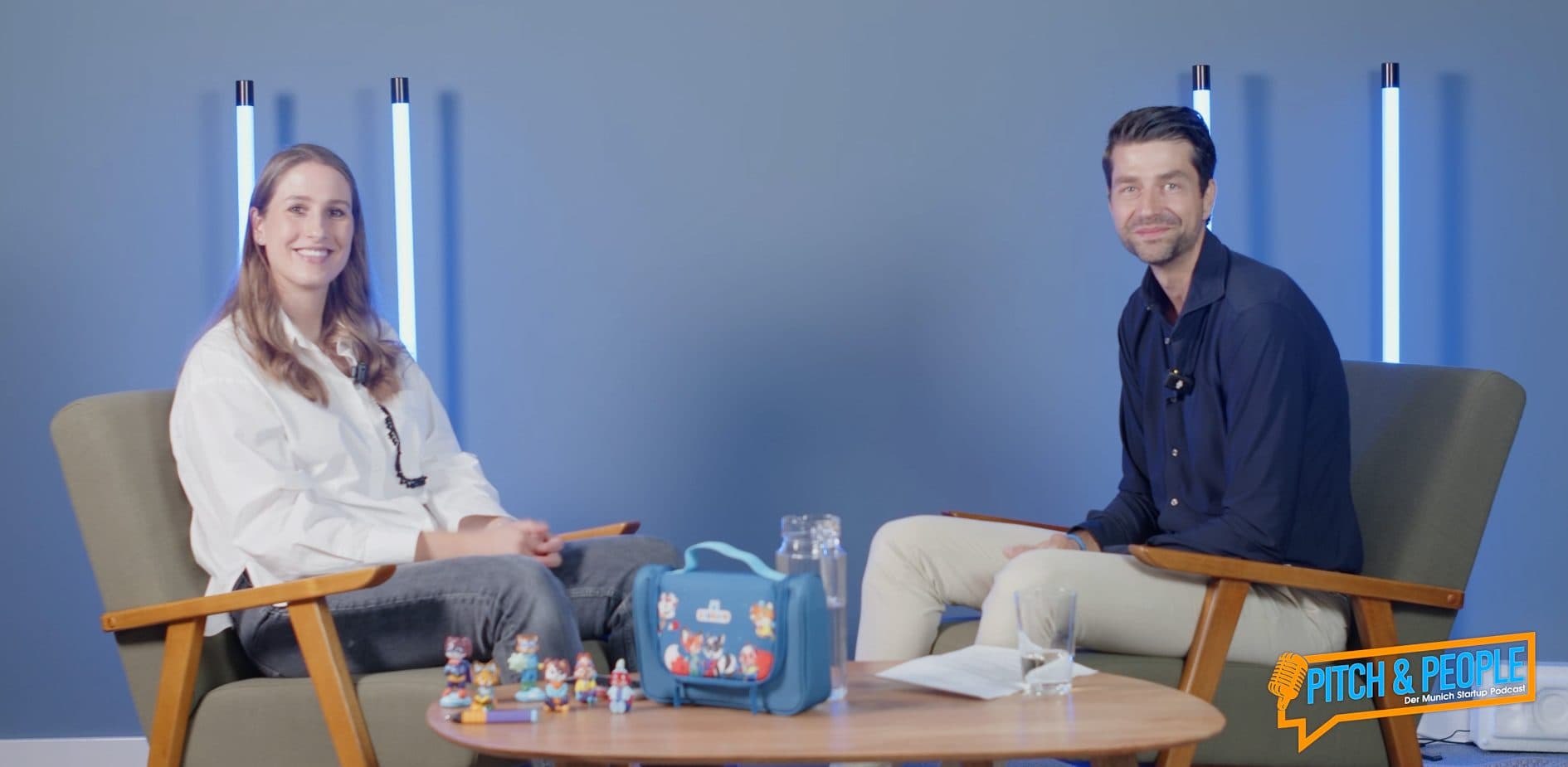

PITCH & PEOPLE Folge 5: Edurino
Digital education begins in the children’s room: the Munich startup Edurino combines play, learning, and technology into a unique concept for children between four and eight years old. Co-founder Irene Klemm explains in the video podcast Pitch & People how an idea that emerged in the middle of the pandemic became an internationally growing EdTech company with 17 million euros in Series B funding – and why mistakes, child feedback, and burping monsters are part of the journey.


“Preparing our children for the future is our responsibility”
When Irene Klemm and her co-founder Franziska Meyer founded Edurino five years ago, their vision was clear: children should learn playfully the skills they need for the future.
“The way education happens today, there’s a big gap, especially in early childhood education”,
says Irene Klemm.
With haptic figurines and an interactive app, children immerse themselves in learning worlds that feel like a game yet deliberately promote future skills. Characters like Leo (emotions), Mika (reading & writing), or Robin (numbers & quantities) convey content in an age-appropriate way. At the same time, children learn the correct pen grip with an ergonomic stylus developed together with occupational therapists.
From living room idea to 17-million-euro funding
Starting in the midst of the Corona pandemic, Edurino now has 75 employees and is active in Germany, Austria, Switzerland, and the UK. Following angel, seed, and Series A rounds, a Series B of 17 million euros followed in summer 2024.
Klemm explains:
“When you know what you’re using the money for, it feels completely natural. It’s not about market expectations, but about focus and conviction.”
Edurino is supported by, among others, Jens Begemann (VUGA), who brings his know-how from the gaming world. This created a learning system that relies on playful motivation and grows at the pace of the children.
Why monsters are allowed to burp
From the beginning, the Edurino founders rely on co-creation with children. New learning games are continuously tested and adapted in partner kindergartens and test families.
“We are not the users. Children must be at the center. If they find something boring, they simply get up and leave”,
laughs Klemm.
This direct feedback ensures intuitive, child-friendly products – including a touch of humor.
“Some monsters in the app burp. Parents don’t always like it, but children love it. And that’s exactly what motivates them to keep learning.”
Crowdfunding, Corona, and self-confidence
Edurino emerged from the observation of how overwhelmed families were when daycare centers and schools closed during Corona. Klemm explains:
“We saw so many gaps that we knew: if this isn’t the golden idea, then another one will be.”
An early crowdfunding campaign helped validate the product. Parents pre-ordered – proving that Edurino is more than just a nice idea.
Rethinking education – with digital foresight
Edurino targets the area where education has the greatest impact: early childhood development.
“At kindergarten age, you can set the course and create equal opportunities. In school, it’s often too late.”
The goal: children learn to understand digital devices as tools – not as pure entertainment. At the same time, they develop emotional intelligence, logical thinking, creativity, and problem-solving skills.
“In ten years we won’t know which skills will be crucial. But resilience and love of learning will always count.”
Today, Edurino has achieved product-market fit. The learning figurines are available in stores, new markets are being opened. In the future, the startup wants to expand its own character universe (IP) and enter into partnerships with other children’s brands. At the same time, Edurino is working on profitability in the DACH region and the next growth stage.
Despite all the support, Klemm sees room for improvement in the Munich ecosystem:
“Especially in the education sector, there are still too few funding programs for the early founding phase. Education wasn’t a typical investment sector for a long time. That’s changing right now, but there’s still room for improvement.”
Today, five years after the founding, she looks back with pride: from a living room startup to an EdTech brand with international impact.