
PITCH & PEOPLE Folge 23: Energyminer
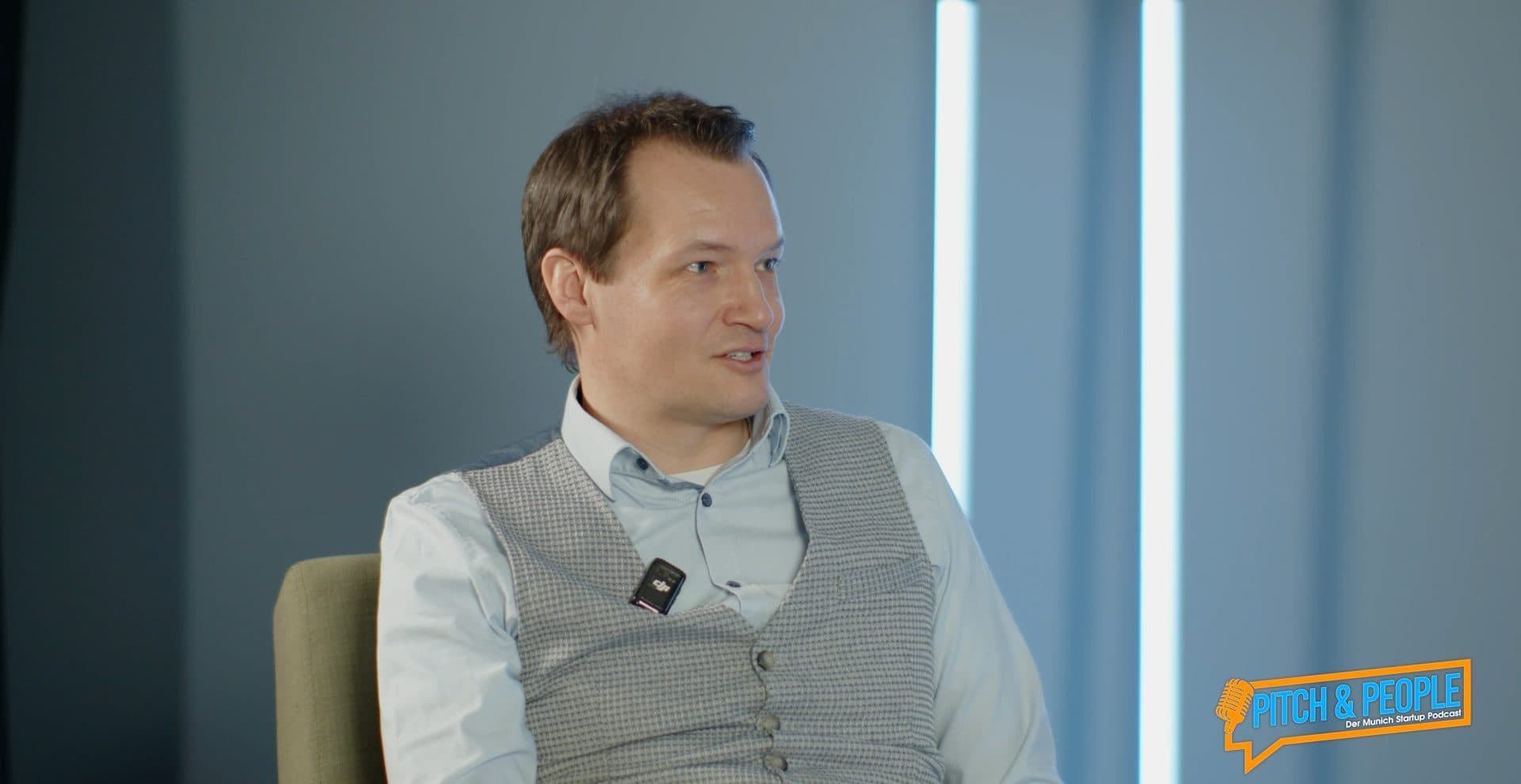
The energy transition needs new ideas – and sometimes they come from directions that hardly anyone has looked at so far. The Munich startup Energyminer is working to unlock a previously largely unused energy source: the kinetic energy of rivers. In the video cast Pitch & People, founder Richard Eckl talks about how floating turbines could supply electricity in the future – permanently, decentralized, and without major impact on nature.


Instead of relying on large dams or conventional hydroelectric power plants, Energyminer focuses on small, modular systems. The “Energyfish” swims in the river, harnesses the natural current, and generates electricity from it. Multiple units are combined in a river section to form what is known as a swarm power plant.
An answer to the baseload gap
For Richard Eckl, CEO of Energyminer, the idea addresses a fundamental problem in current energy supply. In recent years, more and more conventional power plants have been shut down. At the same time, the share of renewable energies is growing, but their electricity production fluctuates significantly.
“In recent years, more and more baseload-capable power plants have been shut down and replaced by fluctuating renewable energies. This is fundamentally positive – however, so far we have not succeeded in replacing the resulting baseload. This creates a gap in the power supply,”
says Eckl in our video cast Pitch & People.
This is exactly where Energyminer sees an opportunity. While wind and solar energy depend heavily on weather, a river flows continuously – and so does the energy it provides. The startup’s technology harnesses this current directly, without damming or diverting the river.
The idea behind it: a new form of hydropower that can be installed flexibly and still generates electricity continuously.
Floating power plants instead of dams
At the heart of the technology is the Energyfish – a floating turbine that is anchored in the river. Multiple units are fastened to the river bed with a cable and connected to an onshore station via cables. There, the generated electricity is collected and fed into the grid via inverters.
A major advantage: The installation effort is relatively low. The systems can be anchored from a boat without requiring extensive construction work or concrete structures. This keeps the river largely in its natural state.
The concept is also modular in design. Individual turbines can be combined into larger units – depending on how much space a river section offers.
Power for entire communities
How much energy can actually be generated with this approach? According to Eckl, even a single unit provides a noticeable contribution.
“A single Energyfish can supply approximately five households with electricity. A typical swarm power plant with around 100 units could thus supply about 500 households permanently and around the clock in baseload operation.”
Performance depends significantly on the flow speed of the respective river. However, since rivers flow continuously and their speed usually changes only slowly, electricity production can be relatively stable.
This could make the technology particularly interesting for municipalities or regional energy providers that want to expand their electricity production in a decentralized manner.
From pilot projects to the first major power plant
Energyminer is still in an early phase of implementation. Multiple systems are currently being tested in rivers – including in Germany. At the same time, the company is working on realizing the first larger commercial swarm power plant.
In parallel, the startup is already exploring additional sites across Europe. Initial steps are underway in Austria and Italy, where discussions with authorities are also taking place.
The long-term goal: to scale the technology not just regionally, but internationally.

Energyminer was founded in 2021 by Dr. Richard Eckl and Dr. Georg Walder and is based in Gröbenzell near Munich. The startup develops technologies for harnessing the kinetic energy of rivers. With its floating turbines, the so-called Energyfish, the company generates electricity directly from the natural flow of rivers. Multiple systems are combined into swarm power plants and feed electricity into the grid together. Energyminer’s goal is to provide a scalable and baseload-capable form of renewable energy.
Global energy potential
From Eckl’s perspective, the theoretical potential of the technology is enormous:
“Even if we take many factors into account globally – such as shipping, lack of power connections, or unsuitable rivers – there is still an enormous potential left. Overall, we are talking about a capacity in the order of hundreds of nuclear power plants that could be developed this way.”
This refers not to a single power plant, but to the total possible capacity that could be generated from river currents worldwide.
Building block for the climate-neutral city
For Eckl, one thing is clear: the energy supply of the future will not be sustained by a single technology. Instead, a network of different renewable sources will be created that work together.
Decentralized systems that generate electricity locally and are networked together could play a central role in this. In this energy mix, the founder also sees the Energyfish as an important building block.
Energyminer is still looking for investors to take the next step and realize the first major power plant. If successful, floating turbines from Munich could help make global energy supply more sustainable in the future.