
PITCH & PEOPLE Folge 14: Bernhard Kowatsch
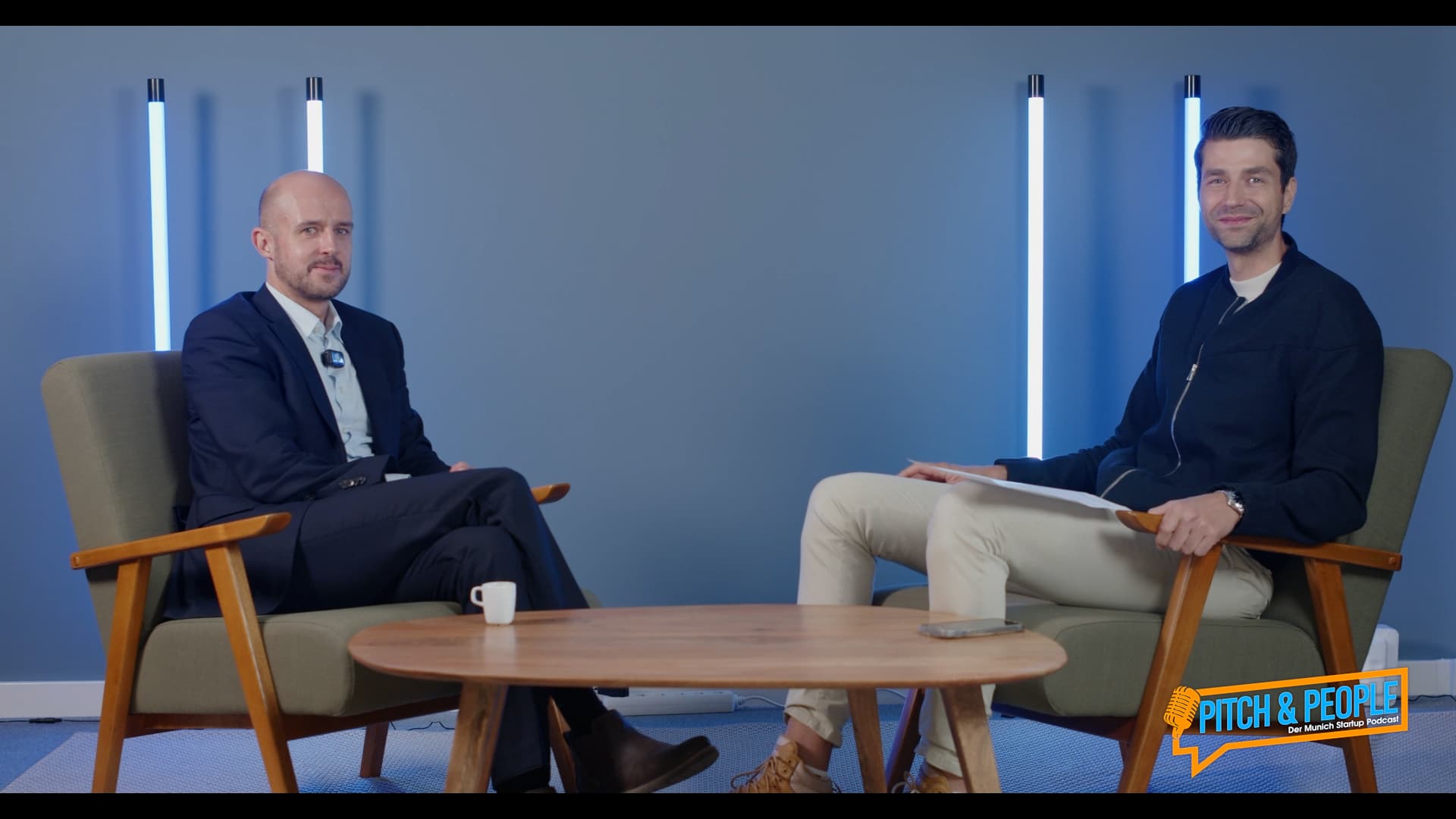
Hunger is not an abstract problem. It currently affects around 800 million people worldwide. And yet it is solvable. Bernhard Kowatsch is convinced of this. The founder and head of the Innovation Accelerator at the UN World Food Programme (WFP) has been working from Munich for ten years to make emergency aid more efficient and scale sustainable solutions against hunger. In the video podcast Pitch & People, he talks about technological leverage, global responsibility – and why innovation saves lives.


The World Food Programme is the world’s largest humanitarian organization. Its long-term goal: to make itself obsolete. By 2030, there should be no global hunger. For Kowatsch, it’s clear: this is not naive idealism, but a realistic vision. Globally, there is enough food for all people. The real problem lies in poverty, conflict, climate change, and inefficient systems, says Bernhard Kowatsch, head of the Innovation Accelerator of the UN World Food Programme, in the Pitch & People video cast:
“In principle, global hunger is a solvable problem. There is still enough food in the world for every person to live a healthy life.”
This is exactly where the Innovation Accelerator comes in. Since its launch, over 500 startups, NGOs, and internal ventures have been supported. In the past year alone, these solutions improved the lives of 61 million people or increased their income. The Accelerator currently operates 18 different impact programs, including for external partners.
Efficiency can unlock millions
That innovation in a humanitarian context produces measurable impact is demonstrated by concrete examples. An internal blockchain solution by the WFP prevents duplicate aid across organizational boundaries. In Ukraine, this saved 270 million US dollars in three years. Money that instead went to people who had previously received no support.
An AI-powered system optimizes the procurement, storage, and transportation of food worldwide. The WFP recently saved over five million US dollars with this system alone. Every efficiency gain means: more help, less waste. Kowatsch on this:
“Wherever we can extract one percent efficiency gain, that’s millions of euros we can save – and which in turn go to hungry people.”
Beyond acute emergency aid, it’s about long-term solutions. The Farm to Market Alliance connects smallholder farmers with markets, credit, seeds, and fertilizers. Through so-called farmer service centers, around 800,000 farmers have been reached, with direct income increases for approximately 3.5 million people.
Another key issue: post-harvest losses. In many countries of the Global South, up to 50 percent of the harvest spoils because storage facilities are lacking. The solution is often surprisingly simple: drying, special bags, or silos. This allows grain to be stored for up to a year without losses.
Innovation created in Munich – impact worldwide
Why is a global UN accelerator based in Munich of all places? For Kowatsch, the answer is clear: strong innovation ecosystem, excellent research, engaged companies, and a central location. The Accelerator works closely with partners such as Google, the German Aerospace Center (DLR), and digital consultancies.
An example from collaboration with the DLR: semi-autonomous amphibious vehicles that can deliver food in mined areas or flood zones without endangering human lives.
Startups wanted – also from Munich
The Innovation Accelerator follows the principle of open innovation. Startups, NGOs, and teams from around the world can apply. From around 1,000 applications, about eight to ten teams are selected. They receive up to 100,000 US dollars in funding – equity-free – as well as access to markets, country offices, and decision-makers.
What matters is not the location of the startup, but the feasibility of the solution in the Global South. A Munich startup can be just as successful as a team from Nigeria or Kenya. Kowatsch adds in the interview:
“Our primary goal is not for startups to make as much money as possible, but for us to help people – to lift people out of hunger and increase their income.”
80 cents against hunger
In addition to technology, individual commitment also plays a role. With the ShareTheMeal app, which Kowatsch co-founded, users can donate a meal for 80 cents. So far, 285 million meals have been shared this way by around 1.9 million people worldwide.
For Kowatsch, this sends a clear message: everyone can do something. Hunger is not a law of nature. It is a question of decisions, systems, and innovation.