
PITCH & PEOPLE Folge 11: Justake
A juicy steak completely without meat? Three young founders from Munich want to make exactly that possible. With Justake, food technologist Sarah Schlingloff is bringing a completely new type of meat alternative to the plate: a steak made from mushrooms. Sounds crazy? But it’s real science. Their “Lion’s Mane steak” looks like beef, can be fried like beef, and has nothing animal about it. Instead of highly processed substitutes, the team relies on a real superfood mushroom that has been considered a medicinal plant in China for centuries. Taste, texture, sustainability – all rethought. Whether it tastes good, our moderator Kyrill Ring found out.


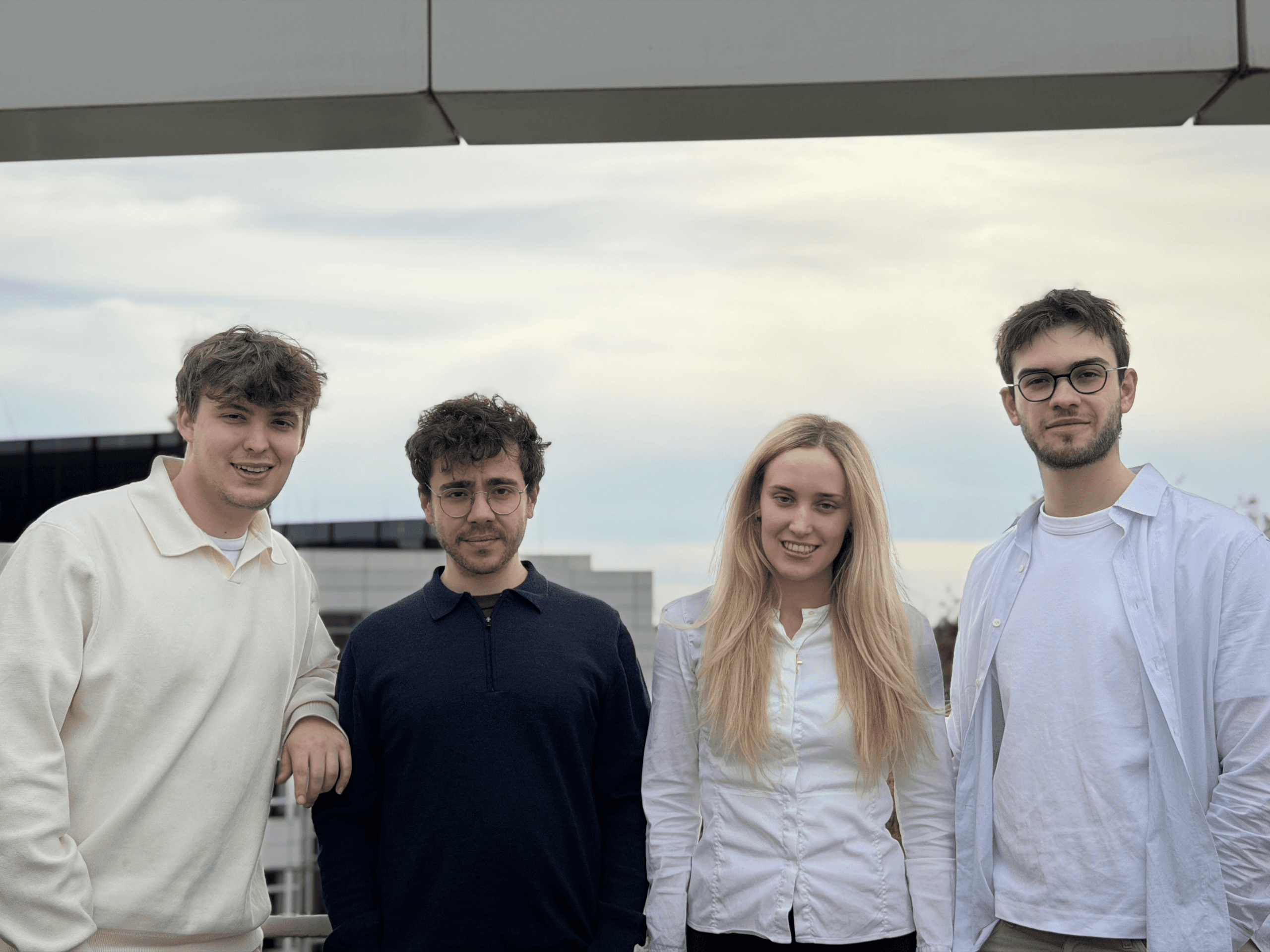
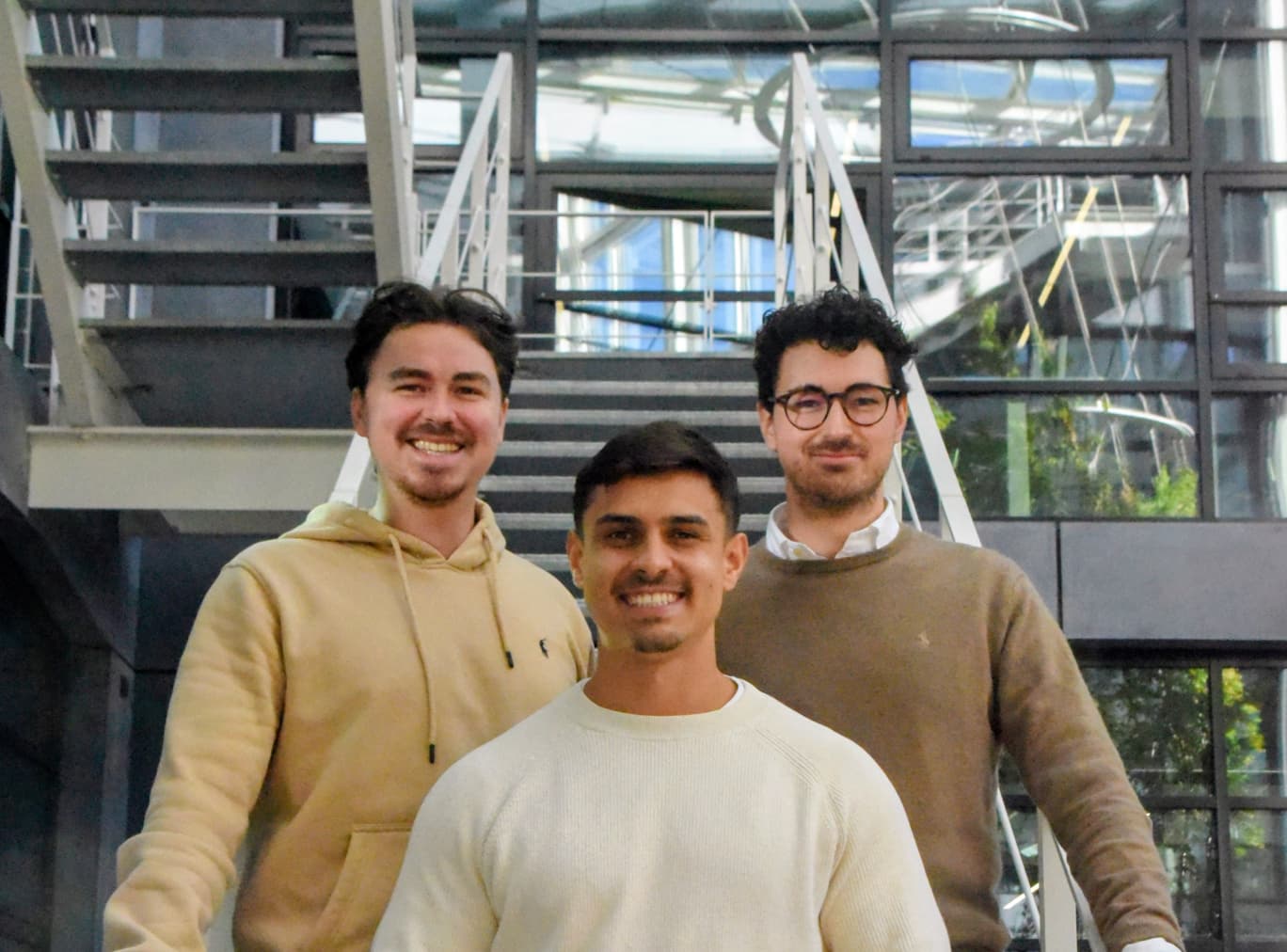
Reinventing the steak with a mushroom – that’s the mission of Sarah Schlingloff and her team at Justake. The food technologist is developing an innovative meat alternative made from mushroom base together with her co-founders Tim and Timo. The young team is on the verge of founding and is currently working on their market-ready MVP from the university.
“We wanted to create a meat alternative that isn’t highly processed, but natural, healthy, and delicious,”
says Schlingloff in the video podcast Pitch & People. The result: a juicy mushroom steak with high protein content and its own unique character.
From superfood to steak
What’s special about Justake is the raw material: the Lion’s Mane, also known as hedgehog fungus or pom-pom mushroom. In Asia it has been valued for centuries as a medicinal mushroom, and its positive properties are scientifically proven. Schlingloff emphasizes:
“This mushroom has a wonderful nutrient profile. It’s not only healthy, but also brings great texture and a unique flavor.”
While many plant-based meat alternatives are based on highly processed, textured plant proteins, Justake takes a different approach.
“Our product is minimally processed and uses the natural properties of the mushroom. You can taste that too.”
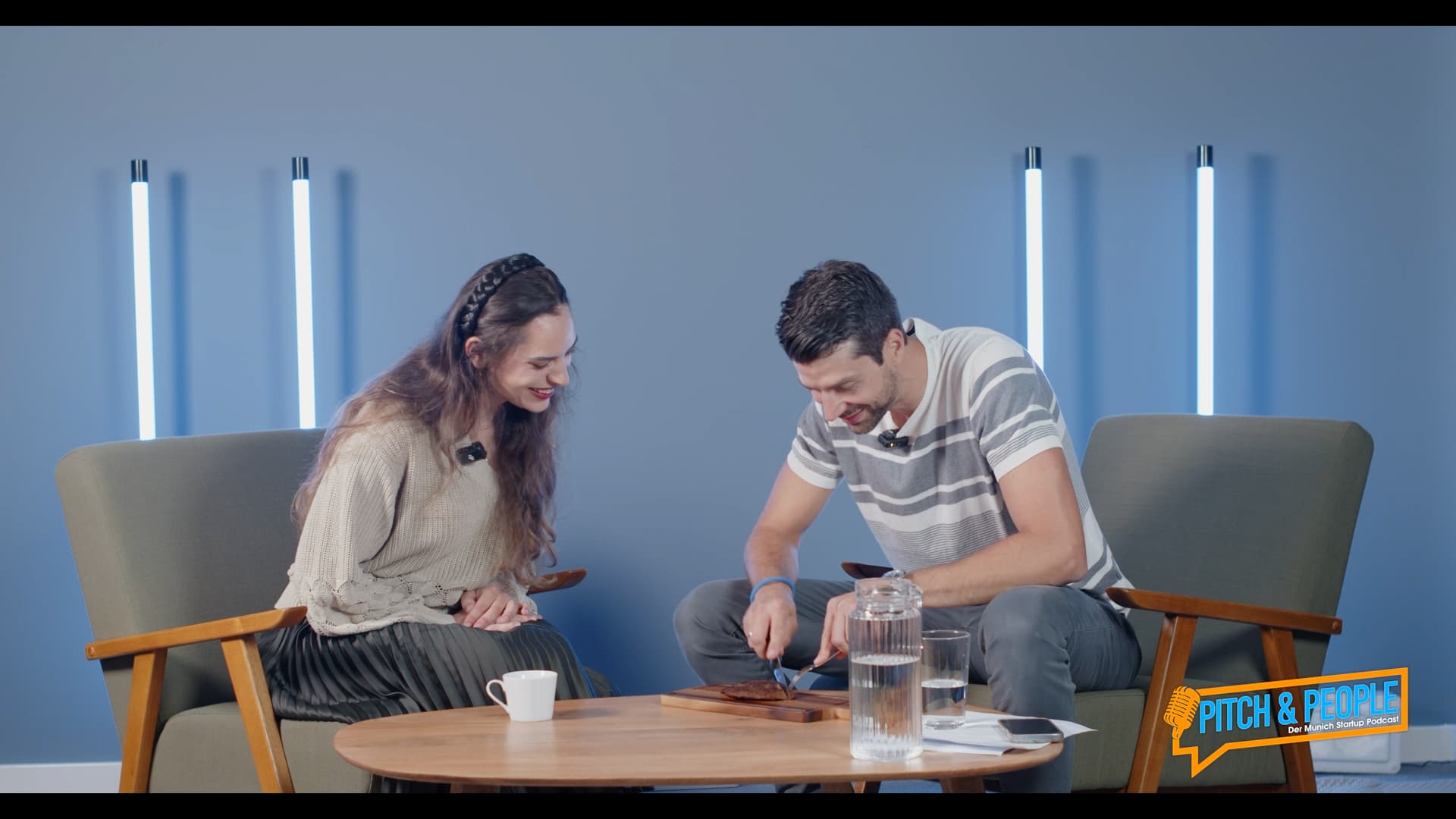
This is also confirmed by Pitch & People moderator Kyrill Ring, who tried the mushroom steak in the interview with the founder.
From idea to prototype
The idea was born in the context of an innovation competition for beverages and food.
“I’m totally obsessed with mushrooms. I was out foraging mushrooms and thought: There’s so much untapped potential in this.”
What initially began as an experiment developed into a prize-winning project – and eventually into a founding idea.
Today the team is working on optimizing their product: the protein content should increase to 20 percent, and a slight bitter note needs to disappear. In parallel, certifications are underway to make the steak market-ready. Tastings – such as at the CSU Summer Lounge – have already shown that the product convinces:
“Many wanted to take some home right away,”
Schlingloff recounts proudly.
Authentic instead of imitation
Despite its steak form, Justake does not see itself as a classic meat substitute, but as an independent alternative.
“We don’t want to get rid of the mushroom flavor completely. It’s a mushroom, but one that can be prepared like a steak.”
This balance between the familiar and the new was exactly the biggest challenge: the team is exploring how to best position itself between imitation and innovation. Schlingloff receives support from mentors at UnternehmerTUM and through direct customer conversations.
Funding, female founding, and perseverance
Financially, Justake is currently relying on grants: the Startup Booster Grant of 45,000 euros and the Exist startup grant, which the founders have already been approved for. Schlingloff is still studying her master’s degree in parallel and is investing a lot of personal capital and heart into the project. This also means she has to advance money herself.
As a young founder, Schlingloff has so far had mainly positive experiences in the Munich startup scene:
“Munich is a great environment. I think the bigger challenge will come with investments.”
Big vision: mushroom instead of beef
Justake’s vision is ambitious:
“We want to replace half of the consumed beef with our mushroom products. If we can do something good for people, animals, and the planet with pleasure, then that’s our goal.”
With this, the team wants to not only reduce meat consumption, but also make a contribution to environmental and climate protection.