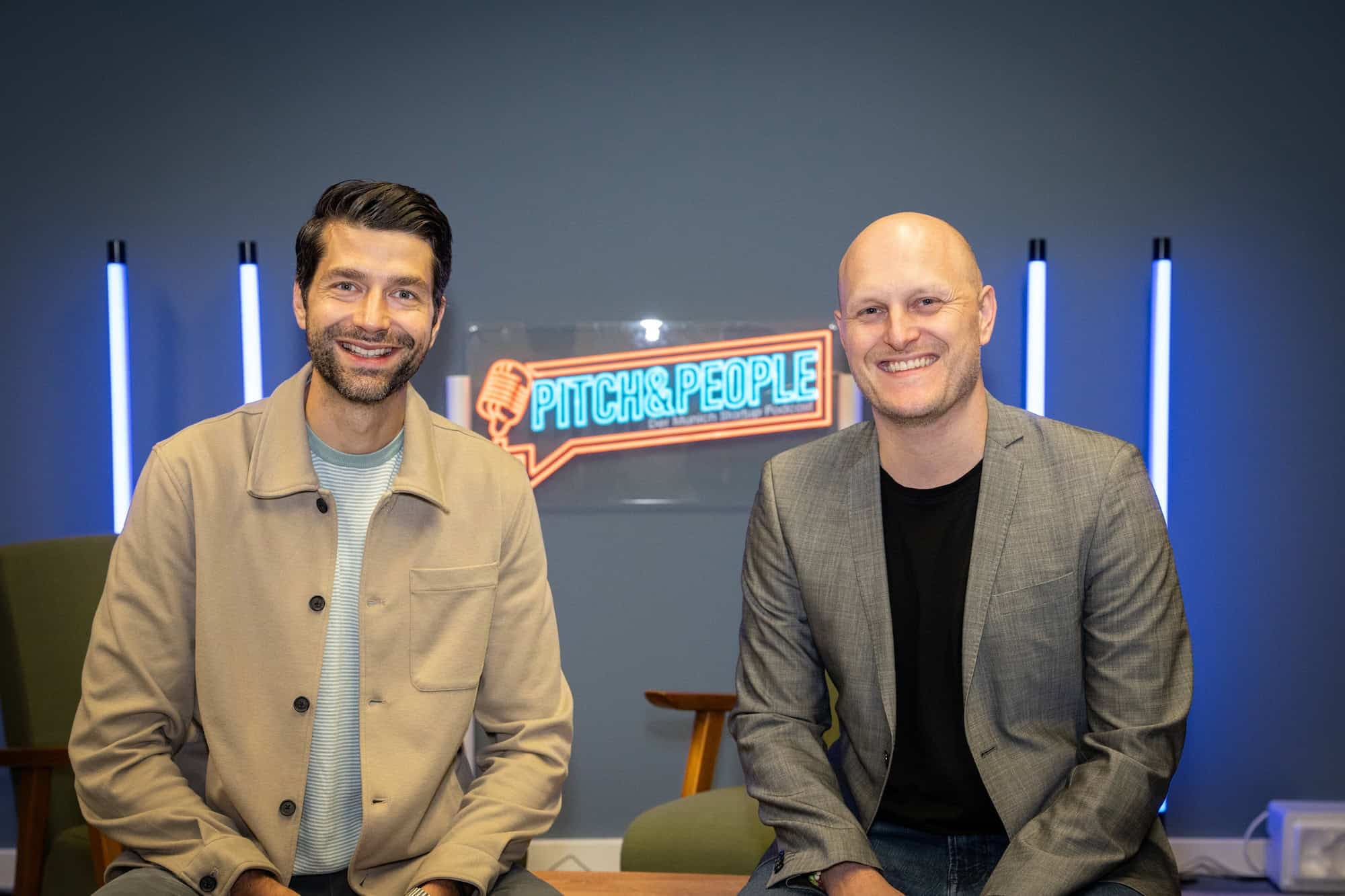

PITCH & PEOPLE Episode 49
What does founding really cost – beyond money? Florian Küster knows the highs and lows: Together with friends, he built a successful media agency, while a later logistics startup failed. Along the way, he also learned his personal limits. On PITCH & PEOPLE, the entrepreneur and author speaks with Kyrill Ring about broken friendships, a lack of funding, and the question of when persevering no longer helps. He also talks about his time at the MakerSpace of Unternehmertum and his novel "Isar Valley", which brings the rollercoaster ride of founding to life.


Most of the budget had been spent, the promised milestones were not achieved, and the client walked away. For Florian Küster, it didn’t just end with a failed agency project. A rift formed within the founding team. He was also unable to publish his planned bachelor’s thesis about the project because the client forbade it. Küster was forced to do an extra lap.
On the video podcast Pitch & People, the founder and author talks openly about this experience. Particularly painful: the company had grown out of a friendship. It took years before it could become a friendship again.
For Küster, such experiences are part of the entrepreneurial journey. In his novel “Isar Valley,” he aims to bring them to life: the uncertainty before a funding round, the strain on relationships, and the question of whether the chosen path actually fits one’s own life.
From the skate park to six-figure profits
Küster’s first startup journey begins during high school and his subsequent community service. Together with three friends, he builds the media agency Kreativkabinett. “We knew each other from the skate park,” he shares. Their skills complemented each other: one designed, two coded, and Küster handled the business side of things.
The four found their clients among medium-sized businesses in Swabia. Back then, many companies needed a website, English translations, or additional features for their online presence. According to Küster, the agency generated a six-figure profit and helped fund part of his stays abroad during his studies.
Yet commercial success does not shield the team from conflict. From the failed client project, Küster takes away concrete lessons: goals and tasks must be clearly agreed upon. When time or money runs short, an early conversation with clients is essential. And expectations shouldn’t remain unsaid among co-founders either. Küster’s advice:
“Confront conflict consciously, state your demands, say what you need.”
A Big Idea – and a Question Without a Good Answer
Through a co-founder of the agency, Küster stumbles upon his next business idea: a rail low-loader designed to allow truck trailers to be loaded onto rails without a crane.
The vision behind it is an electric transport chain. Over short distances to and from the terminal, electric trucks pull the trailers. The long haul is handled by freight train. Less road transport, lower diesel consumption – a concept Küster also explores in his master’s thesis in 2012.
The team develops models and initial prototypes, conducts feasibility studies, and, according to Küster, secures six-figure funding. But taking the next step requires a larger investment. In their discussions, Küster and his team hit a wall: which of them has ever actually built a rail freight system?
The relevant experience is missing. Küster is unable to convince investors that this gap can be bridged quickly through a new hire. The financing falls through, and the project fails.
His next step took him to Bombardier. There, he learned how train systems are built. “So it was good for something after all,” Küster says in retrospect.
When the Mind Wants More Than the Body Can Handle
Studies, stays abroad, an agency, a second startup, and volunteer work: Küster describes a phase in which he took on more and more responsibilities. For a long time, he relied on being able to manage everything with discipline and perseverance.
Yet twice in his life, he reached a point where he had to significantly scale back. He speaks of exhaustion, chronic fatigue, and how difficult it was to acknowledge the limits of his own capacity.
“And of course, all of that takes energy, and eventually you pay the price. After all, you can’t trick nature.”
For Küster, this directly impacts one’s work as an entrepreneur. Anyone suffering from chronic exhaustion is less equipped to lead, inspire customers, or resolve team conflicts.
“That means protecting myself as an entrepreneur, protecting my energy, is crucial.”
He is not trying to discourage anyone from pursuing big ambitions. Küster points to ambitious Munich startups like Isar Aerospace and Proxima Fusion. The key, he says, is understanding your own starting point: What can I handle? What gives me energy? And what drains it over time?
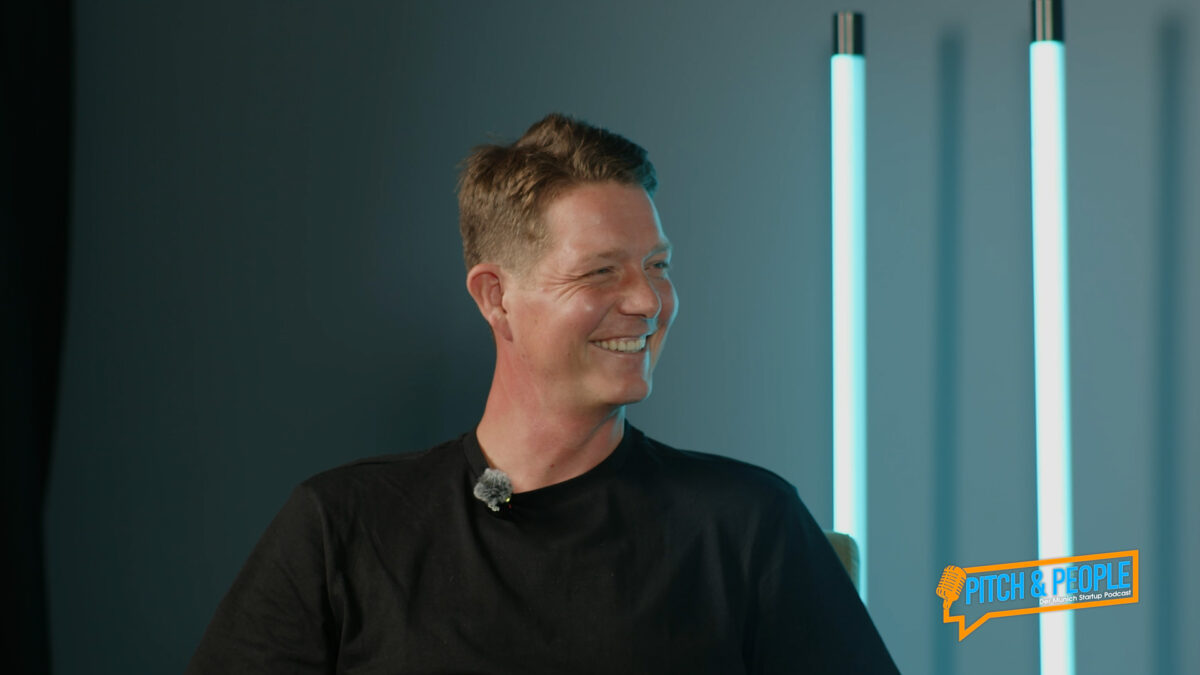
Florian Küster is an entrepreneur and author of the novel “Isar Valley”. While still finishing his Abitur, he founded the media agency Kreativkabinett with three friends. Later, he worked on a logistics startup aimed at putting truck trailers onto rails. After that venture failed, his path led him to Bombardier and subsequently to Unternehmertum for five years, where he helped shape the Makerspace. In “Isar Valley”, Küster combines his founder experiences with a story about Munich’s startup ecosystem, personal values, and the emotional challenges of entrepreneurship. He launched his own publishing house to release the book.
Isar Valley: The Rollercoaster Ride Becomes a Novel
Küster also experienced how much enthusiasm starting a company can spark during his five years at UnternehmerTUM. There, he helped shape the MakerSpace, the high-tech prototyping workshop where teams test their ideas on 3D printers, CNC milling machines, and laser cutters.
What remains in his memory most of all is the curiosity and passion of the young founders. They want to build, experiment, and improve. For him, this energy is a major driving force.
His book aims to bring both sides together: the inventive spirit and the pressures. Küster describes “Isar Valley” as an edutainment novel. The story is meant to entertain while conveying knowledge about entrepreneurship and self-reflection. At the center is Mary Fischer, who navigates her way through Munich’s startup ecosystem. Munich Startup also makes an appearance.
From himself, Küster says he infused the character with traits such as curiosity and the search for a personal moral compass. The novel is intended to help readers engage with the startup journey before finding themselves right in the middle of it. How does it feel when funding is on the line? What happens when friendships suffer because of the business?
The motivation to write also came from the birth of his children and his Christian faith, Küster explains. He wanted to leave something behind for the next generation. For the publication, he founded his own publishing house—thereby turning the book itself into his next entrepreneurial venture.
His answer to the question of whether founding a company or writing is harder fits both experiences:
“Both are difficult if you want to do them well.”
Küster’s book “Isar Valley” can be ordered here with a 30 percent discount until October 15, 2026: Promo code MUNICH-STARTUP