
PITCH & PEOPLE Episode 45: Treesense
Trees can’t say when they’re thirsty. The Munich startup Treesense wants to change that. With sensors directly inside the tree, the team makes water stress measurable – helping cities water their trees more purposefully. This saves water, working hours and, in the best case, thousands of trees. Semir Babajic, co-founder of Treesense, in conversation on Pitch & People.


When cities talk about climate protection, it is often about heat pumps, solar systems, or public transport. Urban trees, on the other hand, frequently play only a supporting role. For Semir Babajic, CEO of Treesense, this is a mistake. Because they in particular are crucial for adapting cities to climate change.
“What I noticed most at the beginning was: Trees weren’t that sexy in public discussion. Trees were only interesting when they were cut down,”
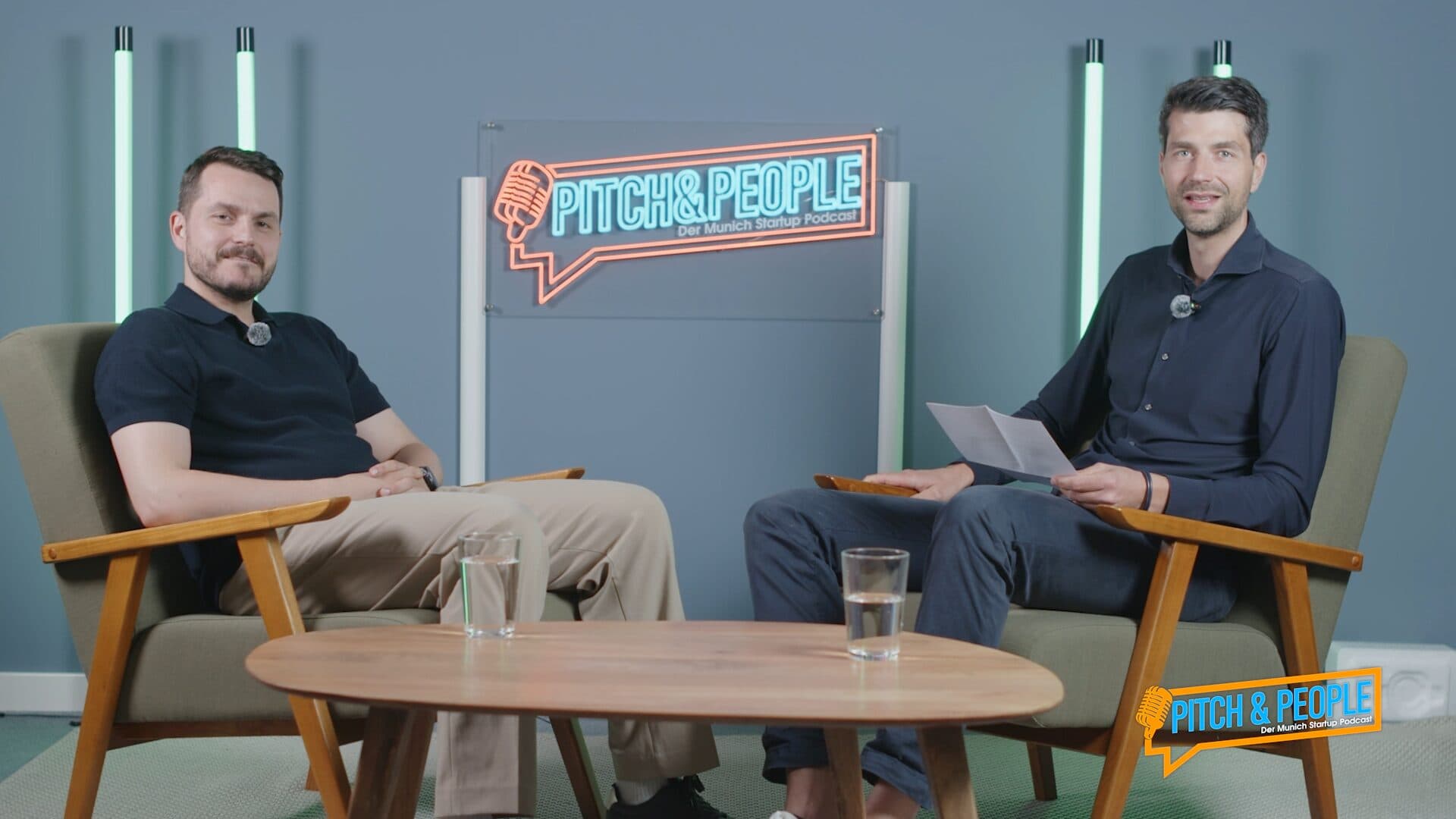
says Babajic in the Pitch & People videocast.
With Treesense, the founder wants to change just that. The spin-off from the Technical University of Munich develops sensors and an IoT platform that show how a tree is actually doing. The goal: Cities should no longer maintain their trees according to rigid watering schedules, but based on data.
The tree speaks – via sensors
At the heart of the technology is the specially developed ‘Treesense Pulse’ sensor. Two small electrodes are attached in a minimally invasive way in the outer annual ring of the tree – right where water is transported from the roots to the crown.
Electrical resistance is measured. The more water flows through the tree, the lower the resistance. This makes it possible to detect when a tree is suffering from drought stress.
“As soon as we know that, we can of course plan our care measures. Instead of watering every tree according to the same scheme, targeted action can be taken where there is an actual need.”
74 Percent Less Watering
One of the startup’s projects demonstrates the potential behind this. At 21 locations, Treesense calculated that 74 percent of watering and the necessary labor could be saved.
For cities, this is more than an ecological question. According to Babajic, it costs an average of around 5,000 euros to replace a dead tree and care for it over years. Munich alone cuts down and replaces around 3,000 trees every year.
“We simply want to make sure that the trees actually survive.”
The tree is not the problem
For Babajic, however, the biggest challenge lies not with the trees themselves, but in the existing processes.
“The contractor is paid based on the number of watering runs. The more watering runs he does, the more cash he has in his pocket. He is thereby incentivized to consume water.”
Treesense takes a data-driven approach instead. Every tree and every location should be considered individually – because not every tree needs the same amount of water at the same time.
The long road to the business model
The fact that this use case sounds so clear today was not a given. Originally, the team focused on forest fire prevention, later on applications in agriculture. It was only after numerous discussions with municipalities that the watering of urban trees emerged as the most critical issue.
“It took some time until we got there,”
says Babajic looking back.
Today, Treesense doesn’t just sell sensors, but managed pilot projects. With a comparatively small entry-level package, municipalities can test the technology and then continue using it independently. In this way, the startup also wants to make access easier for smaller cities.
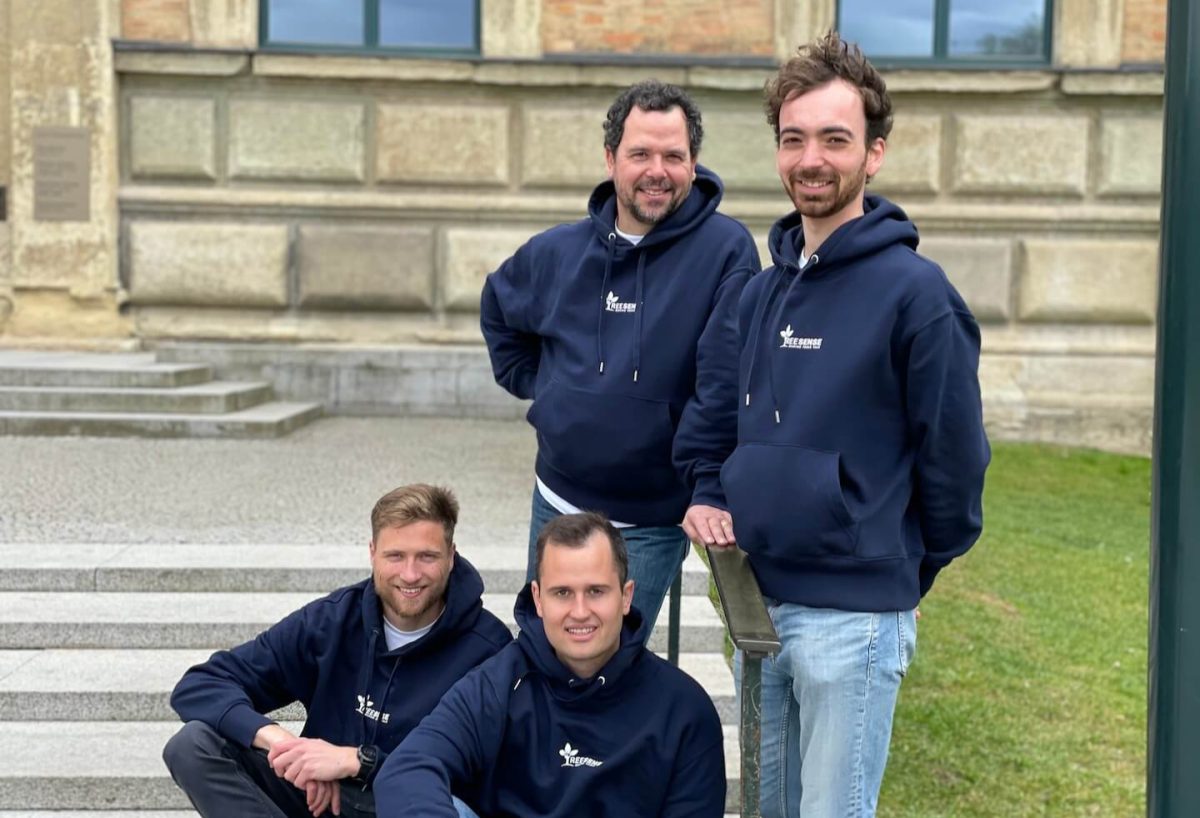
Treesense is a Munich-based cleantech startup and spin-off of the Technical University of Munich. The company was founded in 2021 by Giancarlo Foderá, Julius Kübler-Walzik, Moritz Spielvogel, and Semir Babajić. Together, the team develops sensors and a digital platform that allow cities and municipalities to monitor the health of their trees and manage watering according to demand. The goal is to save resources, preserve urban trees over the long term, and support climate change adaptation with data.
Growth Without Investors
Treesense was founded in 2021. To this day, the company is growing without venture capital. Instead, the team finances itself entirely through its own revenue.
At the time of the interview, the startup employs ten people, works with around 160 customers, and has about 2,000 sensors in use. References include Munich, Stockholm, London, Helsinki, Düsseldorf, and Mainz, among others. For Babajic, this path was not always easy.
“The most difficult question a founder always asks themselves is: When is it time to stop?”
he says. Especially in the first few years, salaries were low, while at the same time trust within the founding team had to grow.
However, with every new customer, this trust grew. An important milestone was a project with the Bavarian Palace Administration at Nymphenburg Palace.
Why we know more about cars than about trees
A statement from the interview sums up Treesense’s mission particularly well. When asked why today we often know more about the condition of our cars than about that of our urban trees, Babajic points to decades of priorities.
Key metrics such as revenue, EBIT, or return on investment had long taken center stage. By contrast, the contributions of trees – better air, cooler cities, or managing heavy rainfall – were barely measurable and were therefore often underestimated.
That is precisely what Treesense wants to change: to make the condition of trees visible and prove their value using data.