
PITCH & PEOPLE Episode 46: Ilya Ballier
60, 70, or even 80 hours a week – is that simply part of founding a company? HR expert Ilya Ballier speaks with Kyrill Ring on Pitch & People about hustle culture, mental health, and the responsibility founders have for a healthy corporate culture. She also explains why startups in particular should establish professional HR structures early on.


Ilya Ballier has known the HR world for about ten years. She has worked in various areas of human resources and started her own business six months ago. Her idea: supporting startups, scaleups, and smaller companies in establishing professional HR structures without having to create a full-time position right away.
“Especially at small companies,” there are often challenges in bringing structure and order to HR topics, Ballier explains in the Pitch & People videocast. At the same time, many companies either cannot or do not yet want to bear the costs of a permanent hire: this is precisely where her HR outsourcing comes in. Companies save on recruiting and onboarding costs, among other things, as well as setting up an additional workstation. Above all, however, this is intended to help founders regain more time for their actual core business.
While outsourcing marketing or sales, for example, has long been common practice, this approach is still comparatively new in the HR field, Ballier observes.
“The worst thing that can happen is that it doesn’t work”
By founding her own company, Ballier switched sides herself. After ten years of professional experience, she decided to do her own thing. Fear of taking the step into self-employment didn’t hold her back. Ballier says:
“The worst that can happen is that it doesn’t work out. But then at least I gave it a try.”
Alongside traditional HR structures, she is deeply involved in a second topic: health in the workplace. Ballier first encountered health management during her studies. Later, she focused more and more on corporate health management. While the topic has now found its place in medium and large companies, in her experience it is still not given enough consideration in small firms.
Yet she considers it especially important there in particular. Because anyone who builds a startup and grows a team quickly lays the groundwork for the later corporate culture early on.
When exhaustion becomes a benchmark for success
Ballier sees a problem in the hustle culture typical of startups. Especially during the early years, 60-, 70-, or even 80-hour workweeks are not uncommon. At the same time, hard work is often equated with entrepreneurial success. Ballier warns:
“Working 60, 70, 80 hours in the long run—I don’t know who can truly endure that.”
Phases of extremely high workloads can certainly happen. However, it becomes problematic when this turns into a permanent state.
“As long as exhaustion and chronic stress are seen as success, that’s definitely an issue that needs to be addressed.”
Recovery therefore needs to be deliberately scheduled. Whether it’s yoga, sports, spending time with family and friends, or another form of balance is a personal choice. What matters is actually protecting these times. Ballier recommends treating recovery as binding as a deadline, an important meeting, a client appointment, or a launch.
Founders Shape the Culture
Yet it is not just about their own health. In Ballier’s view, founders serve as particularly important role models for their teams.
She has seen smaller teams where employees knew full well that their boss regularly worked night shifts. Even if no one explicitly asks them to copy this behavior, it can still create an implicit expectation. Constant availability or permanently visible stress can also bleed into the company culture.
“Sometimes stress becomes the norm, and that rubs off on the entire team.”
Instead, companies should foster a culture where employees feel safe speaking up when they reach their limits. That does not mean sharing personal or medical details with colleagues or managers. What matters most is having the ability to address overload and work together to find a solution.
These can be complemented by concrete offerings, ranging from sports and mental health support to shared team activities. Ballier also cites psychosocial risk assessments as a tool to identify stress factors within the company, analyze findings, and derive appropriate measures.
Poor Sleep and a Short Fuse as Warning Signs
But how do founders notice in the first place that they are approaching their personal breaking point? According to Ballier, the body sends clear signals—they are just often ignored.
These include persistent poor sleep, exhaustion, and increasing irritability. Anyone noticing an increasingly short fuse in conflict situations over an extended period should take a closer look. The same applies if it takes an unusually long time to wind down at all while on vacation.
Eating habits can also serve as an indicator. According to Ballier, anyone who constantly eats at their desk under stress, relies mostly on fast food, and rushes through meals just to get them over with should also view this as a potential warning sign.
For her, yoga is a tool to regain clarity in everyday life. She explicitly emphasizes, however, that yoga is not a one-size-fits-all solution. Rather, her goal is to find ways to escape overload and constant stress and to make decisions more consciously again.
“Yoga is a tool that consistently brings me back to myself in daily life, both professionally and personally. The goal is to make decisions from a place of clarity rather than overload.”
InfoboxIlya Ballier is the founder of Ballier HR Management Consulting and supports startups, scaleups, and smaller businesses as an external HR partner. Following around ten years of professional experience in human resources, she became self-employed in 2026. Her focus is on establishing and developing HR structures—from recruiting and onboarding to personnel development, administration, and workplace health. In addition, Ballier is deeply involved in corporate health management and the question of how companies can foster a healthy, sustainable, and high-performance work culture.
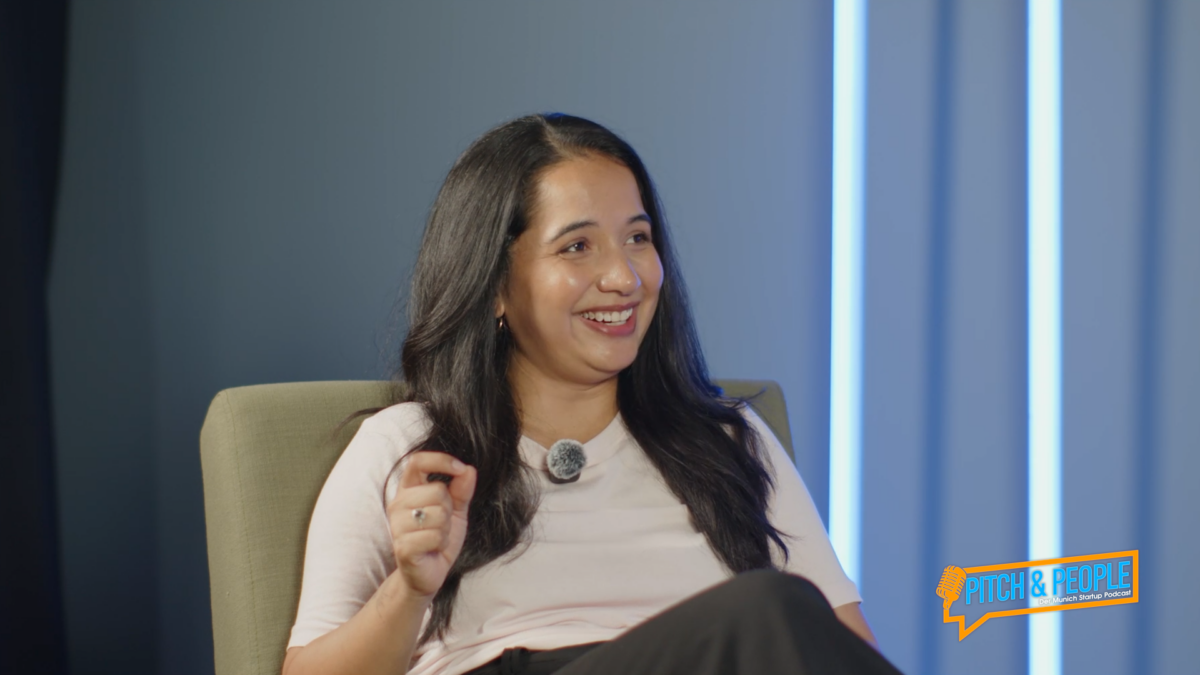
“We Are Not Machines”
Ballier doesn’t dispute that everyday startup life cannot be relaxed every single week. Funding rounds, growth, or other crucial company phases can lead to peak stress levels. Her appeal: Anyone who deliberately pushes through such a phase should also deliberately wind down afterward.
“Please make sure to consciously schedule a phase afterward for you and your team where you can wind down.”
Because sustaining that peak permanently simply cannot work. Ballier ultimately brings it down to a simple comparison: Even machines are deliberately not run at full capacity constantly to keep them from breaking down.
“We are not machines. We are not AI that can handle all of this continuously. We are not robots that can do this permanently.”
Perhaps that is precisely one of the hardest realizations when founding a startup: Not every free hour has to become a work hour. And anyone who wants to ensure a company remains high-performing in the long run must not only focus on numbers, growth, and financing, but also on the people building it.