
About KEWAZO
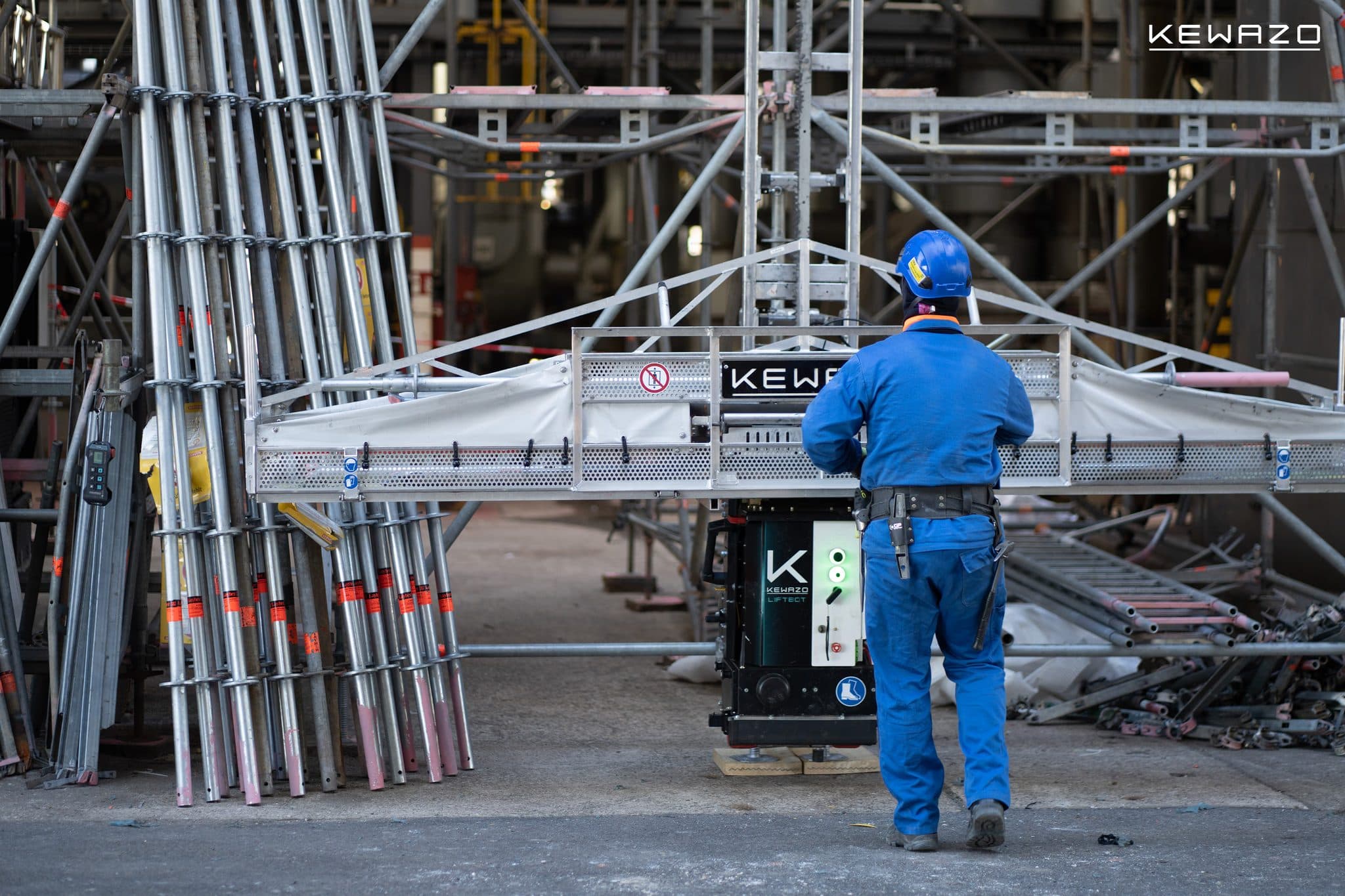
We develop a robot that automates the scaffolding assembly process and introduces a digital data platform to the construction site. With two people and robots, we can build arbitrarily large scaffolds almost twice as fast. Scaffolding assembly is inefficient and expensive. 80% of the time spent on scaffolding assembly and disassembly goes to transporting scaffolding components. 60% of costs are labor expenses. Additionally, scaffolding work is dangerous, with over 6,000 accidents occurring annually in Germany alone. The scaffolding industry and construction sector as a whole continue to face a shortage of skilled workers. One of the main reasons for these problems is inefficient scaffolding assembly logistics. Our solution consists of intelligent robots that move on the scaffold not only vertically but also horizontally, ensuring continuous material flow during scaffolding assembly. This significantly improves scaffolding assembly logistics. Furthermore, scaffolding companies lack information such as: When do my employees start assembly, when do they stop? Where are my scaffolding components? Which scaffolding components do I own? Using artificial intelligence algorithms, sensors, and machine learning, our robots record data on the construction site, determine the positions of people, and calculate their paths independently. To gather information, we use computer vision to recognize which scaffolding components are being installed. Path planning is enabled on the one hand through radio sensors and on the other hand through pathfinding algorithms.
Discover more articles, startups, and events from the ecosystem
Kewazo secures fresh millions for robotics in heavy industry
€9.2 million for Kewazo

Munich Startup Experts: The Underrated Potential of Inbound Leads

14th Bavarian CSR Day: What really counts now